Rebuilding Our Lives: A Reflection on Nehemiah 7:1
"Now it came to pass, when the wall was built, and I had set up the doors, and the porters and the singers and the Levites were appointed," - Nehemiah 7:1
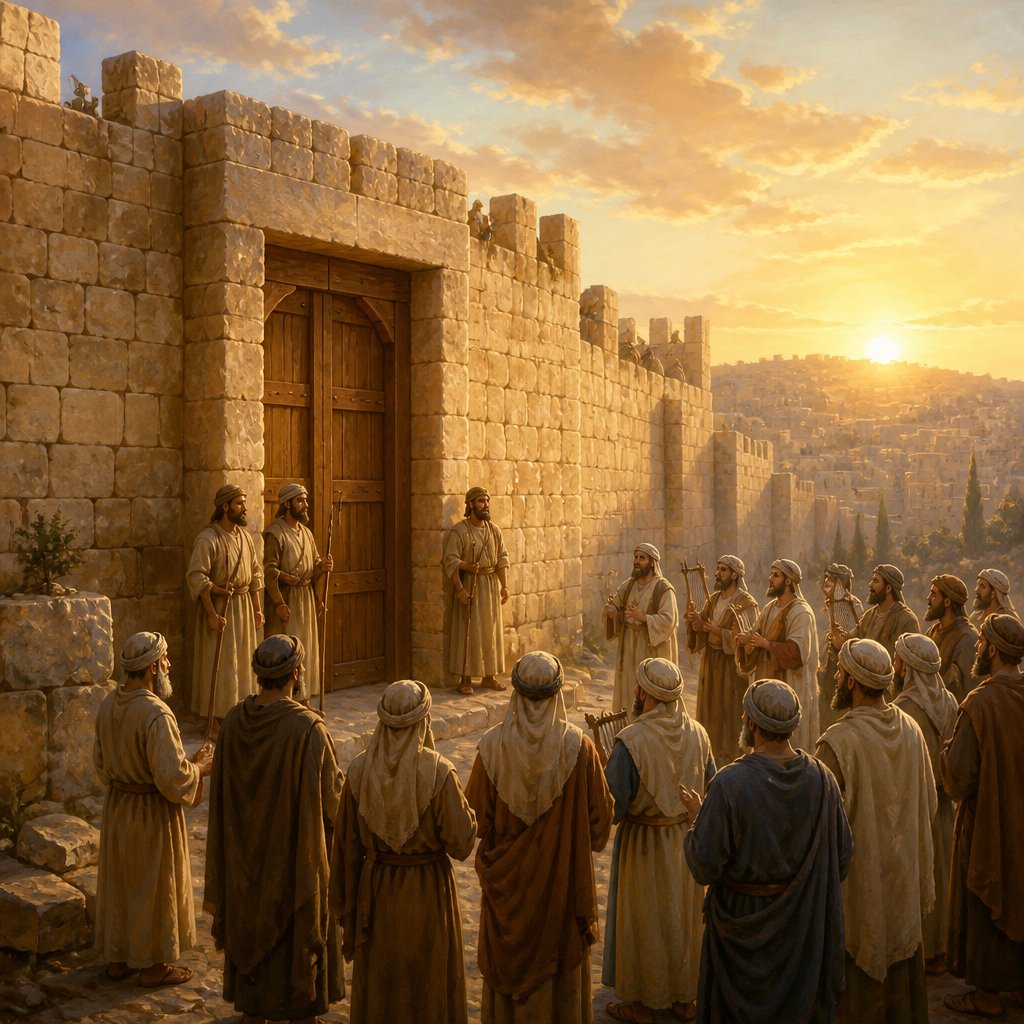
In Nehemiah 7:1, we find the culmination of a significant period of labor, sacrifice, and divine guidance. The verse states: "Now it came to pass, when the wall was built, and I had set up the doors, and the porters and the singers and the Levites were appointed." This phrase not only marks a moment of triumph for Nehemiah and his people but also serves as a powerful metaphor for the rebuilding of our lives in the face of challenges, spiritual warfare, and community restoration.
Nehemiah’s journey began with a heavy heart; he learned about the distress and ruin of Jerusalem—the walls torn down, the gates burned with fire. The state of disrepair was symbolic not only of physical walls but represented the spiritual and communal malaise of the people. In many ways, we can relate to this state of brokenness in our contemporary lives. The walls we build often symbolize our vulnerabilities, our dreams, our relationships, and our spirits. What are the areas in our lives that need rebuilding? Are there dreams deferred, relationships fractured, or spirits that feel abandoned?
The labor that Nehemiah initiated was not just about repairing bricks and mortar; it was about restoring hope and identity to God’s people. When we confront our own walls that need building or rebuilding, we must ask ourselves: What is the foundation upon which we are erecting these walls? Nehemiah’s foundation was prayer. Before beginning the wall’s reconstruction, Nehemiah prayed fervently, seeking God’s guidance and favor (Nehemiah 1:4-11). It is essential for us to lay our own foundations through prayer, meditation on Scripture, and seeking counsel within our faith communities.
In verse one, we also see that once the walls were built and the doors were set up, Nehemiah appointed the porters, singers, and Levites. There is a sense of order, structure, and community that emerges upon the completion of a project. Nehemiah understood that rebuilding is not merely an individual endeavor; rather, it requires the input and support of others. Similarly, our journey of restoration should not be done in isolation. God designed us for community. There is strength in numbers, and accountability within a faith community fosters resilience. By appointing those roles, Nehemiah emphasized the importance of worship, security, and the priestly duties in the life of the community. He ensured that not only were the physical structures restored but that the spiritual life was also revitalized.
In our lives, we may often forget the importance of worship and community when we are actively engaged in building our walls. Let us remember that worship is not a mere afterthought but central to the rebuilding of our spirits. When we engage in worship, whether through music, service, or fellowship, we reinfuse our lives with purpose and joy, transforming our restored structures into sanctuaries of praise. Moreover, appointing leaders or asking others to join us in our journey of restoration can motivate and inspire us further.
Lastly, it’s crucial to recognize the ultimate purpose of Nehemiah’s rebuilding efforts. The restored wall provided both security and a renewed identity for God’s people. They were no longer just a remnant; they were a community chosen by God, restored for His glory. Likewise, as we navigate our own seasons of rebuilding, we must remind ourselves of the purpose of our restoration. It is not merely for ourselves but for the fulfillment of God’s kingdom and the display of His glory.
In conclusion, Nehemiah 7:1 invites us to reflect on our personal walls of life. What needs to be rebuilt? Are we laying a foundation through prayer? Are we involving our community in our restoration? Do we remember to engage in worship as we rebuild? As we answer these questions and take actionable steps, may we emerge stronger, more united, and better equipped for God’s greater purpose. Let us strive to be like Nehemiah—a leader in our rebuilding journey, committed to restoring not only our lives but also the lives of those around us.
Want to reflect more on Nehemiah 7:1?
Continue your spiritual journey with Bible Chat — an AI-powered tool for exploring God's Word through conversation. Ask questions, discover connections, and deepen your understanding.
Get Our Apps


Nehemiah 7:1 Artwork

Nehemiah 7:1 - "Now it came to pass, when the wall was built, and I had set up the doors, and the porters and the singers and the Levites were appointed,"
"Now it came to pass, when the wall was built, and I had set up the doors, and the porters and the singers and the Levites were appointed," - Nehemiah 7:1

Nehemiah 7:7 - "Who came with Zerubbabel, Jeshua, Nehemiah, Azariah, Raamiah, Nahamani, Mordecai, Bilshan, Mispereth, Bigvai, Nehum, Baanah. The number, I say, of the men of the people of Israel was this;"

Nehemiah 10:7 - "Meshullam, Abijah, Mijamin,"

Nehemiah 1:7 - "We have dealt very corruptly against thee, and have not kept the commandments, nor the statutes, nor the judgments, which thou commandedst thy servant Moses."

Nehemiah 7:42 - "The children of Harim, a thousand and seventeen."

Nehemiah 7:24 - "The children of Hariph, an hundred and twelve."

Nehemiah 7:56 - "The children of Neziah, the children of Hatipha."

Nehemiah 7:25 - "The children of Gibeon, ninety and five."

Nehemiah 7:40 - "The children of Immer, a thousand fifty and two."

Nehemiah 7:31 - "The men of Michmas, an hundred and twenty and two."

Nehemiah 7:33 - "The men of the other Nebo, fifty and two."

Nehemiah 7:21 - "The children of Ater of Hezekiah, ninety and eight."

Nehemiah 7:28 - "The men of Beth-azmaveth, forty and two."

Nehemiah 7:14 - "The children of Zaccai, seven hundred and threescore."

Nehemiah 7:27 - "The men of Anathoth, an hundred twenty and eight."

Nehemiah 7:35 - "The children of Harim, three hundred and twenty."

Nehemiah 7:16 - "The children of Bebai, six hundred twenty and eight."

Nehemiah 7:58 - "The children of Jaala, the children of Darkon, the children of Giddel,"

Nehemiah 7:9 - "The children of Shephatiah, three hundred seventy and two."

Nehemiah 7:48 - "The children of Lebana, the children of Hagaba, the children of Shalmai,"

Nehemiah 7:19 - "The children of Bigvai, two thousand threescore and seven."

Nehemiah 7:15 - "The children of Binnui, six hundred forty and eight."

Nehemiah 7:44 - "¶ The singers: the children of Asaph, an hundred forty and eight."

Nehemiah 7:18 - "The children of Adonikam, six hundred threescore and seven."

Nehemiah 7:13 - "The children of Zattu, eight hundred forty and five."

Nehemiah 7:49 - "The children of Hanan, the children of Giddel, the children of Gahar,"

Nehemiah 7:55 - "The children of Barkos, the children of Sisera, the children of Tamah,"

Nehemiah 7:20 - "The children of Adin, six hundred fifty and five."

Nehemiah 1:1 - "The words of Nehemiah the son of Hachaliah. And it came to pass in the month Chisleu, in the twentieth year, as I was in Shushan the palace,"