Courage and Conviction: Standing Firm in the Face of Adversity
"And I said, Should such a man as I flee? and who is there, that, being as I am, would go into the temple to save his life? I will not go in." - Nehemiah 6:11
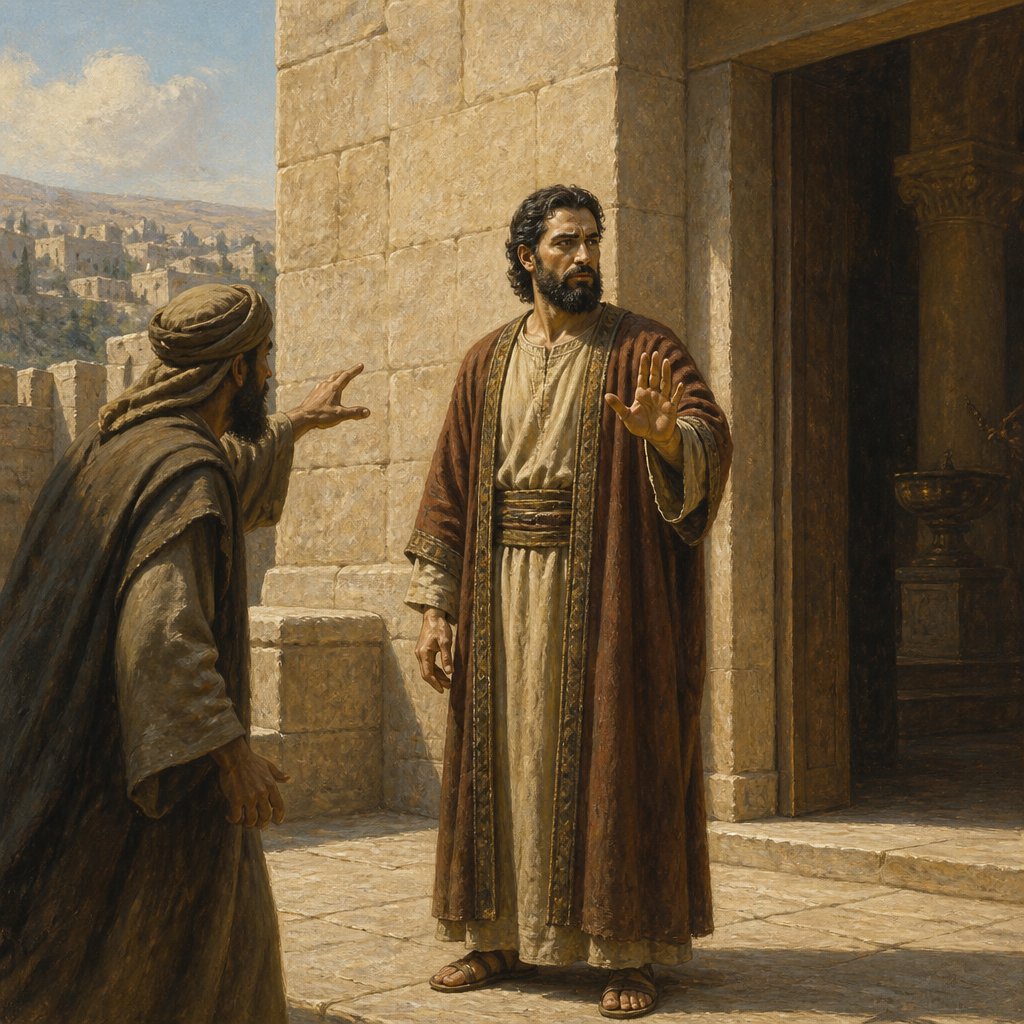
In the book of Nehemiah, we witness a powerful narrative of leadership, perseverance, and devotion to God amidst overwhelming opposition. Nehemiah 6:11 presents a profound moment of clarity and strength: "And I said, Should such a man as I flee? and who is there, that, being as I am, would go into the temple to save his life? I will not go in." This verse encapsulates a significant turning point in Nehemiah's mission, shedding light on the principles of courage and integrity in our walk of faith.
Nehemiah was appointed as the governor of Judah after the Israelites returned from Babylonian exile. Tasked with rebuilding the city walls of Jerusalem, he faced relentless opposition from enemies such as Sanballat and Tobiah. They devised cunning plans to instill fear and disrupt his work. In this particular passage, we see Nehemiah confronted with a scheme that aimed to undermine his courage. He was urged to flee into the Temple to preserve his life, falling prey to the deception of his adversaries.
However, Nehemiah’s response reveals much about his character and his understanding of God’s purpose for him. First, he questions whether it is right for a man of his stature—one called and equipped by God—to abandon his God-given mission in the face of danger. His rhetorical questions illustrate his deep conviction about the integrity of his role. The phrase, "Should such a man as I flee?" reflects his resolute determination not to act out of fear but from faith.
Nehemiah’s refusal to enter the Temple for self-preservation underscores a vital aspect of spiritual leadership: the commitment to stay true to one's calling, no matter the threat. In doing so, he models for us the importance of discerning the voice of God amidst conflicting messages. The world may often shout, suggesting that self-preservation or compromise is the safest route when facing trials. Yet, like Nehemiah, we are called to evaluate our actions against the backdrop of divine purpose and integrity.
Furthermore, Nehemiah's declaration—"I will not go in"—is more than just a refusal. It is a proclamation of trust in God’s sovereignty over his life and situation. In the face of fear, he chose faith. In the Scripture, we are frequently reminded of the theme of courage, such as in Joshua 1:9 where we are encouraged, "Be strong and of a good courage; be not afraid, neither be thou dismayed: for the Lord thy God is with thee whithersoever thou goest." Nehemiah embodies this principle, demonstrating that true courage is rooted not in the absence of fear but in the presence of faith.
In our lives today, we encounter opposition that may come in various forms—a challenging workplace, familial discord, or societal pressures that tempt us to flee from our convictions. Nehemiah’s stance calls us to uphold our integrity and to trust in God’s deliverance. Like him, we must ask ourselves: Are we willing to remain steadfast in our faith or are we tempted to compromise our beliefs for a semblance of safety?
As we reflect on Nehemiah 6:11, let it serve as a catalyst for self-examination. Are we acting in accordance with God's calling in our lives? Will we stand firm in our convictions, even when faced with intimidation or fear?
In conclusion, Nehemiah challenges us to embrace a life of courage, grounded in our relationship with God and characterized by unwavering integrity. Let us declare alongside him, "I will not go in," stepping forward in faith rather than retreating in fear. As we do so, may we draw strength from the Lord, knowing that He who called us is faithful, and He will sustain us through every trial that may come our way.
Want to reflect more on Nehemiah 6:11?
Continue your spiritual journey with Bible Chat — an AI-powered tool for exploring God's Word through conversation. Ask questions, discover connections, and deepen your understanding.
Get Our Apps


Nehemiah 6:11 Artwork
Nehemiah 6:11 - "And I said, Should such a man as I flee? and who is there, that, being as I am, would go into the temple to save his life? I will not go in."
"And I said, Should such a man as I flee? and who is there, that, being as I am, would go into the temple to save his life? I will not go in." - Nehemiah 6:11

Nehemiah 11:6 - "All the sons of Perez that dwelt at Jerusalem were four hundred threescore and eight valiant men."

Nehemiah 11:11-14

Nehemiah 11:13
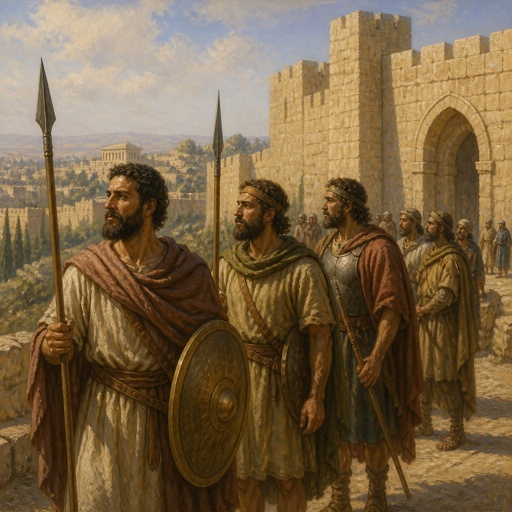
"All the sons of Perez that dwelt at Jerusalem were four hundred threescore and eight valiant men." - Nehemiah 11:6

Nehemiah 4:6

Nehemiah 4:6

Nehemiah 4:6

Nehemiah 6:9

Nehemiah 11:34 - "Hadid, Zeboim, Neballat,"

Nehemiah 10:11 - "Micha, Rehob, Hashabiah,"

Nehemiah 11:33 - "Hazor, Ramah, Gittaim,"

Nehemiah 11:32 - "And at Anathoth, Nob, Ananiah,"

Nehemiah 11:1-19

Nehemiah 11:26 - "And at Jeshua, and at Moladah, and at Beth-phelet,"

Nehemiah 11:29 - "And at En-rimmon, and at Zareah, and at Jarmuth,"

Nehemiah 10:6 - "Daniel, Ginnethon, Baruch,"

Nehemiah 11:35 - "Lod, and Ono, the valley of craftsmen."

Nehemiah 11:28 - "And at Ziklag, and at Mekonah, and in the villages thereof,"

Nehemiah 12:6 - "Shemaiah, and Joiarib, Jedaiah,"

Nehemiah 11:36 - "And of the Levites were divisions in Judah, and in Benjamin."

Nehemiah 11:10 - "Of the priests: Jedaiah the son of Joiarib, Jachin."

Nehemiah 12:11 - "And Joiada begat Jonathan, and Jonathan begat Jaddua."

Nehemiah 11:27 - "And at Hazar-shual, and at Beer-sheba, and in the villages thereof,"

Nehemiah 2:11 - "So I came to Jerusalem, and was there three days."

Nehemiah 11:11 - "Seraiah the son of Hilkiah, the son of Meshullam, the son of Zadok, the son of Meraioth, the son of Ahitub, was the ruler of the house of God."

"And at Anathoth, Nob, Ananiah," - Nehemiah 11:32

"Hadid, Zeboim, Neballat," - Nehemiah 11:34

"Hazor, Ramah, Gittaim," - Nehemiah 11:33