A Cry for Divine Remembrance: Nehemiah's Legacy of Compassion
"Think upon me, my God, for good, according to all that I have done for this people." - Nehemiah 5:19

Nehemiah 5:19 (KJV) states: "Think upon me, my God, for good, according to all that I have done for this people." This heartfelt plea from Nehemiah encapsulates a powerful blend of desperation, hope, and a profound longing for divine acknowledgment. It serves as a poignant reminder of the righteous pursuits we undertake in service of others and the hope that we seek in our labor for the Kingdom of God.
Nehemiah was a man of action. His story is that of leadership, sacrifice, and unwavering commitment to restoring his homeland and his people. As a cupbearer to King Artaxerxes of Persia, Nehemiah was in a position of comfort and privilege, yet he was deeply distressed when he heard news of the desolation of Jerusalem. His heart ached for his fellow Jews who were suffering due to economic exploitation and the ruins that surrounded them. Driven by compassion, Nehemiah embarked on a journey of rebuilding—not just the walls of Jerusalem but also the very spirit of his people.
In chapter 5, we witness Nehemiah’s considerable efforts to address injustices that had arisen among the Jewish exiles. Wealthy landowners were oppressing the poor, leading them into debt and servitude. Instead of ignoring the plight of his fellow countrymen, Nehemiah rose to confront the powerful, demanding accountability and fairness. He was willing to leverage his position to defend the rights of the marginalized, sacrificing his comforts in pursuit of what was right.
After his efforts to restore justice, Nehemiah turns his gaze towards the heavens, offering a prayer that is both a request and a reflection of his heart's desires. "Think upon me, my God, for good..." is not merely an appeal for recognition, but a testament to Nehemiah’s integrity and commitment to his people. It highlights a universal human longing: the desire for our efforts and sacrifices to be seen and valued. Nehemiah’s words invite us to ponder how often we desire vindication and acknowledgment for our own deeds within our communities and relationships. Are our works motivated by a desire for recognition, or are they stemmed from genuine love and service?
Nehemiah’s greatness lies not in seeking glory for himself but in his willingness to put the needs of others first. He understood that true leadership is measured not by the accolades we receive, but by the impact we have on the lives of those around us. His plea serves as an appeal for God's mercy and favor, invoking a promise that God has not forgotten his labor of love.
In reflecting on Nehemiah’s prayer, we are taught valuable lessons about humility and purpose. First, we are reminded that our actions in the service of others should be grounded in our faith and our relationship with God. Nehemiah did not take credit for himself, but rather directed his hope towards God, asking that his good deeds would be acknowledged as part of God's greater plan for His people.
Additionally, Nehemiah’s example encourages us to lead lives characterized by compassion and responsibility. Whether in our personal relationships, workplaces, or community engagements, are we attuned to the struggles of those around us? Are we prepared to step up and advocate for justice and support those in need? These questions compel us to examine the motives behind our actions.
Ultimately, Nehemiah’s heartfelt prayer encapsulates a fundamental truth of the Christian faith: God sees and remembers our efforts. In our moments of struggle, we can echo Nehemiah’s words, knowing that our faithful service to others will not go unnoticed by the Lord. Let us be inspired by Nehemiah's legacy of compassion, encouraging one another to act with integrity and compassion, trusting that God will consider our sacrifices for His glory and the good of His people.
Want to reflect more on Nehemiah 5:19?
Continue your spiritual journey with Bible Chat — an AI-powered tool for exploring God's Word through conversation. Ask questions, discover connections, and deepen your understanding.
Get Our Apps


Nehemiah 5:19 Artwork

Nehemiah 5:19 - "Think upon me, my God, for good, according to all that I have done for this people."

"Think upon me, my God, for good, according to all that I have done for this people." - Nehemiah 5:19

Nehemiah 11:1-19

Nehemiah 10:19 - "Hariph, Anathoth, Nebai,"

Nehemiah 12:19 - "And of Joiarib, Mattenai; of Jedaiah, Uzzi;"

Nehemiah 7:19 - "The children of Bigvai, two thousand threescore and seven."

Nehemiah 10:5 - "Harim, Meremoth, Obadiah,"

Nehemiah 12:5 - "Miamin, Maadiah, Bilgah,"
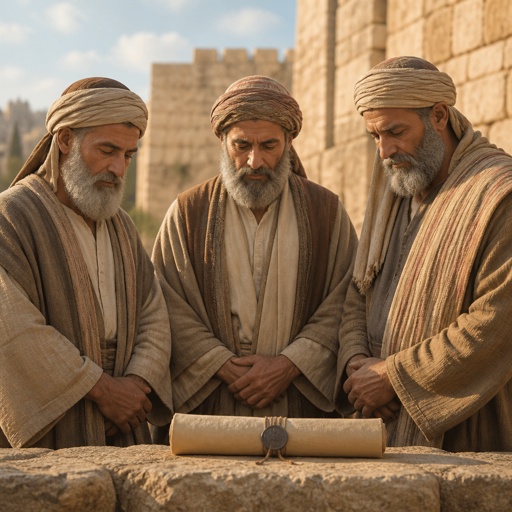
"Hariph, Anathoth, Nebai," - Nehemiah 10:19
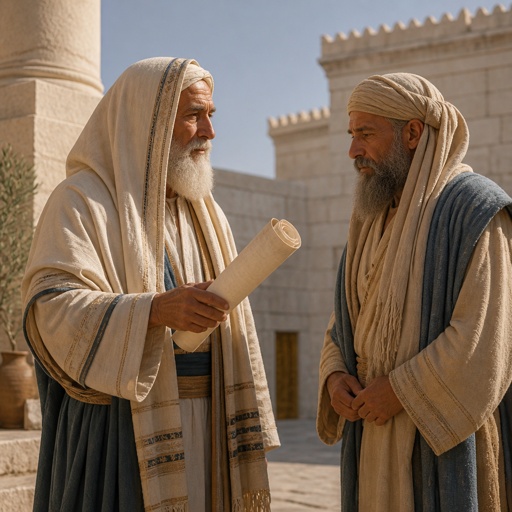
"And of Joiarib, Mattenai; of Jedaiah, Uzzi;" - Nehemiah 12:19

Nehemiah 11:19 - "Moreover the porters, Akkub, Talmon, and their brethren that kept the gates, were an hundred seventy and two."

Nehemiah 5:1 - "And there was a great cry of the people and of their wives against their brethren the Jews."

"Harim, Meremoth, Obadiah," - Nehemiah 10:5

"Miamin, Maadiah, Bilgah," - Nehemiah 12:5

Nehemiah 5:6 - "¶ And I was very angry when I heard their cry and these words."
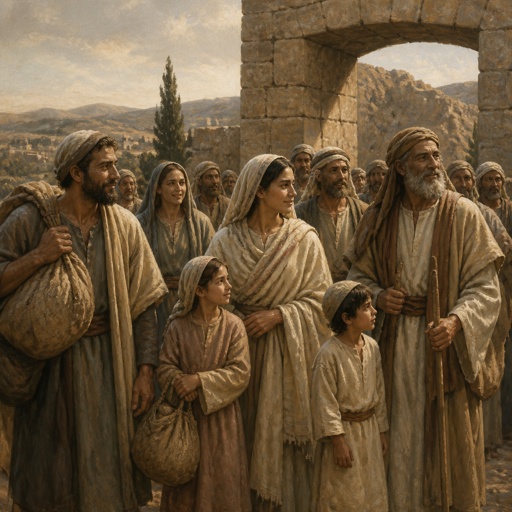
"The children of Bigvai, two thousand threescore and seven." - Nehemiah 7:19

Nehemiah 3:5 - "And next unto them the Tekoites repaired; but their nobles put not their necks to the work of their Lord."

Nehemiah 3:19 - "And next to him repaired Ezer the son of Jeshua, the ruler of Mizpah, another piece over against the going up to the armoury at the turning of the wall."

Nehemiah 6:19 - "Also they reported his good deeds before me, and uttered my words to him. And Tobiah sent letters to put me in fear."

Nehemiah 5:4 - "There were also that said, We have borrowed money for the king's tribute, and that upon our lands and vineyards."

Nehemiah 4:19 - "¶ And I said unto the nobles, and to the rulers, and to the rest of the people, The work is great and large, and we are separated upon the wall, one far from another."

Nehemiah 6:5 - "Then sent Sanballat his servant unto me in like manner the fifth time with an open letter in his hand;"

Nehemiah 4:5 - "And cover not their iniquity, and let not their sin be blotted out from before thee: for they have provoked thee to anger before the builders."

Nehemiah 11:5 - "And Maaseiah the son of Baruch, the son of Col-hozeh, the son of Hazaiah, the son of Adaiah, the son of Joiarib, the son of Zechariah, the son of Shiloni."

"And there was a great cry of the people and of their wives against their brethren the Jews." - Nehemiah 5:1

A biblical scene from Nehemiah 1:5-11 - Nehemiah, a Caucasian male in middle-eastern garb, is depicted respectfully requesting time from the king, a Middle-Eastern male seated at the dinner table while Nehemiah is serving his drink. He is asking for the opportunity to return to Judah and help his people build a wall. The setting is a grand royal court marked by golden hues, opulent textiles, and architecturally rich columns.

Nehemiah 5:3 - "Some also there were that said, We have mortgaged our lands, vineyards, and houses, that we might buy corn, because of the dearth."

Nehemiah 5:9 - "Also I said, It is not good that ye do: ought ye not to walk in the fear of our God because of the reproach of the heathen our enemies?"

Nehemiah 8:5 - "And Ezra opened the book in the sight of all the people; (for he was above all the people;) and when he opened it, all the people stood up:"

A biblical scene from Nehemiah 1:5-11 - Nehemiah, a Caucasian male in middle-eastern garb, is depicted respectfully requesting time from the king, a Middle-Eastern male seated on a throne. He is asking for the opportunity to return to Judah and help his people build a wall. The setting is a grand royal court marked by golden hues, opulent textiles, and architecturally rich columns. Nehemiah is the king's servant.