Restoration and Justice: A Divine Call to Right the Wrongs
"Restore, I pray you, to them, even this day, their lands, their vineyards, their oliveyards, and their houses, also the hundredth part of the money, and of the corn, the wine, and the oil, that ye exact of them." - Nehemiah 5:11
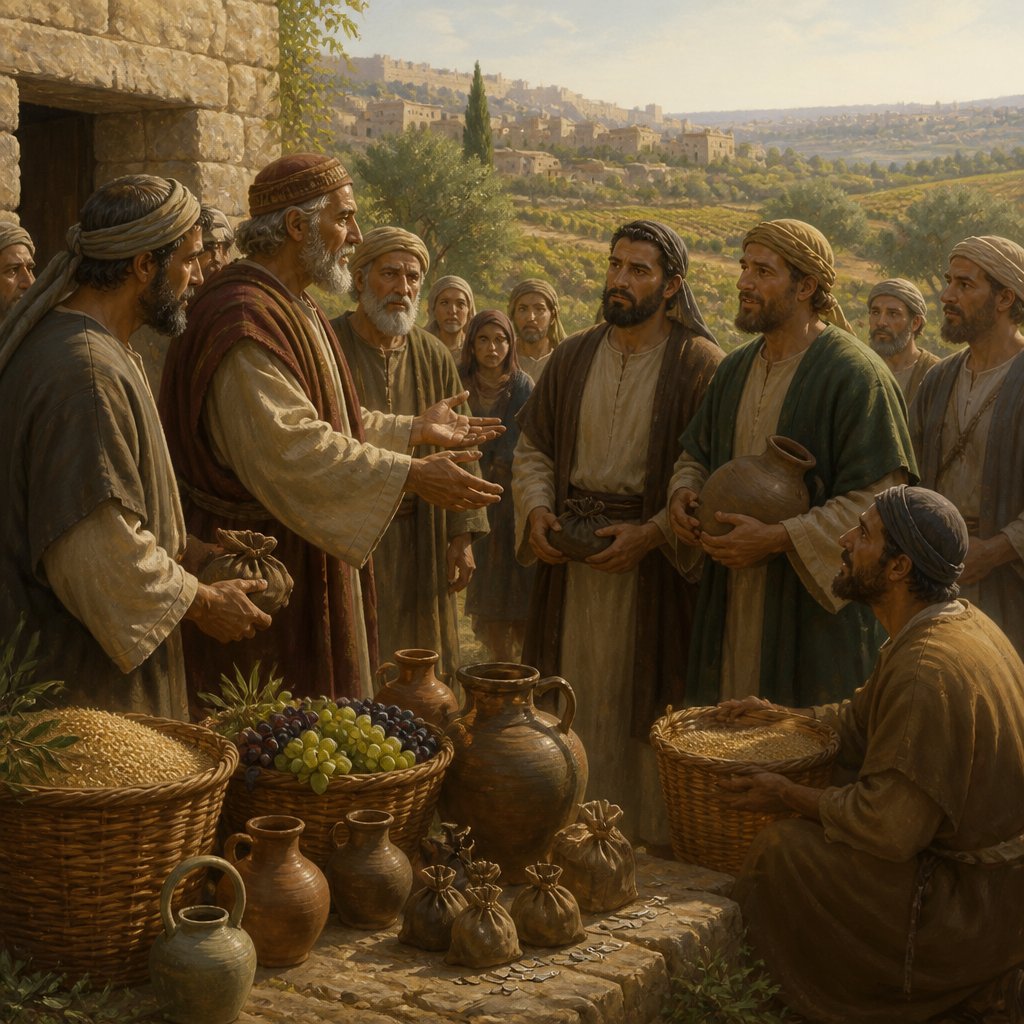
As we delve into Nehemiah 5:11, we encounter a poignant appeal for restoration and justice: "Restore, I pray you, to them, even this day, their lands, their vineyards, their oliveyards, and their houses, also the hundredth part of the money, and of the corn, the wine, and the oil, that ye exact of them." This powerful verse is rooted in a context of deep social injustice and economic oppression among the returned exiles in Jerusalem.
Nehemiah, a man of prayer and action, noticed that while the walls of Jerusalem were being restored, the people were suffering under heavy taxes and the exploitation of the wealthy elite. Jewish families were losing their ancestral lands and livelihoods, and many were unable to feed their children or provide for their families due to these burdens. Nehemiah was not merely concerned with the physical restoration of the city; he recognized the spiritual and social dimensions of community restoration as well.
His plea for restoration comes as an urgent call. The very essence of the Christian faith revolves around the principle of justice: acting rightly in relations with others and advocating for those who cannot advocate for themselves. Nehemiah stood as a mediator, representing the oppressed while reminding the oppressors of their duty to God and their fellow man.
The “lands, vineyards, and oliveyards” symbolize not only material wealth but also the heritage and identity of the people. In ancient Israel, land was integral to one’s existence and a gift that reflected God’s promise. To strip a person of their land was to strip them of their dignity, identity, and future. In this, we see a profound reflection of our own times. How often do we witness systems of injustice that threaten not just physical well-being but the very essence of who we are as individuals created in the image of God?
Nehemiah’s request for restoration is not just about returning what was taken, but it is an invitation to right relations and equitability within the community. He includes" the hundredth part of the money, and of the corn, the wine, and the oil,” indicating that there was a heavy toll placed on the people who were already impoverished. The wealth of a few was built on the backs of many. Such conditions reveal a harsh reality that many communities face today—where the rich grow richer and the poor become increasingly marginalized.
For us, the notion of restoration must take root in our hearts and manifest in our actions. Our spiritual journey as Christians involves actively participating in God’s mission to restore justice. This can mean advocating for policies that support the marginalized, lending our voice to those who are silenced, or practically supporting those in need within our communities.
In embracing the principle of restoration, we should also reflect on areas in our lives where we might need restoration. Are there relationships that need healing? Ways in which we have participated in or turned a blind eye to injustice? God’s call to restoration is not only for others but is also a personal journey towards healing and redemption.
As we meditate on Nehemiah 5:11, let us ask ourselves how we can participate in the divine restoration within our communities and our own hearts. Are we willing to identify injustices and take steps—no matter how small—to restore what has been lost? Just as Nehemiah’s plea was not just for the restoration of land, but the restoration of community and dignity, let us strive to restore love, compassion, and justice in our interactions with those around us. In our call to be imitators of Christ, may we also stand for the voiceless, lend a giving hand, and actively contribute to the restoration of our world.
Want to reflect more on Nehemiah 5:11?
Continue your spiritual journey with Bible Chat — an AI-powered tool for exploring God's Word through conversation. Ask questions, discover connections, and deepen your understanding.
Get Our Apps


Nehemiah 5:11 Artwork

Nehemiah 5:11 - "Restore, I pray you, to them, even this day, their lands, their vineyards, their oliveyards, and their houses, also the hundredth part of the money, and of the corn, the wine, and the oil, that ye exact of them."
"Restore, I pray you, to them, even this day, their lands, their vineyards, their oliveyards, and their houses, also the hundredth part of the money, and of the corn, the wine, and the oil, that ye exact of them." - Nehemiah 5:11

Nehemiah 11:5 - "And Maaseiah the son of Baruch, the son of Col-hozeh, the son of Hazaiah, the son of Adaiah, the son of Joiarib, the son of Zechariah, the son of Shiloni."

Nehemiah 11:11-14

A biblical scene from Nehemiah 1:5-11 - Nehemiah, a Caucasian male in middle-eastern garb, is depicted respectfully requesting time from the king, a Middle-Eastern male seated on a throne. He is asking for the opportunity to return to Judah and help his people build a wall. The setting is a grand royal court marked by golden hues, opulent textiles, and architecturally rich columns. Nehemiah is the king's servant.

A biblical scene from Nehemiah 1:5-11 - Nehemiah, a Caucasian male in middle-eastern garb, is depicted respectfully requesting time from the king, a Middle-Eastern male seated at the dinner table while Nehemiah is serving his drink. He is asking for the opportunity to return to Judah and help his people build a wall. The setting is a grand royal court marked by golden hues, opulent textiles, and architecturally rich columns.

A biblical scene from Nehemiah 1:5-11 - Nehemiah, a middle-age Caucasian male in middle-eastern garb, is serving a drink to the Persian king, a Middle-Eastern male seated at the dinner table. The setting is a grand royal court marked by golden hues, opulent textiles, and architecturally rich columns.

Nehemiah 11:13

A biblical scene from Nehemiah 1:5-11 - Nehemiah, a Caucasian male in middle-eastern garb, is depicted respectfully requesting time from the king, a Middle-Eastern male seated at the dinner table while Nehemiah is serving his drink. He is asking for the opportunity to return to Judah and help his people build a wall. The setting is a grand royal court marked by golden hues, opulent textiles, and architecturally rich columns.

A biblical scene from Nehemiah 1:5-11 - Nehemiah, a middle-age Caucasian male in middle-eastern garb and simple headdress, is standing, serving a drink to the Persian king, a Middle-Eastern male seated at the dinner table. The setting is a grand royal court marked by golden hues, opulent textiles, and architecturally rich columns.

A biblical scene from Nehemiah 1:5-11 - Nehemiah, a Caucasian male in middle-eastern garb, is depicted respectfully requesting time from the king, a Middle-Eastern male seated on a throne. He is asking for the opportunity to return to Judah and help his people build a wall. The setting is a grand royal court marked by golden hues, opulent textiles, and architecturally rich columns. Only the king and Nehemiah, the king's cup bearer, are in the room.

A biblical scene from Nehemiah 1:5-11 - Nehemiah, a middle-age Caucasian male in middle-eastern garb, is standing, serving a drink to the Persian king, a Middle-Eastern male seated at the dinner table. The setting is a grand royal court marked by golden hues, opulent textiles, and architecturally rich columns.

A biblical scene from Nehemiah 1:5-11 - Nehemiah, a Caucasian male in middle-eastern garb, is depicted respectfully requesting time from the king, a Middle-Eastern male seated at the dinner table while Nehemiah is serving his drink. He is asking for the opportunity to return to Judah and help his people build a wall. The setting is a grand royal court marked by golden hues, opulent textiles, and architecturally rich columns.

Nehemiah 11:34 - "Hadid, Zeboim, Neballat,"

Nehemiah 10:11 - "Micha, Rehob, Hashabiah,"

Nehemiah 11:33 - "Hazor, Ramah, Gittaim,"

Nehemiah 11:32 - "And at Anathoth, Nob, Ananiah,"

Nehemiah 11:1-19

Nehemiah 11:26 - "And at Jeshua, and at Moladah, and at Beth-phelet,"

Nehemiah 11:29 - "And at En-rimmon, and at Zareah, and at Jarmuth,"

Nehemiah 10:5 - "Harim, Meremoth, Obadiah,"

Nehemiah 12:5 - "Miamin, Maadiah, Bilgah,"

Nehemiah 11:35 - "Lod, and Ono, the valley of craftsmen."

Nehemiah 11:28 - "And at Ziklag, and at Mekonah, and in the villages thereof,"

A biblical scene from Nehemiah 1:5-11 - Nehemiah, a Caucasian male in middle-eastern garb, is depicted respectfully requesting time from the king, a Middle-Eastern male seated on a throne. He is asking for the opportunity to return to Judah and help his people build a wall. The setting is a grand royal court marked by golden hues, opulent textiles, and architecturally rich columns.

Nehemiah 11:36 - "And of the Levites were divisions in Judah, and in Benjamin."

Nehemiah 11:10 - "Of the priests: Jedaiah the son of Joiarib, Jachin."

Song of Solomon 5:11

Nehemiah 12:11 - "And Joiada begat Jonathan, and Jonathan begat Jaddua."

Nehemiah 11:27 - "And at Hazar-shual, and at Beer-sheba, and in the villages thereof,"