Rebuilding Lives: The Leadership of Rephaiah
"And next unto them repaired Rephaiah the son of Hur, the ruler of the half part of Jerusalem." - Nehemiah 3:9
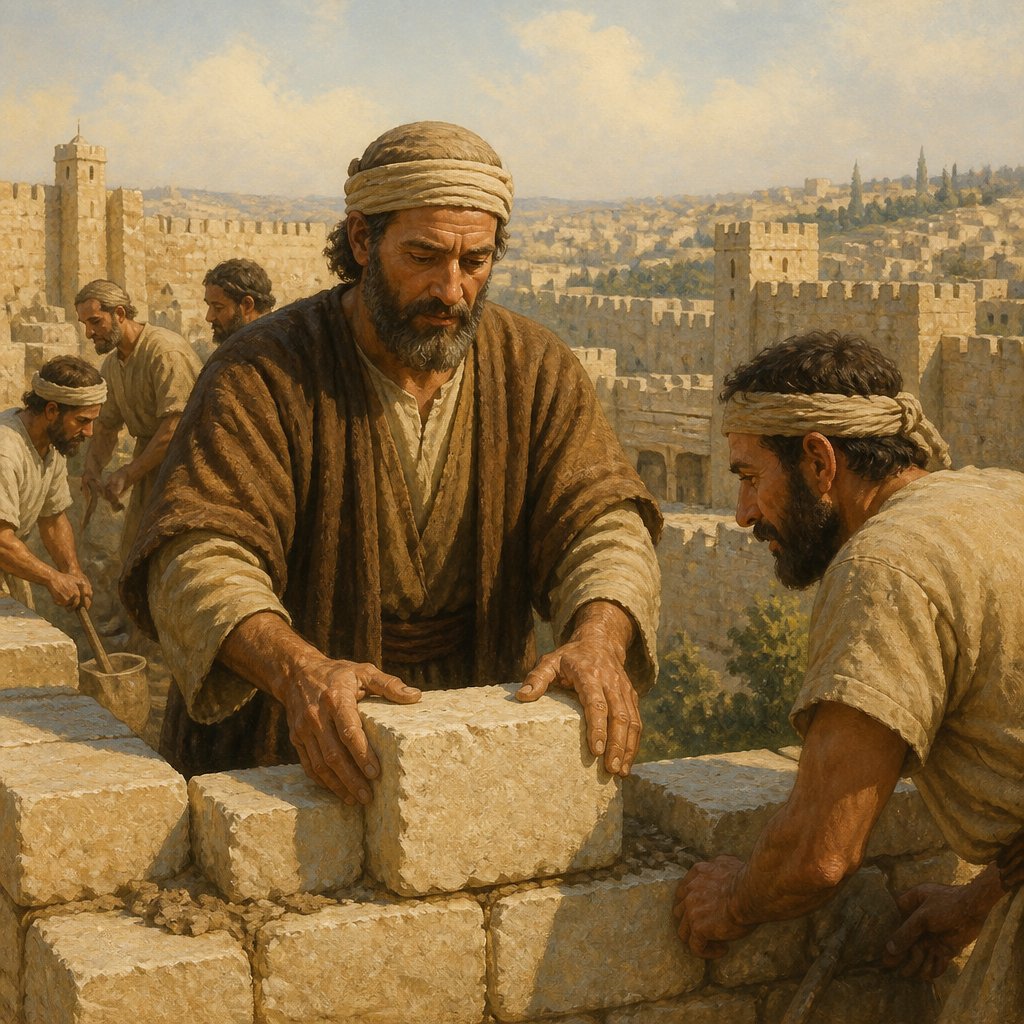
In the book of Nehemiah, we encounter a compelling narrative of restoration and renewal within the walls of Jerusalem. Nehemiah 3:9 (KJV) reads, "And next unto them repaired Rephaiah the son of Hur, the ruler of the half part of Jerusalem." This verse, while brief and seemingly straightforward, encapsulates profound truths about leadership, community, and the integral role each individual plays in the collective restoration of purpose and faith.
As we delve into the context of this passage, it is vital to recognize the significant moment in Israel’s history. After years of exile and destruction, the walls of Jerusalem stood in ruins, a stark reminder of God’s judgment and the consequences of turning away from Him. Nehemiah, burdened by the state of his beloved city, took it upon himself to rally the people to action. The work of rebuilding was not just a physical task; it was a spiritual endeavor, igniting hope in the hearts of a weary people.
In Nehemiah 3, a multitude of individuals from various backgrounds and professions come together, each taking responsibility for a segment of the wall. In this collaborative effort, we see that every person had a role to play, and Rephaiah, mentioned in verse 9, exemplifies the crucial characteristics of a leader.
1. **Leadership**: Rephaiah, identified as "the son of Hur," held a prominent position as the "ruler of the half part of Jerusalem." His role was not only to oversee the physical repair of the wall but also to inspire and mobilize those around him. True leadership entails not only authority but also the ability to guide, serve, and motivate others toward a common goal. Rephaiah did not shy away from the task, instead demonstrating that leaders are those who lead by example and are intimately involved in the work at hand.
2. **Community Engagement**: The phrase "next unto them" signifies Rephaiah's collaborative spirit. He worked alongside others, illustrating that rebuilding is not a solo endeavor but a community effort. Each person who participated in the rebuilding had their own skills and strengths, and Rephaiah’s presence reinforced the importance of unity. In our own journeys, we are called to engage with our communities, to contribute to the welfare of others, and to recognize that our involvement can lead to collective healing and restoration.
3. **Overcoming Challenges**: The task ahead was monumental, filled with potential hazards and discouragement. The walls of Jerusalem were not merely broken stones; they represented lost dreams and faith. Yet, Rephaiah and his companions faced these challenges with courage. As we encounter difficulties in our own lives, we must remember that rebuilding often comes at a cost and requires resilience. Nehemiah’s story teaches us to rise above our fears and stand firm in our commitments to God and each other.
4. **Spiritual Renewal**: Rebuilding the wall was intricately linked to the spiritual renewal of the people. It represented a physical restoration that mirrored the need for spiritual revival. For Rephaiah and the others, restoring the wall meant restoring their identity as God's chosen people. We must consider what walls in our own lives need rebuilding—whether it is our faith, relationships, or sense of purpose—and commit ourselves to that work.
As we reflect on Nehemiah 3:9, let us be inspired by Rephaiah's example of leadership, community engagement, and resilience. May we view the act of building and rebuilding not just as tasks to be completed but as opportunities for growth, collaboration, and spiritual renewal. In doing so, we can participate in God’s divine work, transforming our own lives and the lives of those around us—one stone at a time, wherever we are called to repair the brokenness of our world.
Want to reflect more on Nehemiah 3:9?
Continue your spiritual journey with Bible Chat — an AI-powered tool for exploring God's Word through conversation. Ask questions, discover connections, and deepen your understanding.
Get Our Apps


Nehemiah 3:9 Artwork

Nehemiah 3:9 - "And next unto them repaired Rephaiah the son of Hur, the ruler of the half part of Jerusalem."
"And next unto them repaired Rephaiah the son of Hur, the ruler of the half part of Jerusalem." - Nehemiah 3:9

Nehemiah 9:3 - "And they stood up in their place, and read in the book of the law of the LORD their God one fourth part of the day; and another fourth part they confessed, and worshipped the LORD their God."

Nehemiah 6:9

Nehemiah 9:9 - "And didst see the affliction of our fathers in Egypt, and heardest their cry by the Red sea;"

Nehemiah 12:3 - "Shechaniah, Rehum, Meremoth,"

Nehemiah 10:3 - "Pashur, Amariah, Malchijah,"

Nehemiah 7:9 - "The children of Shephatiah, three hundred seventy and two."

Nehemiah 3:22 - "And after him repaired the priests, the men of the plain."

Nehemiah 9:16 - "But they and our fathers dealt proudly, and hardened their necks, and hearkened not to thy commandments,"

Nehemiah 12:9 - "Also Bakbukiah and Unni, their brethren, were over against them in the watches."

Nehemiah 10:9 - "And the Levites: both Jeshua the son of Azaniah, Binnui of the sons of Henadad, Kadmiel;"

Nehemiah 3:16 - "After him repaired Nehemiah the son of Azbuk, the ruler of the half part of Beth-zur, unto the place over against the sepulchres of David, and to the pool that was made, and unto the house of the mighty."

Nehemiah 11:9 - "And Joel the son of Zichri was their overseer: and Judah the son of Senuah was second over the city."

"Pashur, Amariah, Malchijah," - Nehemiah 10:3

"Shechaniah, Rehum, Meremoth," - Nehemiah 12:3

Nehemiah 9:2 - "And the seed of Israel separated themselves from all strangers, and stood and confessed their sins, and the iniquities of their fathers."

Nehemiah 8:9 - "¶ And Nehemiah, which is the Tirshatha, and Ezra the priest the scribe, and the Levites that taught the people, said unto all the people, This day is holy unto the LORD your God; mourn not, nor weep. For all the people wept, when they heard the words of the law."

Nehemiah 3:32 - "And between the going up of the corner unto the sheep gate repaired the goldsmiths and the merchants."

Nehemiah 3:5 - "And next unto them the Tekoites repaired; but their nobles put not their necks to the work of their Lord."

Nehemiah 9:38 - "And because of all this we make a sure covenant, and write it; and our princes, Levites, and priests, seal unto it."

"And didst see the affliction of our fathers in Egypt, and heardest their cry by the Red sea;" - Nehemiah 9:9

Nehemiah 13:9 - "Then I commanded, and they cleansed the chambers: and thither brought I again the vessels of the house of God, with the meat offering and the frankincense."

Nehemiah 3:3 - "But the fish gate did the sons of Hassenaah build, who also laid the beams thereof, and set up the doors thereof, the locks thereof, and the bars thereof."

"The children of Shephatiah, three hundred seventy and two." - Nehemiah 7:9

Nehemiah 3:18 - "After him repaired their brethren, Bavai the son of Henadad, the ruler of the half part of Keilah."
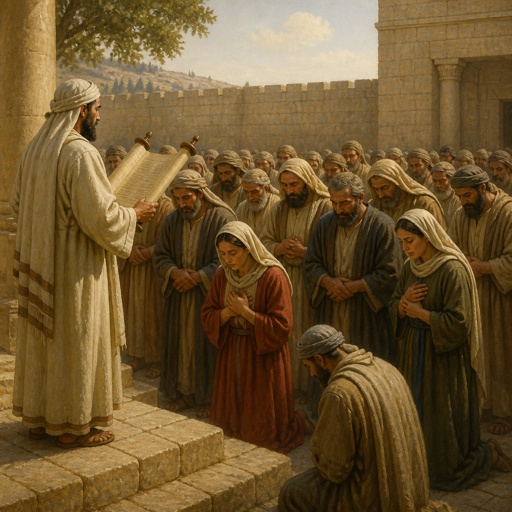
"And they stood up in their place, and read in the book of the law of the LORD their God one fourth part of the day; and another fourth part they confessed, and worshipped the LORD their God." - Nehemiah 9:3

Nehemiah 9:1 - "Now in the twenty and fourth day of this month the children of Israel were assembled with fasting, and with sackclothes, and earth upon them."

Nehemiah 3:11 - "Malchijah the son of Harim, and Hashub the son of Pahath-moab, repaired the other piece, and the tower of the furnaces."

Nehemiah 3:2 - "And next unto him builded the men of Jericho. And next to them builded Zaccur the son of Imri."