Rebuilding Together: The Unity of Purpose in Service
"And next unto them repaired Melatiah the Gibeonite, and Jadon the Meronothite, the men of Gibeon, and of Mizpah, unto the throne of the governor on this side the river." - Nehemiah 3:7
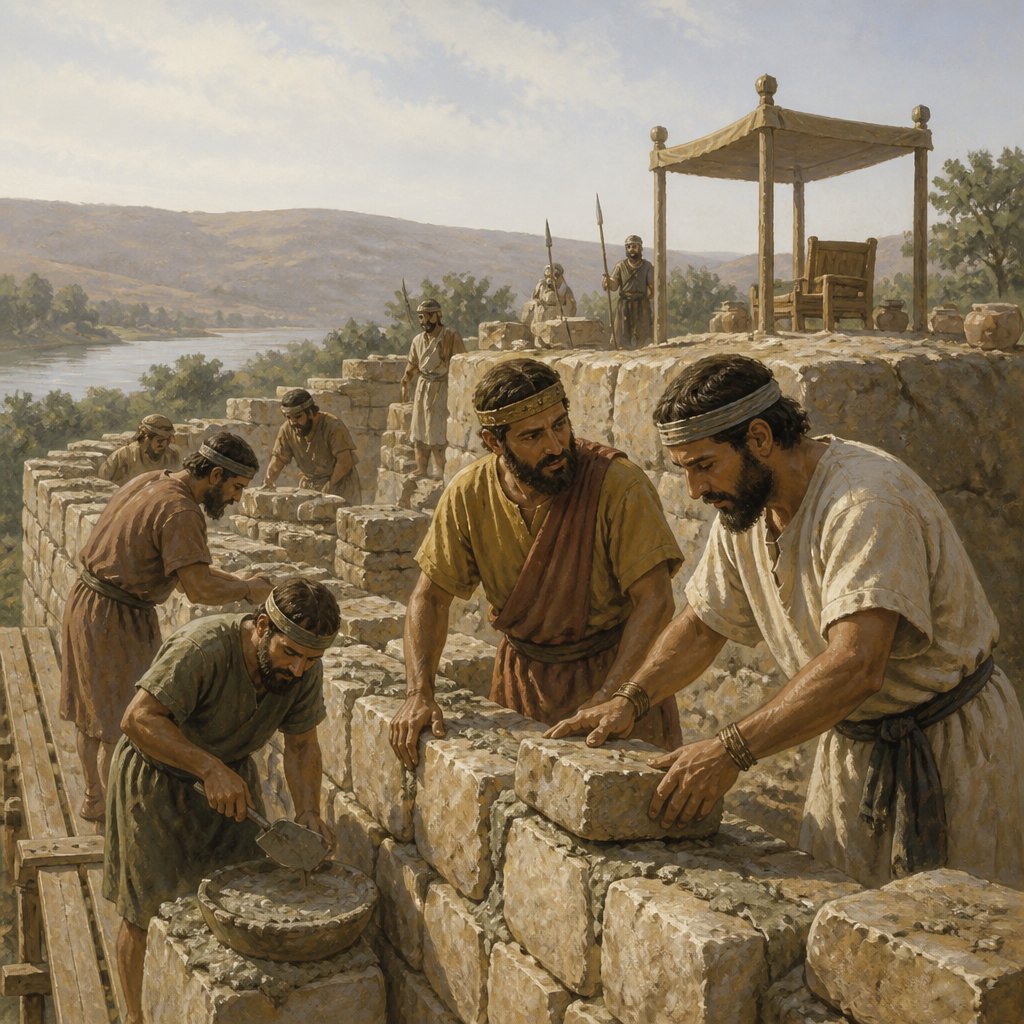
The verse from Nehemiah 3:7 reads, "And next unto them repaired Melatiah the Gibeonite, and Jadon the Meronothite, the men of Gibeon, and of Mizpah, unto the throne of the governor on this side the river." This verse may appear to be a simple account of who built a portion of the wall in Jerusalem, but it carries profound implications about community, unity, and the purpose behind our service.
As we delve into the context of Nehemiah 3, we see that it is a chapter dedicated to the names of those who came together to rebuild the walls of Jerusalem after they had laid in ruins. Nehemiah had returned from exile with a God-given vision to restore the city’s walls—a task that had seemed impossible. Yet, amidst opposition and fear, he rallied the people of God to join him in this great work.
In verse 7, we meet Melatiah and Jadon, whose commitment to the work symbolizes the collective heart of the people. They are identified not only by their names but also by their hometowns—Gibeon and Mizpah. Each worker brought their unique background and skills to the table, reminding us that God unites people from diverse walks of life to achieve a common goal.
**Unity in Diversity**
This theme of unity in diversity is crucial in understanding our capacities to serve. The men of Gibeon and Mizpah reflect how God can use different individuals, with various contributions, to further His plans. Each person working on the wall had specific areas they were responsible for, yet they worked side by side. The church today can learn from this; we are called to embrace one another’s differences, recognizing that each member has a vital role in fulfilling God’s mission in the world.
**Repairing the Breaches**
The word "repaired" is repeated throughout this chapter and speaks to the act of restoring what is broken. For Melatiah and Jadon, repairing the wall represented more than physical labor; it symbolized restoring dignity, security, and identity to the people of Jerusalem after years of oppression and fear. In our lives, we are not just called to repair physical structures but to rebuild relationships, restore our communities, and fortify our faith. This restorative work can sometimes be daunting, yet it is encouraged by the presence of those around us.
**Aim Towards the Throne**
Additionally, the verse ends with a reference to "the throne of the governor on this side the river." This point is significant because it reminds us that their work was directed toward a greater authority—the governing body that had the power to influence their lives profoundly. As they labored side by side, they laid foundations not just for their immediate safety but for future generations. In our service, we, too, must focus on the purposes that align with the kingdom of God. The vision of the work we do should inspire us to reach higher and look beyond our immediate context.
**A Call to Action**
Nehemiah 3:7 stands as a reminder that no service is too small, and every act of repair counts. As we contemplate our journey today, let us look to those around us and consider how we can contribute to the rebuilding efforts in our communities. Who can we partner with? In what areas are we being called to unify our efforts?
Let us pray:
"Dear Lord, thank You for the example set by Melatiah and Jadon. Help us to seek unity and purpose as we serve. Guide us to identify the specific areas You are calling us to repair in our lives and communities. May we be diligent in our commitment to You and to one another as we work together for the restoration of Your kingdom. In Jesus' name, amen."
In moments of despair, remember that together we can rebuild, achieving the extraordinary through unity in purpose and action. May our hearts be encouraged to rise up and repair the breaches in our world, reflecting the light of hope in a broken generation.
Want to reflect more on Nehemiah 3:7?
Continue your spiritual journey with Bible Chat — an AI-powered tool for exploring God's Word through conversation. Ask questions, discover connections, and deepen your understanding.
Get Our Apps


Nehemiah 3:7 Artwork

Nehemiah 3:7 - "And next unto them repaired Melatiah the Gibeonite, and Jadon the Meronothite, the men of Gibeon, and of Mizpah, unto the throne of the governor on this side the river."
"And next unto them repaired Melatiah the Gibeonite, and Jadon the Meronothite, the men of Gibeon, and of Mizpah, unto the throne of the governor on this side the river." - Nehemiah 3:7

Nehemiah 7:7 - "Who came with Zerubbabel, Jeshua, Nehemiah, Azariah, Raamiah, Nahamani, Mordecai, Bilshan, Mispereth, Bigvai, Nehum, Baanah. The number, I say, of the men of the people of Israel was this;"

Nehemiah 10:7 - "Meshullam, Abijah, Mijamin,"

Nehemiah 7:42 - "The children of Harim, a thousand and seventeen."

Nehemiah 7:24 - "The children of Hariph, an hundred and twelve."

Nehemiah 7:56 - "The children of Neziah, the children of Hatipha."

Nehemiah 7:25 - "The children of Gibeon, ninety and five."

Nehemiah 12:3 - "Shechaniah, Rehum, Meremoth,"

Nehemiah 10:3 - "Pashur, Amariah, Malchijah,"

Nehemiah 7:40 - "The children of Immer, a thousand fifty and two."

Nehemiah 7:31 - "The men of Michmas, an hundred and twenty and two."

Nehemiah 7:33 - "The men of the other Nebo, fifty and two."

Nehemiah 7:21 - "The children of Ater of Hezekiah, ninety and eight."

Nehemiah 7:28 - "The men of Beth-azmaveth, forty and two."

Nehemiah 7:14 - "The children of Zaccai, seven hundred and threescore."

Nehemiah 7:27 - "The men of Anathoth, an hundred twenty and eight."

Nehemiah 7:35 - "The children of Harim, three hundred and twenty."

Nehemiah 7:16 - "The children of Bebai, six hundred twenty and eight."

Nehemiah 7:58 - "The children of Jaala, the children of Darkon, the children of Giddel,"

Nehemiah 7:9 - "The children of Shephatiah, three hundred seventy and two."

Nehemiah 7:48 - "The children of Lebana, the children of Hagaba, the children of Shalmai,"

Nehemiah 7:19 - "The children of Bigvai, two thousand threescore and seven."

Nehemiah 7:15 - "The children of Binnui, six hundred forty and eight."

Nehemiah 7:44 - "¶ The singers: the children of Asaph, an hundred forty and eight."

Nehemiah 7:18 - "The children of Adonikam, six hundred threescore and seven."

Nehemiah 7:13 - "The children of Zattu, eight hundred forty and five."

Nehemiah 7:49 - "The children of Hanan, the children of Giddel, the children of Gahar,"

Nehemiah 7:55 - "The children of Barkos, the children of Sisera, the children of Tamah,"

Nehemiah 7:20 - "The children of Adin, six hundred fifty and five."