The Call to Rebuild: A Journey of Faith and Purpose
"And I said unto the king, If it please the king, and if thy servant have found favour in thy sight, that thou wouldest send me unto Judah, unto the city of my fathers' sepulchres, that I may build it." - Nehemiah 2:5
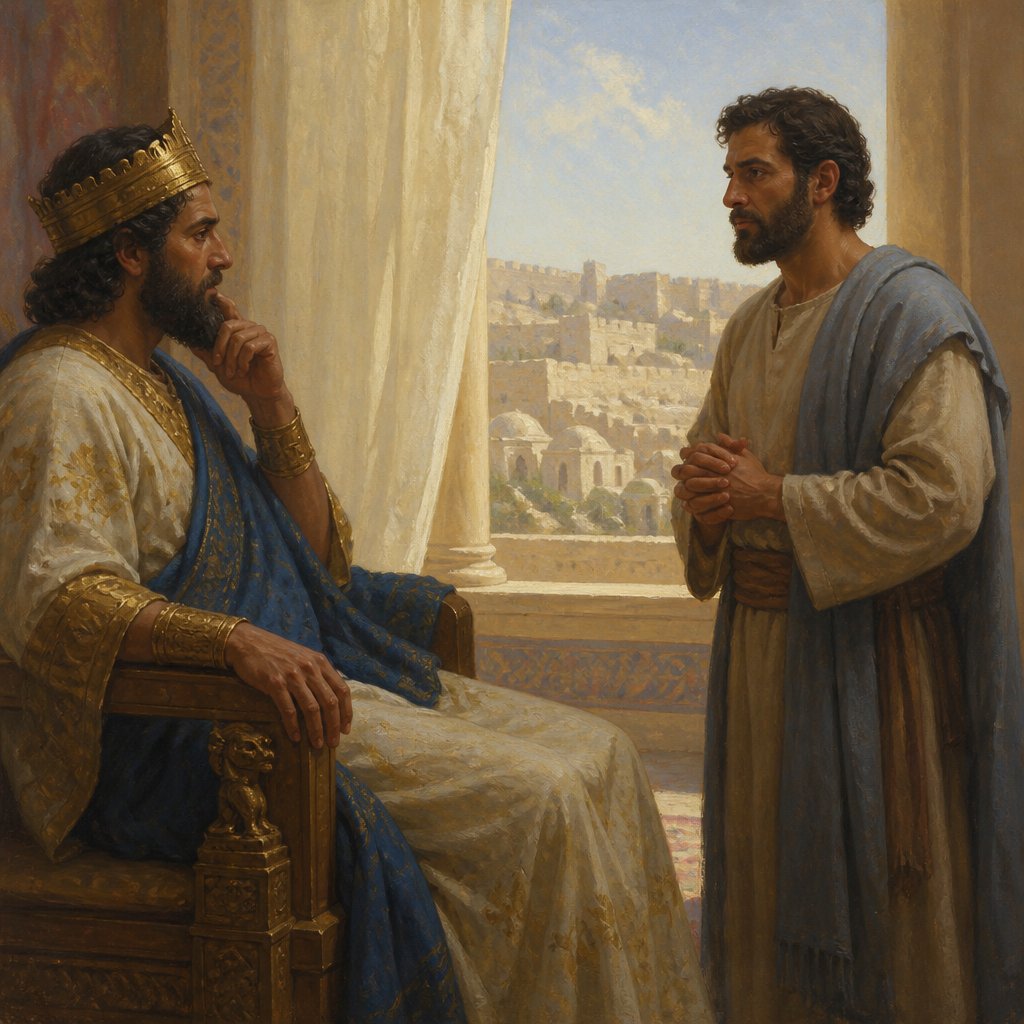
Nehemiah 2:5 presents a pivotal moment in the life of Nehemiah, a cupbearer to the king of Persia and a man of deep faith and commitment to God’s people. The verse states, "And I said unto the king, If it please the king, and if thy servant have found favour in thy sight, that thou wouldest send me unto Judah, unto the city of my fathers' sepulchres, that I may build it." This simple yet profound request sheds light on Nehemiah's heart, purpose, and divine calling.
In the backdrop of this verse, we witness Nehemiah's anguish over the condition of Jerusalem. The city of his forefathers lay in ruins, its walls broken down, its gates burned with fire. Nehemiah, though he was in the palace, was not insulated from the suffering of his people. His position allowed him to hear the news, and his response was one of deep sorrow. He spent days fasting and praying, seeking God’s guidance on how he might help. There’s a vital lesson right here: true leadership is often born from compassion and the capacity to feel deeply for others.
When Nehemiah finally approached King Artaxerxes, his words were steeped in humility and respect. He recognized the authority of the king and laid before him a heartfelt request, demonstrating both reverence and clarity of purpose. Nehemiah’s approach is noteworthy: he did not dive headfirst into his request but first affirmed his servant status and desire for favor. In doing so, he acknowledged that any success in his mission hinged on God’s grace.
This brings us to the concept of favor. Nehemiah understood that in order to accomplish the monumental task of rebuilding, he needed the favor of both God and the king. Favor is not merely a stroke of luck; it is a gift from God that often accompanies those who earnestly seek Him. Nehemiah’s prayer life demonstrated his reliance on divine favor to influence the earthly realm. As we seek the will of God for our lives, we must bear in mind that there is a connection between our prayers and the favor that manifests in our lives.
The request to "send me unto Judah" marks the beginning of a journey—a journey not only to a physical location but a journey of faith and restoration. Nehemiah had a vision, a task that was not just about rebuilding walls but restoring the glory of God amongst His people. His heart for Jerusalem mirrors the heart of God, who desires restoration for His people. The act of building entails more than literal construction; it involves community, healing, and discipleship. Nehemiah was not merely interested in the bricks and mortar but also in the spiritual and communal wellbeing of the Israelites.
As believers, we are often called to the seemingly impossible tasks, requiring us to stretch our faith and step into roles of leadership and service. Like Nehemiah, we might find ourselves in positions that seem distant from the challenges our communities face. However, we need to remember that God is inviting us to engage. He asks us to bring our burdens to Him and to use our unique positions for His glory.
When we align our desires with God’s will and seek His favor, we open ourselves up to remarkable opportunities for service. God may be calling you to rebuild in your own life or the lives of others around you. It could be reconciliation with a friend, involvement in community service, or advocating for social justice. Whatever it may be, when we embrace the call to rebuild, we are participating in God’s redemptive plan.
In closing, let Nehemiah’s conviction to seek God's favor inspire us. May we approach our own significant moments with prayerful hearts, recognizing that God can use us to affect change for His kingdom. When we say, "send me," we are stepping into a legacy of faith, courage, and hope, rallying for the rebuilding of our neighborhoods—with God's strength fueling our every effort.
Want to reflect more on Nehemiah 2:5?
Continue your spiritual journey with Bible Chat — an AI-powered tool for exploring God's Word through conversation. Ask questions, discover connections, and deepen your understanding.
Get Our Apps


Nehemiah 2:5 Artwork

Nehemiah 2:5 - "And I said unto the king, If it please the king, and if thy servant have found favour in thy sight, that thou wouldest send me unto Judah, unto the city of my fathers' sepulchres, that I may build it."
"And I said unto the king, If it please the king, and if thy servant have found favour in thy sight, that thou wouldest send me unto Judah, unto the city of my fathers' sepulchres, that I may build it." - Nehemiah 2:5

Nehemiah 5:2 - "For there were that said, We, our sons, and our daughters, are many: therefore we take up corn for them, that we may eat, and live."

Nehemiah 10:5 - "Harim, Meremoth, Obadiah,"

Nehemiah 12:5 - "Miamin, Maadiah, Bilgah,"

Nehemiah 5:1 - "And there was a great cry of the people and of their wives against their brethren the Jews."

"Harim, Meremoth, Obadiah," - Nehemiah 10:5

"Miamin, Maadiah, Bilgah," - Nehemiah 12:5

Nehemiah 5:6 - "¶ And I was very angry when I heard their cry and these words."

Nehemiah 3:5 - "And next unto them the Tekoites repaired; but their nobles put not their necks to the work of their Lord."

Nehemiah 12:2 - "Amariah, Malluch, Hattush,"

Nehemiah 10:2 - "Seraiah, Azariah, Jeremiah,"

Nehemiah 5:19 - "Think upon me, my God, for good, according to all that I have done for this people."

Nehemiah 5:4 - "There were also that said, We have borrowed money for the king's tribute, and that upon our lands and vineyards."

Nehemiah 6:5 - "Then sent Sanballat his servant unto me in like manner the fifth time with an open letter in his hand;"

Nehemiah 2:11 - "So I came to Jerusalem, and was there three days."

Nehemiah 4:5 - "And cover not their iniquity, and let not their sin be blotted out from before thee: for they have provoked thee to anger before the builders."

Nehemiah 11:5 - "And Maaseiah the son of Baruch, the son of Col-hozeh, the son of Hazaiah, the son of Adaiah, the son of Joiarib, the son of Zechariah, the son of Shiloni."

"And there was a great cry of the people and of their wives against their brethren the Jews." - Nehemiah 5:1
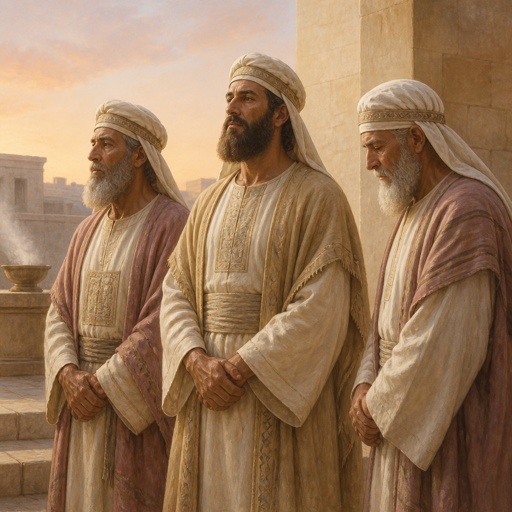
"Amariah, Malluch, Hattush," - Nehemiah 12:2
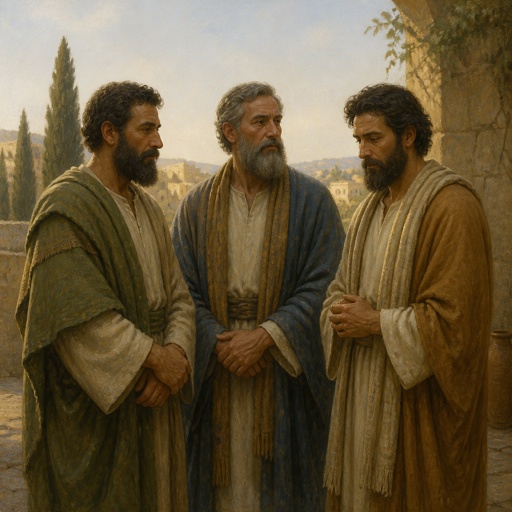
"Seraiah, Azariah, Jeremiah," - Nehemiah 10:2

A biblical scene from Nehemiah 1:5-11 - Nehemiah, a Caucasian male in middle-eastern garb, is depicted respectfully requesting time from the king, a Middle-Eastern male seated at the dinner table while Nehemiah is serving his drink. He is asking for the opportunity to return to Judah and help his people build a wall. The setting is a grand royal court marked by golden hues, opulent textiles, and architecturally rich columns.

Nehemiah 5:3 - "Some also there were that said, We have mortgaged our lands, vineyards, and houses, that we might buy corn, because of the dearth."

Nehemiah 5:9 - "Also I said, It is not good that ye do: ought ye not to walk in the fear of our God because of the reproach of the heathen our enemies?"

Nehemiah 8:5 - "And Ezra opened the book in the sight of all the people; (for he was above all the people;) and when he opened it, all the people stood up:"

A biblical scene from Nehemiah 1:5-11 - Nehemiah, a Caucasian male in middle-eastern garb, is depicted respectfully requesting time from the king, a Middle-Eastern male seated on a throne. He is asking for the opportunity to return to Judah and help his people build a wall. The setting is a grand royal court marked by golden hues, opulent textiles, and architecturally rich columns. Nehemiah is the king's servant.
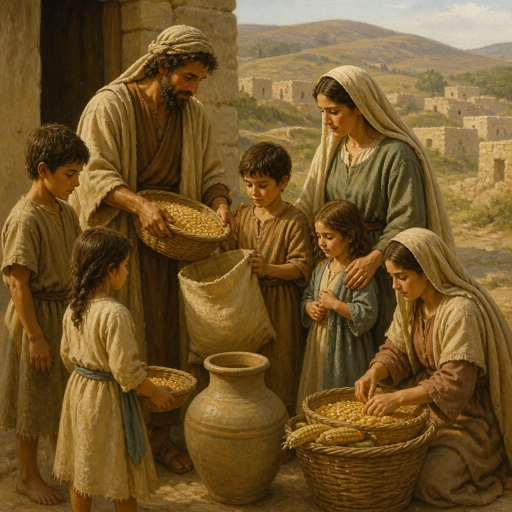
"For there were that said, We, our sons, and our daughters, are many: therefore we take up corn for them, that we may eat, and live." - Nehemiah 5:2

Nehemiah 11:2 - "And the people blessed all the men, that willingly offered themselves to dwell at Jerusalem."

Nehemiah 5:17 - "Moreover there were at my table an hundred and fifty of the Jews and rulers, beside those that came unto us from among the heathen that are about us."

A biblical scene from Nehemiah 1:5-11 - Nehemiah, a Caucasian male in middle-eastern garb, is depicted respectfully requesting time from the king, a Middle-Eastern male seated at the dinner table while Nehemiah is serving his drink. He is asking for the opportunity to return to Judah and help his people build a wall. The setting is a grand royal court marked by golden hues, opulent textiles, and architecturally rich columns.