The Burden of Joy: Serving with a Heavy Heart
"And it came to pass in the month Nisan, in the twentieth year of Artaxerxes the king, that wine was before him: and I took up the wine, and gave it unto the king. Now I had not been beforetime sad in his presence." - Nehemiah 2:1
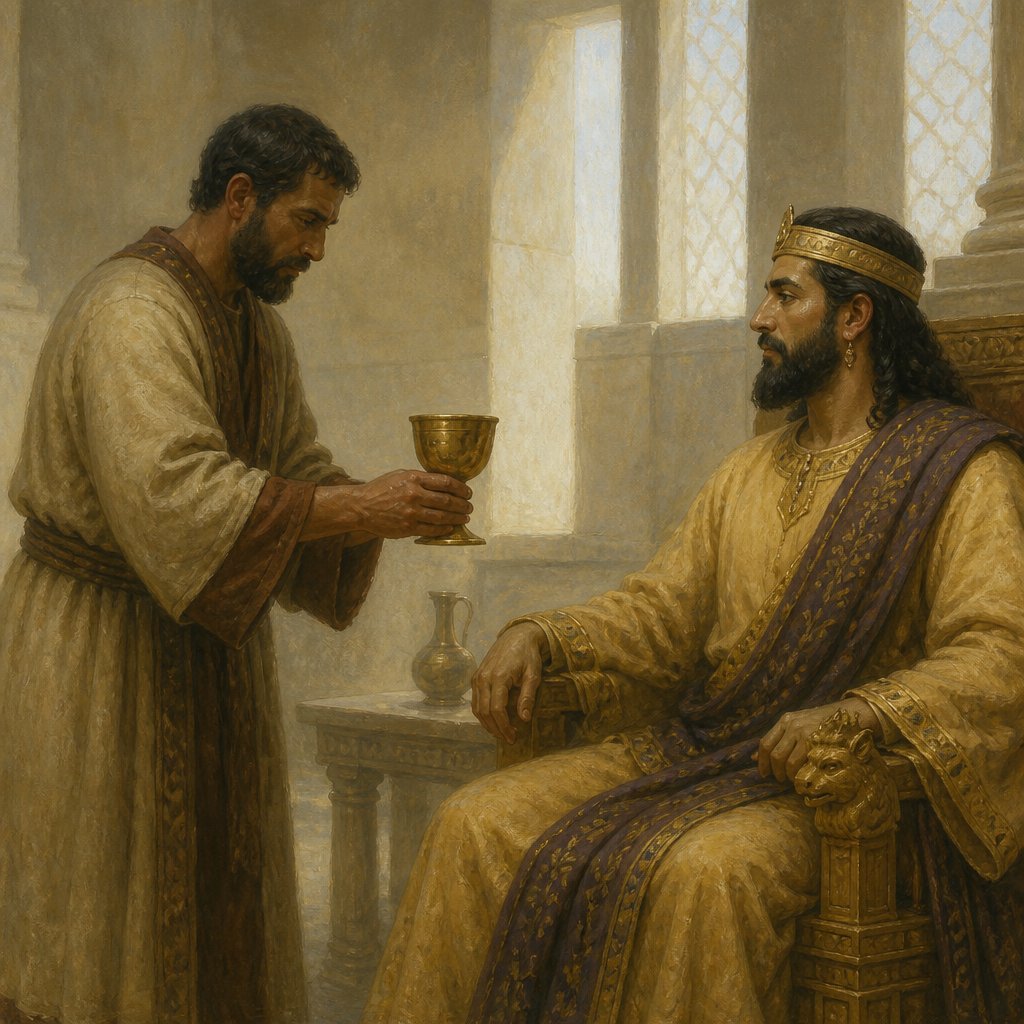
In Nehemiah 2:1, we encounter a profound moment not only in Nehemiah's life but also in the narrative of God's restoration for His people. The verse states: "And it came to pass in the month Nisan, in the twentieth year of Artaxerxes the king, that wine was before him: and I took up the wine, and gave it unto the king. Now I had not been beforetime sad in his presence." This passage, while seemingly straightforward, holds within it layers of emotional and spiritual significance that can deeply inform our own lives.
Nehemiah was the cupbearer to King Artaxerxes, a position that was both prestigious and perilous. The cupbearer not only had the honor of serving the king but also bore the risk of tasting the wine — a role crucial for the king's safety. In this capacity, Nehemiah was expected to present a countenance of joy and faithfulness at all times. All of this came crashing down as he absorbed the news of Jerusalem's desolation, a city sacred to his people and critical to their identity. His sorrow was a heavy burden that weighed upon him while he served in this royal court, a place of privilege and abundance.
The significance of Nehemiah’s sadness becomes more apparent when we realize that he had not expressed grief in the king's presence before. This detail points to the customary expectation within royal courts where servants were expected to maintain a facade of contentment. When his heart ached for his homeland, it was an internal conflict; how could he express such sorrow in a setting that demanded joy? The month of Nisan symbolizes a new beginning in the Hebrew calendar, a time of spring and renewal. Yet, for Nehemiah, it also held the weight of unresolved grief.
In examining Nehemiah’s emotional state, we can glean that God often calls us to confront our deepest burdens even within joyous tasks. It is an invitation to turn our sadness into a divine mission. Nehemiah’s sorrow was not merely a reflection of personal loss but also served as a catalyst for restoration. It is a profound reminder that our hearts, when heavy with the burdens of the world, can become instruments of change.
Consider how Nehemiah’s sadness served as a means for divine intervention. As he stood before King Artaxerxes, his vulnerable state opened the door for a conversation that would ultimately lead to the rebuilding of Jerusalem’s walls. God can transform our weaknesses, our tears, and our sadness into powerful testimonies for His glory. The Holy Spirit can use our pain as a platform to share His hope and love.
Nehemiah’s example is incredibly relevant for our lives today. Many of us walk into workplaces, families, and friendships carrying unexpressed burdens. Like Nehemiah, we may wear the mask of joy and success while our hearts are heavy. Yet God honors our authenticity over pretense; it is through our real emotions that His grace is made manifest. We are given permission to be vulnerable. A joyful facade might momentarily protect us, but it prevents us from experiencing the fullness of joy that only God can provide through honesty and healing.
As we navigate our uncomfortable spaces, let us remember that the Lord is intimately aware of our struggles. He sees our sadness, and He invites us to come to Him with our burdens. Let us seek out spaces where we can express our heartaches and receive His comfort. When we do, just as He did with Nehemiah, God can turn our sorrow into action, our burdens into blessings, and our moments of despair into a divine purpose that impacts others.
Today, let us lay our heavy hearts before God and allow Him to shape our struggles into steps of faith and restoration. In doing so, we may, like Nehemiah, pave the way for healing and hope in the world around us.
Want to reflect more on Nehemiah 2:1?
Continue your spiritual journey with Bible Chat — an AI-powered tool for exploring God's Word through conversation. Ask questions, discover connections, and deepen your understanding.
Get Our Apps


Nehemiah 2:1 Artwork

Nehemiah 2:1 - "And it came to pass in the month Nisan, in the twentieth year of Artaxerxes the king, that wine was before him: and I took up the wine, and gave it unto the king. Now I had not been beforetime sad in his presence."
"And it came to pass in the month Nisan, in the twentieth year of Artaxerxes the king, that wine was before him: and I took up the wine, and gave it unto the king. Now I had not been beforetime sad in his presence." - Nehemiah 2:1

Nehemiah 1:1 - "The words of Nehemiah the son of Hachaliah. And it came to pass in the month Chisleu, in the twentieth year, as I was in Shushan the palace,"

Nehemiah 10:1 - "Now those that sealed were, Nehemiah, the Tirshatha, the son of Hachaliah, and Zidkijah,"

Nehemiah 12:2 - "Amariah, Malluch, Hattush,"

Nehemiah 11:1-19

Nehemiah 1:2 - "That Hanani, one of my brethren, came, he and certain men of Judah; and I asked them concerning the Jews that had escaped, which were left of the captivity, and concerning Jerusalem."

Nehemiah 10:2 - "Seraiah, Azariah, Jeremiah,"

Nehemiah 11:13

Nehemiah 8:10

Nehemiah 11:11-14

Nehemiah 2:11 - "So I came to Jerusalem, and was there three days."

"The words of Nehemiah the son of Hachaliah. And it came to pass in the month Chisleu, in the twentieth year, as I was in Shushan the palace," - Nehemiah 1:1

"Now those that sealed were, Nehemiah, the Tirshatha, the son of Hachaliah, and Zidkijah," - Nehemiah 10:1

Nehemiah book overview with element mentioned
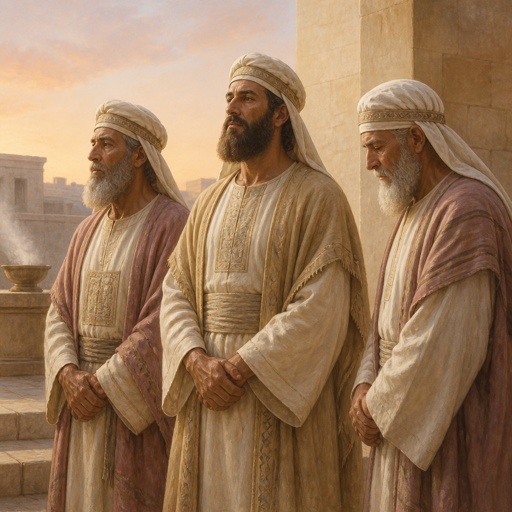
"Amariah, Malluch, Hattush," - Nehemiah 12:2
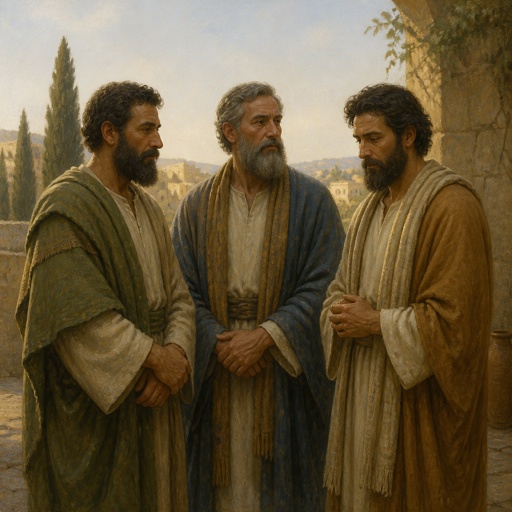
"Seraiah, Azariah, Jeremiah," - Nehemiah 10:2

Nehemiah 11:2 - "And the people blessed all the men, that willingly offered themselves to dwell at Jerusalem."

Nehemiah 5:1 - "And there was a great cry of the people and of their wives against their brethren the Jews."

Ezra 2:2 - "Which came with Zerubbabel: Jeshua, Nehemiah, Seraiah, Reelaiah, Mordecai, Bilshan, Mispar, Bigvai, Rehum, Baanah. The number of the men of the people of Israel:"

Nehemiah 2:14 - "Then I went on to the gate of the fountain, and to the king's pool: but there was no place for the beast that was under me to pass."

Nehemiah 3:2 - "And next unto him builded the men of Jericho. And next to them builded Zaccur the son of Imri."

Nehemiah 9:2 - "And the seed of Israel separated themselves from all strangers, and stood and confessed their sins, and the iniquities of their fathers."

Nehemiah 2:15 - "Then went I up in the night by the brook, and viewed the wall, and turned back, and entered by the gate of the valley, and so returned."

Nehemiah 2:4 - "Then the king said unto me, For what dost thou make request? So I prayed to the God of heaven."

Nehemiah 2:2 - "Wherefore the king said unto me, Why is thy countenance sad, seeing thou art not sick? this is nothing else but sorrow of heart. Then I was very sore afraid,"
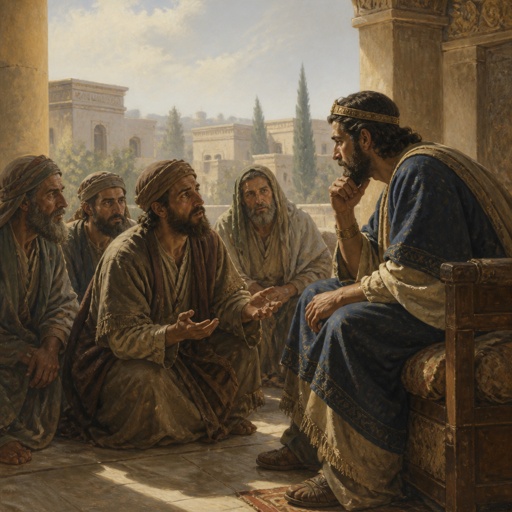
"That Hanani, one of my brethren, came, he and certain men of Judah; and I asked them concerning the Jews that had escaped, which were left of the captivity, and concerning Jerusalem." - Nehemiah 1:2

"So I came to Jerusalem, and was there three days." - Nehemiah 2:11

Nehemiah 12:1 - "Now these are the priests and the Levites that went up with Zerubbabel the son of Shealtiel, and Jeshua: Seraiah, Jeremiah, Ezra,"

A biblical scene from Nehemiah 1:5-11 - Nehemiah, a Caucasian male in middle-eastern garb, is depicted respectfully requesting time from the king, a Middle-Eastern male seated at the dinner table while Nehemiah is serving his drink. He is asking for the opportunity to return to Judah and help his people build a wall. The setting is a grand royal court marked by golden hues, opulent textiles, and architecturally rich columns.