A Chamber for Compromise: Lessons from Nehemiah 13:7
"And I came to Jerusalem, and understood of the evil that Eliashib did for Tobiah, in preparing him a chamber in the courts of the house of God." - Nehemiah 13:7
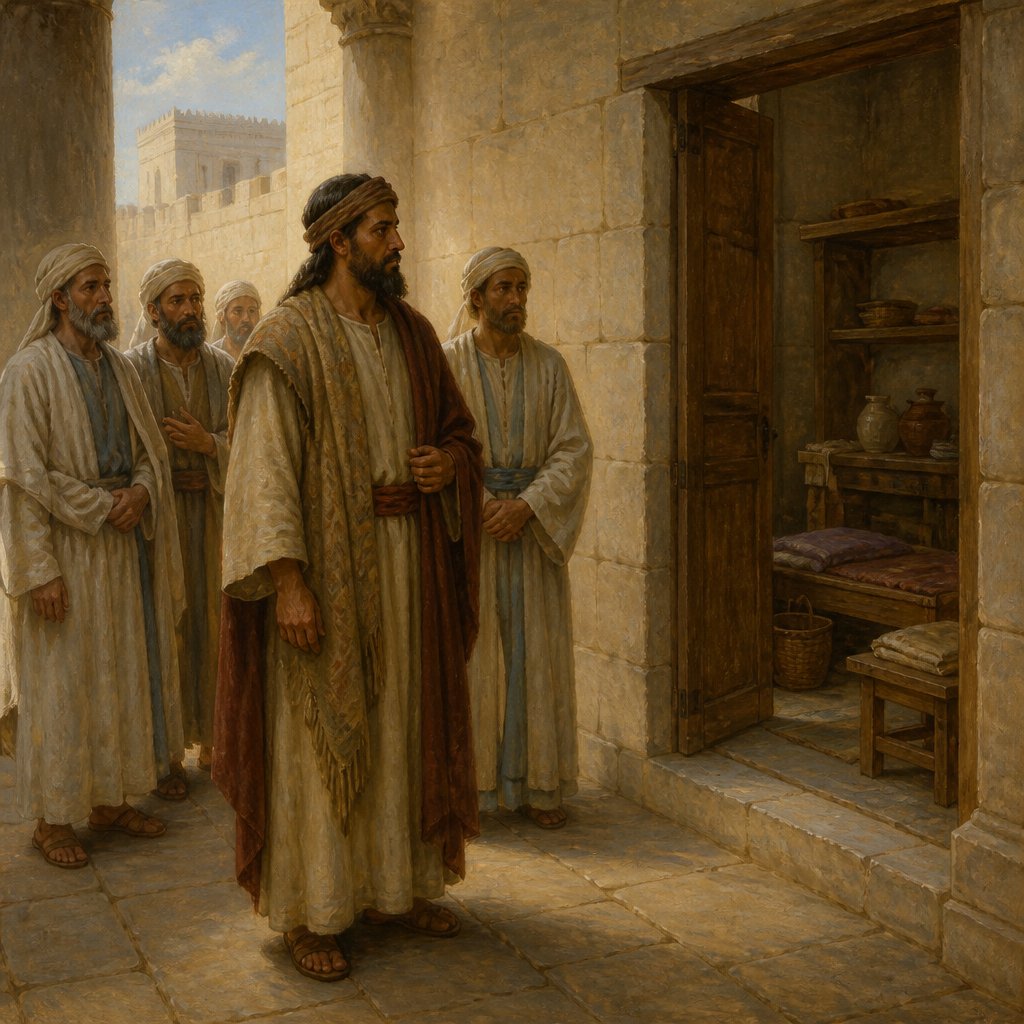
In the book of Nehemiah, we witness a faithful leader's unwavering commitment to the restoration of Jerusalem and the reformation of the people of God. Within the narrative of Nehemiah’s return to Jerusalem is the poignant verse from Nehemiah 13:7, “And I came to Jerusalem, and understood of the evil that Eliashib did for Tobiah, in preparing him a chamber in the courts of the house of God.” This verse encapsulates the themes of compromise, spiritual integrity, and the consequences of aligning oneself with worldly influences while serving God.
The context of this scripture takes us back to a period when the Jews had returned from exile and were rebuilding not just the physical walls of Jerusalem but also their communal and spiritual identity. Nehemiah had worked tirelessly to galvanize the people towards righteousness, to adhere to God's commandments, and to bring about a zealous renewal of faith. Yet, upon his return, he discovers a betrayal within the very leadership that should have been upholding the values of God. Eliashib, the high priest, had fallen into a grievous error by providing a living space for Tobiah—a prominent Ammonite and an adversary of the Jews—in the chambers of the house of God.
Eliashib’s actions reveal a startling lapse in judgment and fidelity to God’s holiness. The chambers of the temple were intended for sacred purposes, dedicated to worship and the service of God, yet here we see them being repurposed for worldly gain and comfort, housing the very individual who opposed God’s people and mission. This act of compromising the sanctity of the temple space for friendship with the enemy serves as a warning to us today about the dangers of mingling with the world and neglecting our commitment to God’s standards.
Compromise is often subtle; it begins with seemingly innocuous decisions that deviate from God’s best. We can find ourselves making accommodations that may seem practical or harmless, yet they can lead us down a path away from God’s truth. Eliashib might have viewed Tobiah as simply a friend or benefactor. However, his failure to recognize Tobiah’s true intentions reflects the often-blind spots in our relationships and affiliations.
As believers, we must ask ourselves if we have allowed any ‘Tobiahs’ into the ‘chambers’ of our lives? Are there influences or relationships that we have nurtured which dilute our faith or compromise our integrity?
Moreover, the passage prompts us to consider the impact of our actions on the community of faith. Eliashib's decision was not just a personal misjudgment, but it posed a threat to the spiritual well-being of the entire community. Our own compromises can lead others astray and weaken the collective resolve to pursue holiness. It is critical that, as a body of believers, we support and encourage one another to uphold righteousness and maintain purity in our worship and lifestyle.
The ramifications of Eliashib’s actions are stark. Nehemiah’s consequent reaction was to take purposeful action to cleanse the chambers and restore the sanctity of the temple. He took decisive measures to remove Tobiah and restore the chambers entirely for their intended purpose. This illustrates the need for bold leadership and active correction within our communities and our lives. When we recognize a misalignment, we must address it with courage and resolve, seeking to restore what has been defiled.
Finally, let us reflect on the depths of God’s grace. Nehemiah’s return signifies hope. The narrative doesn’t end with compromise but with restoration. God is always ready to welcome us back when we recognize our errors and desire to realign ourselves with His will. There is redemption even after compromise. We must continuously seek God’s guidance, prioritizing our relationship with Him above all else.
In closing, Nehemiah 13:7 serves as both a warning and an encouragement. It reminds us to stand vigilant against compromise and to uphold the integrity of our lives as temples of the Holy Spirit. Let us proclaim in our hearts with fervency: "We will not prepare chambers for the enemy; we will restore and protect the sanctity of our lives and worship for the glory of God!"
Want to reflect more on Nehemiah 13:7?
Continue your spiritual journey with Bible Chat — an AI-powered tool for exploring God's Word through conversation. Ask questions, discover connections, and deepen your understanding.
Get Our Apps


Nehemiah 13:7 Artwork

Nehemiah 13:7 - "And I came to Jerusalem, and understood of the evil that Eliashib did for Tobiah, in preparing him a chamber in the courts of the house of God."
"And I came to Jerusalem, and understood of the evil that Eliashib did for Tobiah, in preparing him a chamber in the courts of the house of God." - Nehemiah 13:7

Nehemiah 7:13 - "The children of Zattu, eight hundred forty and five."

"The children of Zattu, eight hundred forty and five." - Nehemiah 7:13

Nehemiah 11:13

Nehemiah 7:7 - "Who came with Zerubbabel, Jeshua, Nehemiah, Azariah, Raamiah, Nahamani, Mordecai, Bilshan, Mispereth, Bigvai, Nehum, Baanah. The number, I say, of the men of the people of Israel was this;"

Nehemiah 10:13 - "Hodijah, Bani, Beninu."

Nehemiah 12:13 - "Of Ezra, Meshullam; of Amariah, Jehohanan;"

Nehemiah 10:7 - "Meshullam, Abijah, Mijamin,"

Nehemiah 7:42 - "The children of Harim, a thousand and seventeen."

Nehemiah 7:24 - "The children of Hariph, an hundred and twelve."

Nehemiah 7:56 - "The children of Neziah, the children of Hatipha."

Nehemiah 7:25 - "The children of Gibeon, ninety and five."

Nehemiah 7:40 - "The children of Immer, a thousand fifty and two."

Nehemiah 7:31 - "The men of Michmas, an hundred and twenty and two."

Nehemiah 7:33 - "The men of the other Nebo, fifty and two."

Nehemiah 7:21 - "The children of Ater of Hezekiah, ninety and eight."

Nehemiah 7:28 - "The men of Beth-azmaveth, forty and two."

Nehemiah 7:14 - "The children of Zaccai, seven hundred and threescore."

Nehemiah 7:27 - "The men of Anathoth, an hundred twenty and eight."

Nehemiah 7:35 - "The children of Harim, three hundred and twenty."

"Hodijah, Bani, Beninu." - Nehemiah 10:13

Nehemiah 7:16 - "The children of Bebai, six hundred twenty and eight."

Nehemiah 7:58 - "The children of Jaala, the children of Darkon, the children of Giddel,"

Nehemiah 7:9 - "The children of Shephatiah, three hundred seventy and two."

Nehemiah 7:48 - "The children of Lebana, the children of Hagaba, the children of Shalmai,"

Nehemiah 7:19 - "The children of Bigvai, two thousand threescore and seven."

Nehemiah 7:15 - "The children of Binnui, six hundred forty and eight."

Nehemiah 7:44 - "¶ The singers: the children of Asaph, an hundred forty and eight."

Nehemiah 7:18 - "The children of Adonikam, six hundred threescore and seven."