The Legacy of Faithful Servants: Lessons from Nehemiah 12:6
"Shemaiah, and Joiarib, Jedaiah," - Nehemiah 12:6
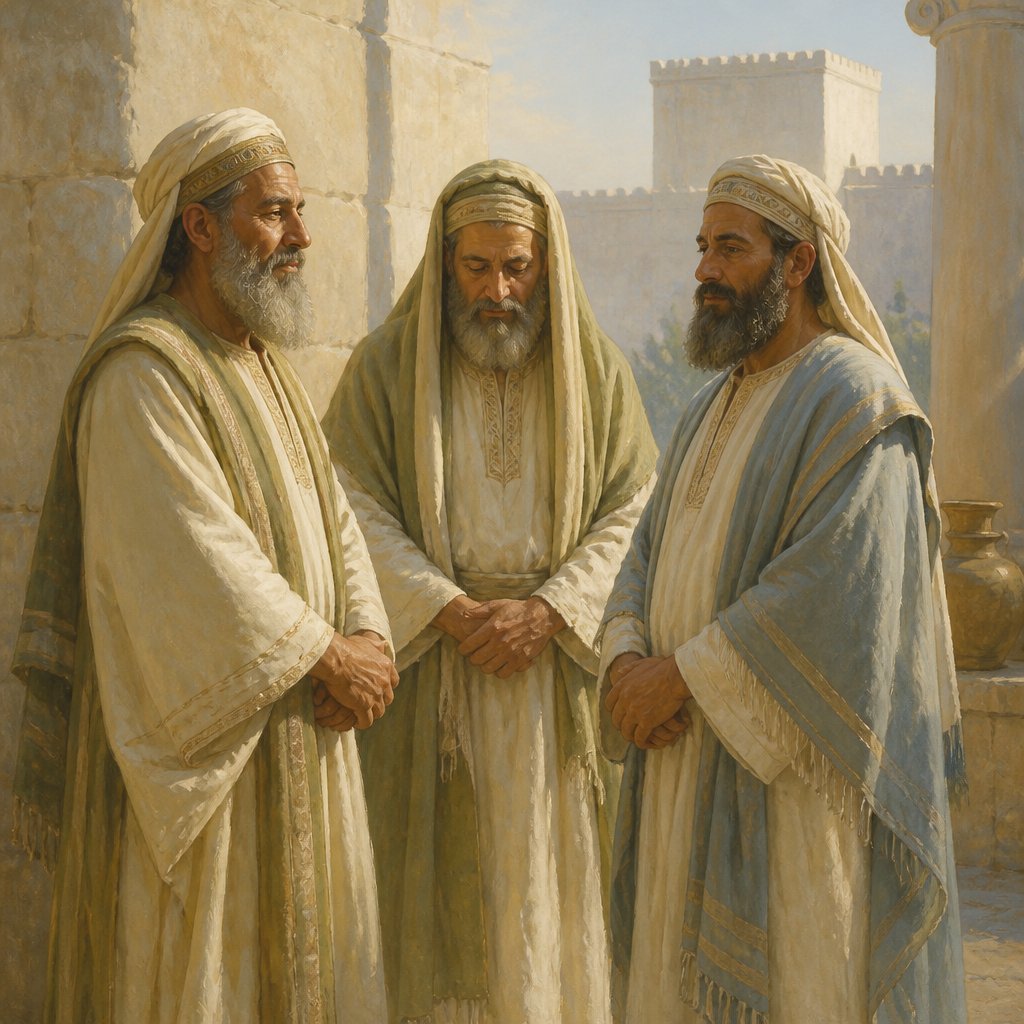
In the historical tapestry of the Bible, the Book of Nehemiah stands out as a testament to perseverance, leadership, and community revival. Within this crucial book lies Nehemiah 12:6, which reads, "Shemaiah, and Joiarib, Jedaiah," in the King James Version (KJV). At first glance, this verse might appear to be a mere listing of names, yet it encapsulates profound lessons on identity, legacy, and the vital role of faithful servants in God's narrative.
### The Importance of Names
Names in Biblical times often carried deep significance; they signified character, destiny, and family lineage. In our modern world, we may overlook these details, but understanding the context can enrich our spiritual insights tremendously. Shemaiah, Joiarib, and Jedaiah were not just names; they represented families who were integral to the divine plan of restoration in Jerusalem post-exile.
Undoubtedly, these men played a pivotal role in maintaining the spiritual and temporal well-being of their community. Their names were linked to the priestly line, underscoring the importance of worship, sacrifice, and the continuity of faith practice within the Jewish people. In a world that often seeks to erase history, these names serve as reminders of the collective identity that binds communities together. Each name evokes questions about the responsibilities and privileges of bearing a legacy of faith.
### The Weight of Legacy
As we reflect on Shemaiah, Joiarib, and Jedaiah, we are called to consider our own spiritual legacy. What will our names evoke in the hearts of those who follow us? Will they recall our faithfulness, our service, our dedication to God and others? Legacy is not merely about what we leave behind, but about how we live today in the light of eternity.
These men were committed to rebuilding walls and restoring a city. But more than that, they were concerned about creating a society rooted in worship and obedience to God’s commandments. Their commitment was not just for their generation, but for generations to come. This idea resonates profoundly in our lives as we think about what we are building for future generations within our families, communities, and churches.
### Active Participation in God’s Work
Another lesson we see in this scripture is that every one of us has a role in God's plan. Shemaiah, Joiarib, and Jedaiah were priests, yet every believer is a priest in the New Covenant, called to participate actively in God’s work here on earth (1 Peter 2:9). How are we responding to that call? Every act of kindness, every prayer, every sacrifice contributes to the rebuilding of our spiritual walls and the restoration of our communities. Though these names may seem obscure, their contributions echo throughout eternity.
### A Call to Faithful Service
In the New Testament, the Apostle Paul exhorts believers to be co-workers with Christ (1 Corinthians 3:9). Each act of service contributes to the building of the Church, the body of Christ. Like Shemaiah, Joiarib, and Jedaiah, we too must embrace the call to faithful service.
Let us not underestimate our contributions, even in small tasks. Remind yourself that God sees each effort, and through our unity and dedication, we can achieve great things for His glory. In a world of instability, the commitment of those who came before us serves as a beacon of hope and inspiration.
### Conclusion: Embracing Our Call
As we meditate on Nehemiah 12:6, let us embrace our identities as modern-day servants, grounded in faith, and intent on building a legacy for the next generation. Acknowledge the faithful service of those who came before us, just as the names we read in Scriptures paved the way for the restoration of God’s people. Let us strive to write our names in the legacy of faith, reflecting honor, commitment, and devotion to God. May our lives echo in the hearts of those after us, inspiring them to follow in the footsteps of faith.
Want to reflect more on Nehemiah 12:6?
Continue your spiritual journey with Bible Chat — an AI-powered tool for exploring God's Word through conversation. Ask questions, discover connections, and deepen your understanding.
Get Our Apps


Nehemiah 12:6 Artwork

Nehemiah 12:6 - "Shemaiah, and Joiarib, Jedaiah,"

"Shemaiah, and Joiarib, Jedaiah," - Nehemiah 12:6

Nehemiah 6:12 - "And, lo, I perceived that God had not sent him; but that he pronounced this prophecy against me: for Tobiah and Sanballat had hired him."

Nehemiah 12:26 - "These were in the days of Joiakim the son of Jeshua, the son of Jozadak, and in the days of Nehemiah the governor, and of Ezra the priest, the scribe."

Nehemiah 4:6

Nehemiah 4:6

Nehemiah 4:6

Nehemiah 6:9

Nehemiah 12:5 - "Miamin, Maadiah, Bilgah,"

Nehemiah 12:33 - "And Azariah, Ezra, and Meshullam,"

Nehemiah 12:4 - "Iddo, Ginnetho, Abijah,"

Nehemiah 12:2 - "Amariah, Malluch, Hattush,"

Nehemiah 12:3 - "Shechaniah, Rehum, Meremoth,"

Nehemiah 10:12 - "Zaccur, Sherebiah, Shebaniah,"

Nehemiah 12:12 - "And in the days of Joiakim were priests, the chief of the fathers: of Seraiah, Meraiah; of Jeremiah, Hananiah;"

Nehemiah 12:13 - "Of Ezra, Meshullam; of Amariah, Jehohanan;"

Nehemiah 12:16 - "Of Iddo, Zechariah; of Ginnethon, Meshullam;"

Nehemiah 12:20 - "Of Sallai, Kallai; of Amok, Eber;"

Nehemiah 10:6 - "Daniel, Ginnethon, Baruch,"

Nehemiah 12:19 - "And of Joiarib, Mattenai; of Jedaiah, Uzzi;"

Nehemiah 12:34 - "Judah, and Benjamin, and Shemaiah, and Jeremiah,"

Nehemiah 12:15 - "Of Harim, Adna; of Meraioth, Helkai;"

Nehemiah 12:18 - "Of Bilgah, Shammua; of Shemaiah, Jehonathan;"

Nehemiah 12:21 - "Of Hilkiah, Hashabiah; of Jedaiah, Nethaneel."

Nehemiah 12:14 - "Of Melicu, Jonathan; of Shebaniah, Joseph;"

Nehemiah 12:17 - "Of Abijah, Zichri; of Miniamin, of Moadiah, Piltai;"

Nehemiah 12:11 - "And Joiada begat Jonathan, and Jonathan begat Jaddua."

Nehemiah 7:12 - "The children of Elam, a thousand two hundred fifty and four."

Nehemiah 12:32 - "And after them went Hoshaiah, and half of the princes of Judah,"

"Miamin, Maadiah, Bilgah," - Nehemiah 12:5