Rejoicing in Faithfulness: A Call to Gather and Share
"¶ And at that time were some appointed over the chambers for the treasures, for the offerings, for the firstfruits, and for the tithes, to gather into them out of the fields of the cities the portions of the law for the priests and Levites: for Judah rejoiced for the priests and for the Levites that waited." - Nehemiah 12:44
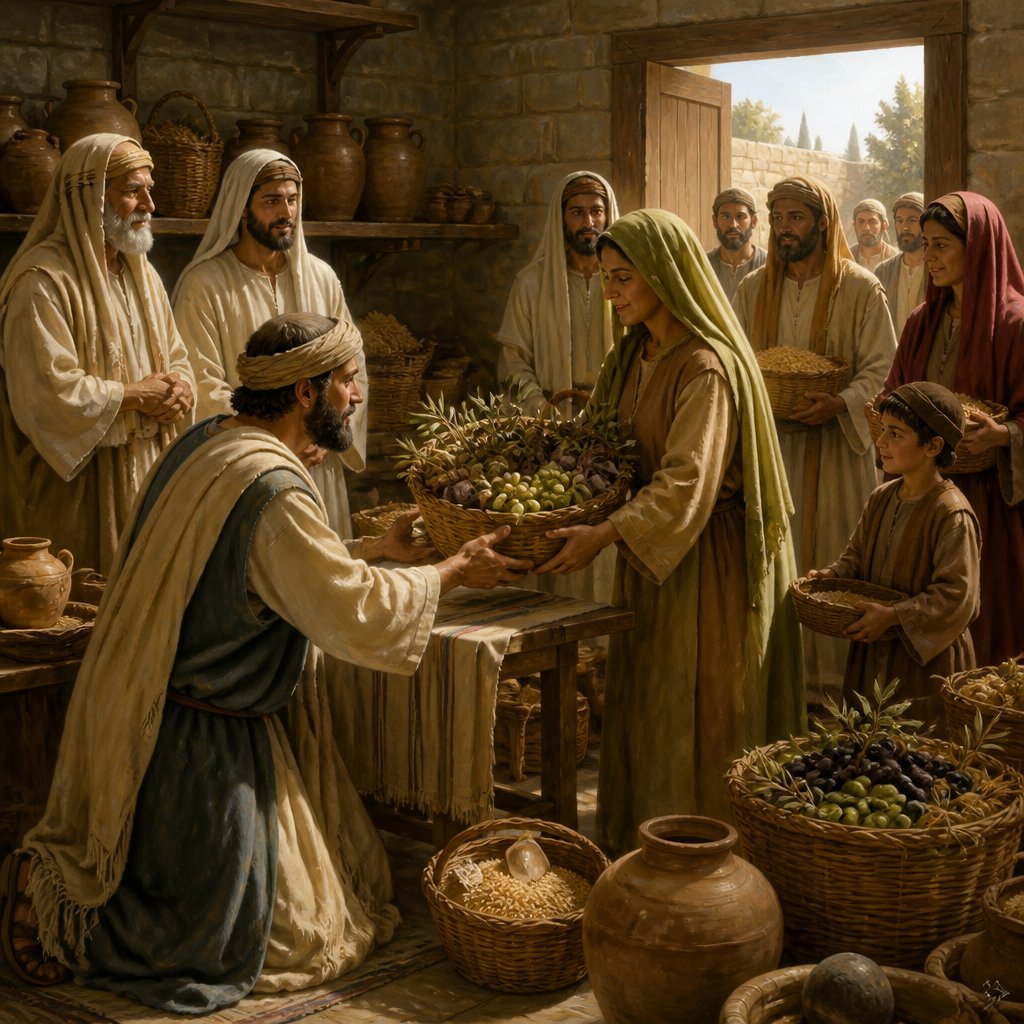
Nehemiah 12:44 (KJV) reads: "And at that time were some appointed over the chambers for the treasures, for the offerings, for the firstfruits, and for the tithes, to gather into them out of the fields of the cities the portions of the law for the priests and Levites: for Judah rejoiced for the priests and for the Levites that waited."
The scene described in Nehemiah 12:44 unfolds during a pivotal moment in the restoration of Jerusalem after exile. Nehemiah, with passion and purpose, leads the people to dedicate themselves to God’s Law. Central to this restoration was the establishment of a system to support the priests and Levites, who were vital for maintaining the spiritual health of the nation. This verse highlights several key components of their worship and governance, offering us an opportunity for reflection on our commitment to generosity, leadership, and community support in our own lives.
Firstly, the appointment of individuals over the chambers for treasures and offerings signifies the importance of organization and accountability in the handling of sacred resources. The treasures mentioned here are not just monetary; they symbolize the heart of worship, the giving of firstfruits and tithes that reflect one’s gratitude and acknowledgment of God’s provision. When we consider our resources, we must ask ourselves: Are we faithfully allocating what God has given us? Are we honoring Him in our finances, time, and talents? 1 Corinthians 4:2 reminds us, "Moreover it is required in stewards, that a man be found faithful."
Moreover, the verse emphasizes the role of gathering. The leaders were entrusted with the responsibility of gathering from the fields and cities the portions of the law meant for the priests and Levites. This gathering signifies cooperation among the community members, each doing their part to fulfill God’s commands. In our churches and communities today, we should exemplify this same spirit of cooperation and mutual support. When we sow into the lives of others, whether through prayer, financial assistance, or acts of service, we cultivate a rich soil from which the entire body of Christ can flourish. Galatians 6:2 reminds us, "Bear ye one another's burdens, and so fulfill the law of Christ."
The response of Judah—a people rejoicing for their priests and Levites—illustrates the joy that comes from recognizing and supporting God’s servants. Worship is not a solitary act; it flourishes within community. As the people of Judah rejoiced, it was not merely about their own benefits but a collective celebration of God’s provision and the recognition of those who dedicated their lives to leading them spiritually. We, too, must rejoice for those who serve in leadership and ministry, acknowledging their sacrifices and efforts to shepherd the flock. How often do we express our gratitude for our pastors, church leaders, and volunteers? A simple act of encouragement, a note of thanks, or a prayer offered on their behalf can uplift and remind them that their labor is valued and seen.
As we reflect on Nehemiah 12:44, let it also serve as an impeccable reminder of our covenant community. Each member has gifts and responsibilities that play a critical role in the body of Christ. We are called to gather—both together and in spirit—to support one another in the work of advancing God's kingdom. The joy of Judah calls us to share in their spirit. Let us be diligent and faithful stewards, ready to contribute our time, talent, and treasure for the glory of God and the benefit of our community.
Finally, let us carry into our hearts the essence of praise and gratitude. Just as the people of Judah rejoiced, we also must cultivate a habit of thanksgiving for those who have labored in the word and doctrine. May our communities reflect this spirit of gathering and rejoicing—working together for the shared cause of Christ's love and truth.
In conclusion, Nehemiah 12:44 not only records an event from ancient Israel but also lays down principles that resonate deeply with our daily walk. Let us commit to appointing trusted individuals in our circles, supporting them in their endeavors, and rejoicing in the shared work of God’s kingdom.
Want to reflect more on Nehemiah 12:44?
Continue your spiritual journey with Bible Chat — an AI-powered tool for exploring God's Word through conversation. Ask questions, discover connections, and deepen your understanding.
Get Our Apps


Nehemiah 12:44 Artwork

Nehemiah 12:44 - "¶ And at that time were some appointed over the chambers for the treasures, for the offerings, for the firstfruits, and for the tithes, to gather into them out of the fields of the cities the portions of the law for the priests and Levites: for Judah rejoiced for the priests and for the Levites that waited."
"¶ And at that time were some appointed over the chambers for the treasures, for the offerings, for the firstfruits, and for the tithes, to gather into them out of the fields of the cities the portions of the law for the priests and Levites: for Judah rejoiced for the priests and for the Levites that waited." - Nehemiah 12:44

Nehemiah 7:44 - "¶ The singers: the children of Asaph, an hundred forty and eight."

"¶ The singers: the children of Asaph, an hundred forty and eight." - Nehemiah 7:44

Mark 12:41 - 44
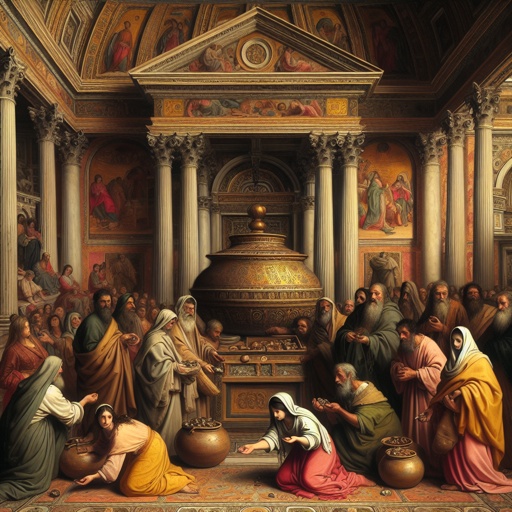
Mark 12:41 - 44

Mark 12:41 - 44

Mark 12:41 - 44

Mark 12:41 - 44

Nehemiah 12:26 - "These were in the days of Joiakim the son of Jeshua, the son of Jozadak, and in the days of Nehemiah the governor, and of Ezra the priest, the scribe."

Nehemiah 12:33 - "And Azariah, Ezra, and Meshullam,"

Nehemiah 12:5 - "Miamin, Maadiah, Bilgah,"

Nehemiah 12:2 - "Amariah, Malluch, Hattush,"

Nehemiah 12:4 - "Iddo, Ginnetho, Abijah,"

Nehemiah 12:3 - "Shechaniah, Rehum, Meremoth,"

Nehemiah 10:12 - "Zaccur, Sherebiah, Shebaniah,"

Nehemiah 12:6 - "Shemaiah, and Joiarib, Jedaiah,"

Nehemiah 12:12 - "And in the days of Joiakim were priests, the chief of the fathers: of Seraiah, Meraiah; of Jeremiah, Hananiah;"

Nehemiah 12:16 - "Of Iddo, Zechariah; of Ginnethon, Meshullam;"

Nehemiah 12:13 - "Of Ezra, Meshullam; of Amariah, Jehohanan;"

Nehemiah 12:20 - "Of Sallai, Kallai; of Amok, Eber;"

Nehemiah 12:19 - "And of Joiarib, Mattenai; of Jedaiah, Uzzi;"

Nehemiah 12:34 - "Judah, and Benjamin, and Shemaiah, and Jeremiah,"

Nehemiah 12:15 - "Of Harim, Adna; of Meraioth, Helkai;"

Nehemiah 12:18 - "Of Bilgah, Shammua; of Shemaiah, Jehonathan;"

Nehemiah 12:14 - "Of Melicu, Jonathan; of Shebaniah, Joseph;"

Nehemiah 12:21 - "Of Hilkiah, Hashabiah; of Jedaiah, Nethaneel."

Nehemiah 12:17 - "Of Abijah, Zichri; of Miniamin, of Moadiah, Piltai;"

Nehemiah 12:11 - "And Joiada begat Jonathan, and Jonathan begat Jaddua."

Psalms 44:12 - "Thou sellest thy people for nought, and dost not increase thy wealth by their price."