Standing at the Gates: A Reflection on Nehemiah 12:39
"And from above the gate of Ephraim, and above the old gate, and above the fish gate, and the tower of Hananeel, and the tower of Meah, even unto the sheep gate: and they stood still in the prison gate." - Nehemiah 12:39
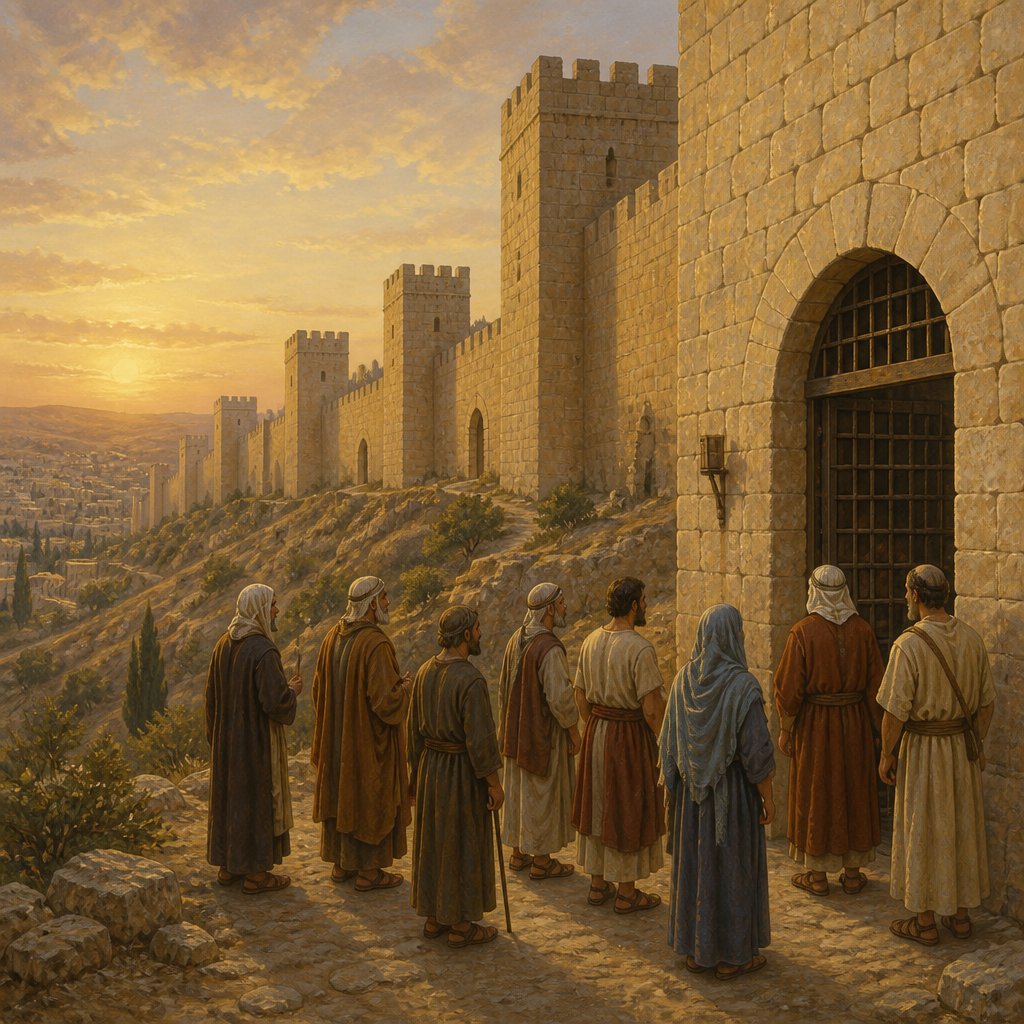
As we delve into the scripture Nehemiah 12:39, we encounter a vivid depiction of the people of Jerusalem gathering at the gates of the city to celebrate a pivotal moment in their history. The verse reads: "And from above the gate of Ephraim, and above the old gate, and above the fish gate, and the tower of Hananeel, and the tower of Meah, even unto the sheep gate: and they stood still in the prison gate" (KJV). This moment encapsulates the essence of the Jewish people's return from exile, the reestablishment of their identity, and the reaffirmation of their covenant with God. Let us take a moment to reflect on the significance of gates, both historical and spiritual, and what it means for us today.
**Gates: Thresholds of Change**
Gates in ancient cities were not merely physical structures; they represented the points of entry and exit, symbolic of transitions and transformations in lives and communities. In times of war, they served as defenses against enemies, but in times of peace, they were portals of joy and worship. When Nehemiah mentions the various gates strewn throughout the city, he is reminding us of the many pathways by which we can connect to God, be it through worship, prayer, community, or service. Each gate mentioned—the gate of Ephraim, the old gate, and the fish gate—holds unique significance, representing diverse aspects of life and faith.
**Gathering in Unity**
The act of standing together in a united front at the gates indicates a collective recognition of their past, present, and future. It serves as a powerful reminder of the strength found in community. The people of Jerusalem are not merely spectators; they are active participants in their restoration. In our own lives, as we recommit to Christ, we too gather at our own gates—whether they be the gates of family, friendship, church, or society. This gathering is crucial, for it acknowledges that we are not on our spiritual journeys in isolation. Community energizes our faith, holds us accountable, and cultivates a spirit of worship and gratitude that seems almost palpable when shared with others.
**The Symbolism of Each Gate**
- **The Gate of Ephraim** traditionally represents abundance and provision, reminding us that every good gift comes from God.
- **The Old Gate** symbolizes the importance of history and tradition, suggesting that we must honor the foundations of the faith that precede us.
- **The Fish Gate** points to the call to be fishers of men, encouraging evangelism and reaching out to those lost in darkness.
- **The Sheep Gate** signifies sacrifice and service, emphasizing Christ as the Good Shepherd who lays down His life for us.
Each gate is a reminder of what we are called to embody within our own lives—provision, tradition, outreach, and sacrifice. As we reflect on each of these gates, we can ask ourselves: What do you desire to bring as a contribution to your community? How can you embody the good news of Christ through your actions?
**Standing Still in the Prison Gate**
The verse culminates with the phrase, "and they stood still in the prison gate." This imagery is striking. The prison gate can symbolize confinement, struggles, and the burdens we carry; yet, standing still can signify a moment of pause, contemplation, and surrender. In our hurried lives, we often rush through challenges, unwilling to face the discomfort that comes with them. Yet, the scripture urges us to stand still and acknowledge where we are. Standing still at the gate permits us to seek God's guidance, to recollect the times He has delivered us, and to renew our strength. It invites us to reflect on what has held us captive and brings us to the forefront of His grace and deliverance.
**A Final Reflection**
As we meditate on Nehemiah 12:39, let this passage invite us into deeper reflection about the gates in our lives. Reflect on the abundance, history, outreach, and sacrifice that each 'gate' might represent for you. Examine the prison gate moments in your own life—where are the areas you need to stand still and invite God into your struggles? May this scripture inspire unity in your church community and encourage you to celebrate the work God is doing in your midst. Just as the people of Jerusalem rejoiced over their restoration, so too may we find joy in the ongoing work of God in our lives and communities.
Want to reflect more on Nehemiah 12:39?
Continue your spiritual journey with Bible Chat — an AI-powered tool for exploring God's Word through conversation. Ask questions, discover connections, and deepen your understanding.
Get Our Apps


Nehemiah 12:39 Artwork

Nehemiah 12:39 - "And from above the gate of Ephraim, and above the old gate, and above the fish gate, and the tower of Hananeel, and the tower of Meah, even unto the sheep gate: and they stood still in the prison gate."
"And from above the gate of Ephraim, and above the old gate, and above the fish gate, and the tower of Hananeel, and the tower of Meah, even unto the sheep gate: and they stood still in the prison gate." - Nehemiah 12:39

Nehemiah 7:39 - "¶ The priests: the children of Jedaiah, of the house of Jeshua, nine hundred seventy and three."

Genesis 39:12

Nehemiah 12:26 - "These were in the days of Joiakim the son of Jeshua, the son of Jozadak, and in the days of Nehemiah the governor, and of Ezra the priest, the scribe."

Genesis 39:6-12
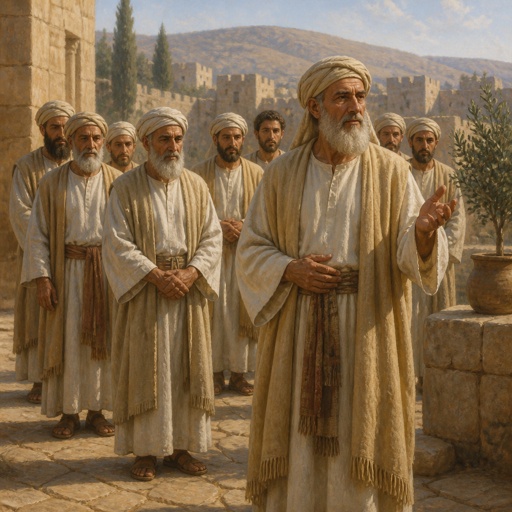
"¶ The priests: the children of Jedaiah, of the house of Jeshua, nine hundred seventy and three." - Nehemiah 7:39

Nehemiah 12:5 - "Miamin, Maadiah, Bilgah,"

Nehemiah 12:33 - "And Azariah, Ezra, and Meshullam,"

Nehemiah 12:4 - "Iddo, Ginnetho, Abijah,"

Nehemiah 12:2 - "Amariah, Malluch, Hattush,"

Nehemiah 12:3 - "Shechaniah, Rehum, Meremoth,"

Nehemiah 10:12 - "Zaccur, Sherebiah, Shebaniah,"

Nehemiah 12:6 - "Shemaiah, and Joiarib, Jedaiah,"

Exodus 39:12 - "And the third row, a ligure, an agate, and an amethyst."

Nehemiah 12:12 - "And in the days of Joiakim were priests, the chief of the fathers: of Seraiah, Meraiah; of Jeremiah, Hananiah;"

Nehemiah 12:13 - "Of Ezra, Meshullam; of Amariah, Jehohanan;"

Nehemiah 12:16 - "Of Iddo, Zechariah; of Ginnethon, Meshullam;"

Nehemiah 12:20 - "Of Sallai, Kallai; of Amok, Eber;"

Nehemiah 12:19 - "And of Joiarib, Mattenai; of Jedaiah, Uzzi;"

Nehemiah 12:34 - "Judah, and Benjamin, and Shemaiah, and Jeremiah,"

Nehemiah 12:15 - "Of Harim, Adna; of Meraioth, Helkai;"

Nehemiah 12:18 - "Of Bilgah, Shammua; of Shemaiah, Jehonathan;"

Nehemiah 12:21 - "Of Hilkiah, Hashabiah; of Jedaiah, Nethaneel."

Nehemiah 12:14 - "Of Melicu, Jonathan; of Shebaniah, Joseph;"

Mark 12:39 - "And the chief seats in the synagogues, and the uppermost rooms at feasts:"

Nehemiah 12:17 - "Of Abijah, Zichri; of Miniamin, of Moadiah, Piltai;"

John 12:39 - "Therefore they could not believe, because that Esaias said again,"

Nehemiah 12:11 - "And Joiada begat Jonathan, and Jonathan begat Jaddua."

Nehemiah 10:39 - "For the children of Israel and the children of Levi shall bring the offering of the corn, of the new wine, and the oil, unto the chambers, where are the vessels of the sanctuary, and the priests that minister, and the porters, and the singers: and we will not forsake the house of our God."