Dedication and Joy: A Testament of Community and Worship
"¶ And at the dedication of the wall of Jerusalem they sought the Levites out of all their places, to bring them to Jerusalem, to keep the dedication with gladness, both with thanksgivings, and with singing, with cymbals, psalteries, and with harps." - Nehemiah 12:27
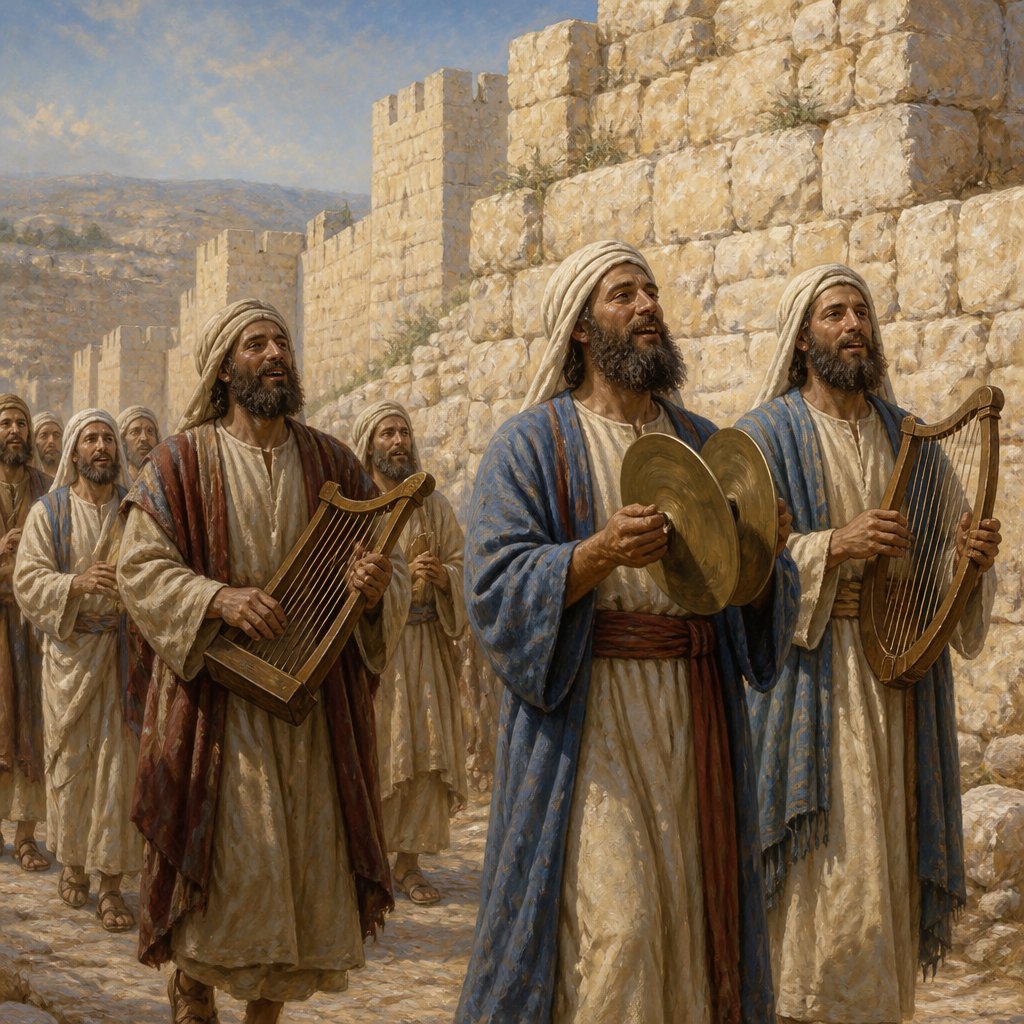
As we turn our attention to Nehemiah 12:27, we encounter a profound scene set amidst the ancient walls of Jerusalem. The verse states, "And at the dedication of the wall of Jerusalem they sought the Levites out of all their places, to bring them to Jerusalem, to keep the dedication with gladness, both with thanksgivings, and with singing, with cymbals, psalteries, and with harps." This moment stands as a testimony to community, worship, and the joy of restoration.
The backdrop of this verse is rich with historical significance. After years of exile and destruction, the Jews returned to Jerusalem to rebuild not only the walls but also their identities as God's chosen people. The wall represented more than just physical safety; it was a symbol of God’s faithfulness and a restoration of covenant between Him and His people. The act of dedicating the wall was an acknowledgment of God's providence, strength, and unwavering love, and it sparked a communal spirit that drew individuals from their homes to celebrate together.
In this verse, we see a conscious effort directed toward worship. The Israelites did not merely rejoice in isolation; they sought out the Levites from all their places—those appointed to lead in spiritual matters—ensuring that the dedication was done decently and in order. In doing so, they cultivated a culture where worship was collective, vibrant, and inclusive. The Levites were integral to this worship experience, acting as both facilitators and participants in the expression of gratitude and reverence to God.
The call to bring together the Levites and the people speaks volumes about the power of community in worship. The act of gathering individuals to honor God underscores a fundamental principle of faith—worship is not merely a personal act but a communal expression. In the modern church, we can sometimes forget this aspect, focusing instead on individual preferences and styles of worship. Yet, the example set in Jerusalem challenges us to see worship as an act of unity. When we join together in praise, we not only lift our voices but also reinforce our collective identity as the body of Christ.
Moreover, the celebratory elements described—"with gladness, both with thanksgivings, and with singing, with cymbals, psalteries, and with harps"—paint a vivid picture of joyful worship. It is a reminder that our worship should reflect our hearts' condition. Joy is a hallmark of a life transformed by gratitude. The act of thanksgiving is not mere ritual; it is a response to an understanding of who God is and what He has done. As the Levites led the people in song, they acknowledged that their celebration was rooted in thankfulness.
In our lives today, we are called to approach our worship—whether through song, service, or community gatherings—with similar gladness and gratitude. When we reflect on God’s faithfulness in our own lives, what stems from us ought to be an outpouring of thanks and joy. Our communities must echo that spirit of worship through uplifting celebrations, both collectively and individually.
Additionally, the variety of instruments mentioned serves an important function. The use of cymbals, psalteries, and harps signifies the diversity of expression in our worship. Each instrument contributes its unique voice to the symphony of celebration, mirroring how each member of the church brings unique gifts to the body of Christ. This diversity not only enriches our worship experience but also paints a broader picture of God’s creativity and intention for His people.
As we reflect on Nehemiah 12:27, let us remember the importance of dedicating ourselves to God with joy, and gratitude, celebrating His goodness in community. May we actively seek opportunities to gather, worship, and express our thanks to the Lord with glad hearts, knowing that we are part of a larger story of redemption and restoration—a story that, like the walls of Jerusalem, stands strong against adversity.
Want to reflect more on Nehemiah 12:27?
Continue your spiritual journey with Bible Chat — an AI-powered tool for exploring God's Word through conversation. Ask questions, discover connections, and deepen your understanding.
Get Our Apps


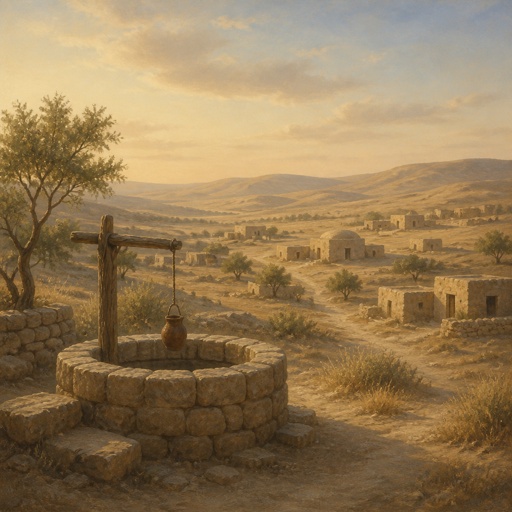
Nehemiah 12:27 Artwork

Nehemiah 12:27 - "¶ And at the dedication of the wall of Jerusalem they sought the Levites out of all their places, to bring them to Jerusalem, to keep the dedication with gladness, both with thanksgivings, and with singing, with cymbals, psalteries, and with harps."
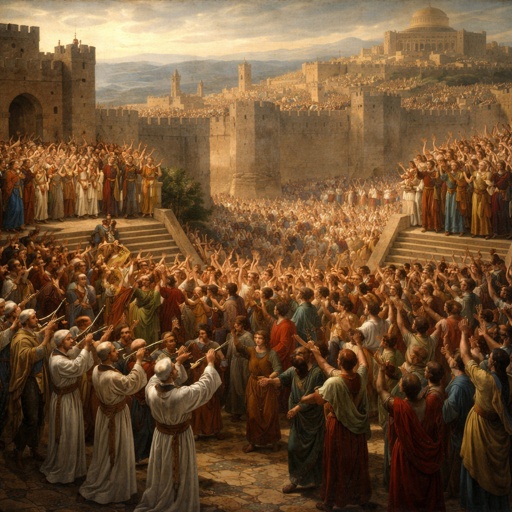
Generate a digital art style depiction of a biblical scene inspired by Nehemiah 12:27-43. The image should feature the ancient people of Israel rejoicing at the dedication of the gates, with two choirs giving thanks to God using biblical instruments with great joy. The scene should show a large crowd of people inside the walls of Israel as they were in the time of Nehemiah.
"¶ And at the dedication of the wall of Jerusalem they sought the Levites out of all their places, to bring them to Jerusalem, to keep the dedication with gladness, both with thanksgivings, and with singing, with cymbals, psalteries, and with harps." - Nehemiah 12:27

Nehemiah 10:27 - "Malluch, Harim, Baanah."

Nehemiah 7:27 - "The men of Anathoth, an hundred twenty and eight."

Nehemiah 11:27 - "And at Hazar-shual, and at Beer-sheba, and in the villages thereof,"

"Malluch, Harim, Baanah." - Nehemiah 10:27

Nehemiah 12:26 - "These were in the days of Joiakim the son of Jeshua, the son of Jozadak, and in the days of Nehemiah the governor, and of Ezra the priest, the scribe."

Nehemiah 12:33 - "And Azariah, Ezra, and Meshullam,"

Nehemiah 12:5 - "Miamin, Maadiah, Bilgah,"

Nehemiah 12:2 - "Amariah, Malluch, Hattush,"

Nehemiah 12:4 - "Iddo, Ginnetho, Abijah,"

Nehemiah 12:3 - "Shechaniah, Rehum, Meremoth,"

Nehemiah 10:12 - "Zaccur, Sherebiah, Shebaniah,"

Nehemiah 12:6 - "Shemaiah, and Joiarib, Jedaiah,"

Nehemiah 12:12 - "And in the days of Joiakim were priests, the chief of the fathers: of Seraiah, Meraiah; of Jeremiah, Hananiah;"

Nehemiah 12:16 - "Of Iddo, Zechariah; of Ginnethon, Meshullam;"

Nehemiah 12:13 - "Of Ezra, Meshullam; of Amariah, Jehohanan;"

Nehemiah 12:20 - "Of Sallai, Kallai; of Amok, Eber;"

Nehemiah 12:19 - "And of Joiarib, Mattenai; of Jedaiah, Uzzi;"

Nehemiah 12:34 - "Judah, and Benjamin, and Shemaiah, and Jeremiah,"

Nehemiah 12:15 - "Of Harim, Adna; of Meraioth, Helkai;"

Nehemiah 12:18 - "Of Bilgah, Shammua; of Shemaiah, Jehonathan;"

Nehemiah 12:14 - "Of Melicu, Jonathan; of Shebaniah, Joseph;"

Nehemiah 12:21 - "Of Hilkiah, Hashabiah; of Jedaiah, Nethaneel."
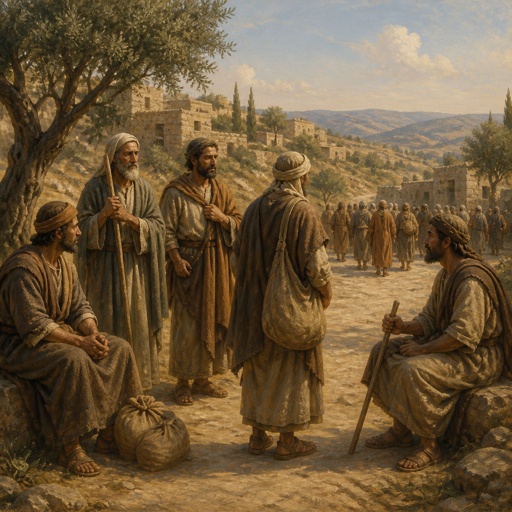
"The men of Anathoth, an hundred twenty and eight." - Nehemiah 7:27

Nehemiah 12:17 - "Of Abijah, Zichri; of Miniamin, of Moadiah, Piltai;"

Nehemiah 12:11 - "And Joiada begat Jonathan, and Jonathan begat Jaddua."
"And at Hazar-shual, and at Beer-sheba, and in the villages thereof," - Nehemiah 11:27

Nehemiah 7:12 - "The children of Elam, a thousand two hundred fifty and four."