Faithful Remembrance: The Legacy of Service
"Of Sallai, Kallai; of Amok, Eber;" - Nehemiah 12:20
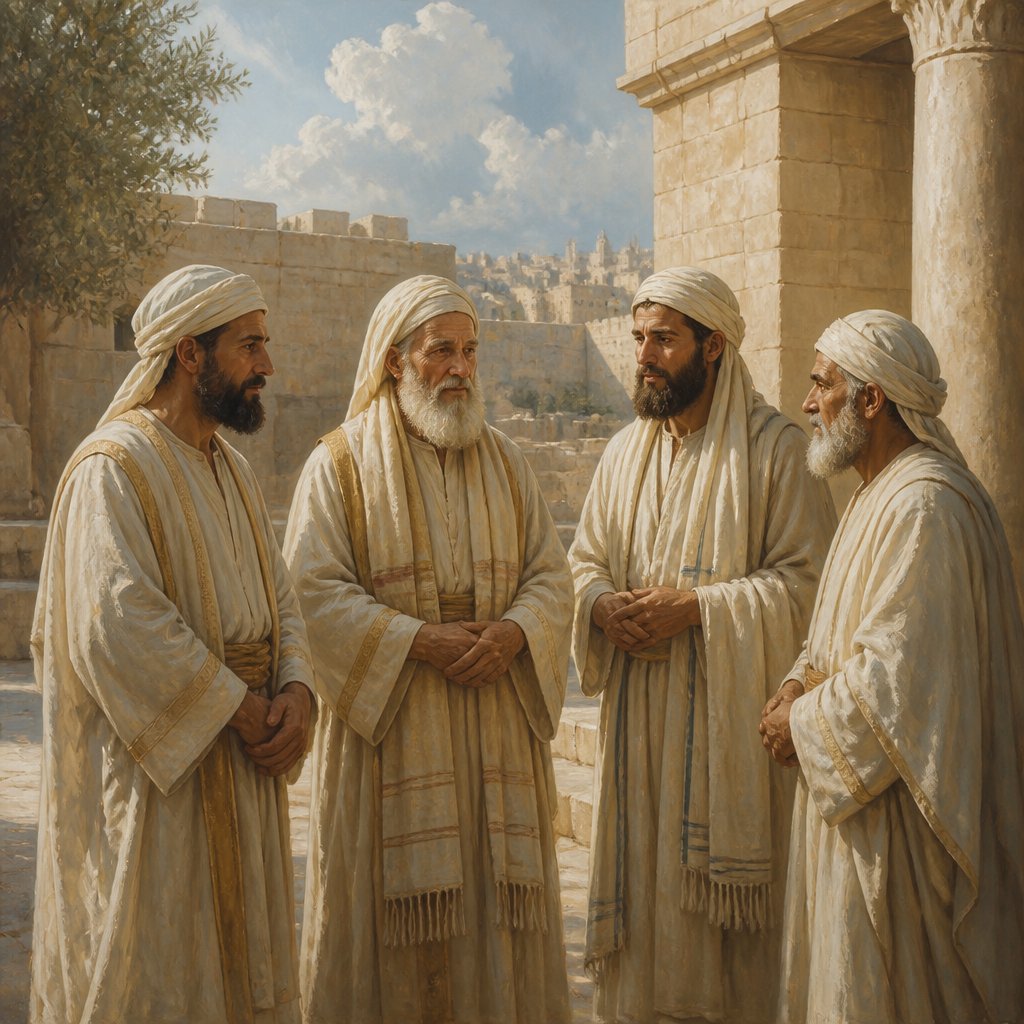
In the book of Nehemiah, we find a crucial moment in the history of Israel. Nehemiah 12:20 states, "Of Sallai, Kallai; of Amok, Eber;". This seemingly simple verse, listing the names of those who returned to Jerusalem after exile, holds significant meaning for our spiritual lives today. It encapsulates themes of dedication, remembrance, and the importance of community in our walk with God.
### The Context of Nehemiah
To fully appreciate the verse, we must consider the context. Nehemiah was tasked with rebuilding the walls of Jerusalem. After much opposition and hardship, he succeeded in this monumental task. These verses present a moment of celebration and dedication, as the people gathered to recognize their collective journey and achievements. Each name in the genealogy underscores that restoration was not a solitary effort, but a communal endeavor.
### The Power of Names
The mention of names such as Sallai, Kallai, Amok, and Eber might seem trivial at first glance. However, within the Biblical tradition, names are saturated with meaning and significance. Each name represents a life, a story, and a contribution to the kingdom of God. The inclusion of these names suggests that every role matters within God’s plan.
In our own lives, it’s easy to underestimate our contributions. We may think we are unimportant or that our actions go unnoticed. Yet this verse reminds us that every act of service, no matter how small, is vital. Whether we are in the spotlight or working quietly behind the scenes, we play a role in God’s grand narrative of redemption and restoration.
### Collective Faithfulness in Community
As we explore the implications of this passage, we must reflect on the community of believers. The Israelites had returned to Jerusalem not only to rebuild walls but to renew their commitment to God as a nation. Each name listed is a testament to individual obedience that contributes to collective faithfulness. This serves as a call to us: how are we serving within our communities?
In an age where individualism is celebrated, the scriptures invite us to consider the importance of our part in a larger whole. Are we, like those in Nehemiah’s time, actively participating in strengthening our local church, our schools, and our neighborhoods? Just as the rebuilding of the walls required every person to play their part, the health of our communities today relies on our willingness to engage and serve.
### The Legacy of Service
As we ponder the legacy of those mentioned in Nehemiah 12:20, we can consider our own legacy. What will our names mean to future generations? Will we be remembered for our service, our commitment to Christ, and our love for others? Or will we be forgotten, living only for ourselves and missing out on the greater purpose?
Let us learn from the faithful example set forth in Nehemiah’s account. Each individual mentioned contributes to a larger narrative of hope and restoration. Their commitment to rebuilding Jerusalem is mirrored in our own daily lives as we work to build up the kingdom of God on earth.
### Conclusion
In conclusion, Nehemiah 12:20, although short, compels us to reflect on the importance of our contributions to God’s work. These faithful individuals remind us that no act of service is insignificant, and each name signifies a person devoted to a cause deeper than themselves. As a body of believers, let us strive to be like Sallai, Kallai, Amok, and Eber—working together in unity for the glory of God. May our lives leave a legacy that inspires future generations to follow Christ with the same fervor. Let us engage, serve, and remember that together, we are part of something much greater.
Want to reflect more on Nehemiah 12:20?
Continue your spiritual journey with Bible Chat — an AI-powered tool for exploring God's Word through conversation. Ask questions, discover connections, and deepen your understanding.
Get Our Apps


Nehemiah 12:20 Artwork

Nehemiah 12:20 - "Of Sallai, Kallai; of Amok, Eber;"
"Of Sallai, Kallai; of Amok, Eber;" - Nehemiah 12:20

Nehemiah 10:20 - "Magpiash, Meshullam, Hezir,"

Nehemiah 12:26 - "These were in the days of Joiakim the son of Jeshua, the son of Jozadak, and in the days of Nehemiah the governor, and of Ezra the priest, the scribe."

Nehemiah 7:20 - "The children of Adin, six hundred fifty and five."

Nehemiah 12:5 - "Miamin, Maadiah, Bilgah,"

Nehemiah 12:33 - "And Azariah, Ezra, and Meshullam,"

Nehemiah 12:4 - "Iddo, Ginnetho, Abijah,"

Nehemiah 12:2 - "Amariah, Malluch, Hattush,"

Nehemiah 12:3 - "Shechaniah, Rehum, Meremoth,"

Nehemiah 10:12 - "Zaccur, Sherebiah, Shebaniah,"

Nehemiah 12:6 - "Shemaiah, and Joiarib, Jedaiah,"

Nehemiah 12:12 - "And in the days of Joiakim were priests, the chief of the fathers: of Seraiah, Meraiah; of Jeremiah, Hananiah;"

Nehemiah 12:13 - "Of Ezra, Meshullam; of Amariah, Jehohanan;"

Nehemiah 12:16 - "Of Iddo, Zechariah; of Ginnethon, Meshullam;"

Nehemiah 12:19 - "And of Joiarib, Mattenai; of Jedaiah, Uzzi;"

Nehemiah 12:34 - "Judah, and Benjamin, and Shemaiah, and Jeremiah,"

Nehemiah 12:15 - "Of Harim, Adna; of Meraioth, Helkai;"

Nehemiah 12:18 - "Of Bilgah, Shammua; of Shemaiah, Jehonathan;"

Nehemiah 12:21 - "Of Hilkiah, Hashabiah; of Jedaiah, Nethaneel."

Nehemiah 12:14 - "Of Melicu, Jonathan; of Shebaniah, Joseph;"

"Magpiash, Meshullam, Hezir," - Nehemiah 10:20

Nehemiah 12:17 - "Of Abijah, Zichri; of Miniamin, of Moadiah, Piltai;"

Nehemiah 12:11 - "And Joiada begat Jonathan, and Jonathan begat Jaddua."

Nehemiah 7:12 - "The children of Elam, a thousand two hundred fifty and four."

Nehemiah 12:32 - "And after them went Hoshaiah, and half of the princes of Judah,"

Nehemiah 13:20 - "So the merchants and sellers of all kind of ware lodged without Jerusalem once or twice."

"Miamin, Maadiah, Bilgah," - Nehemiah 12:5

"Shemaiah, and Joiarib, Jedaiah," - Nehemiah 12:6

"Iddo, Ginnetho, Abijah," - Nehemiah 12:4