Restoration of The Heart: The Significance of Names in Nehemiah 12:19
"And of Joiarib, Mattenai; of Jedaiah, Uzzi;" - Nehemiah 12:19
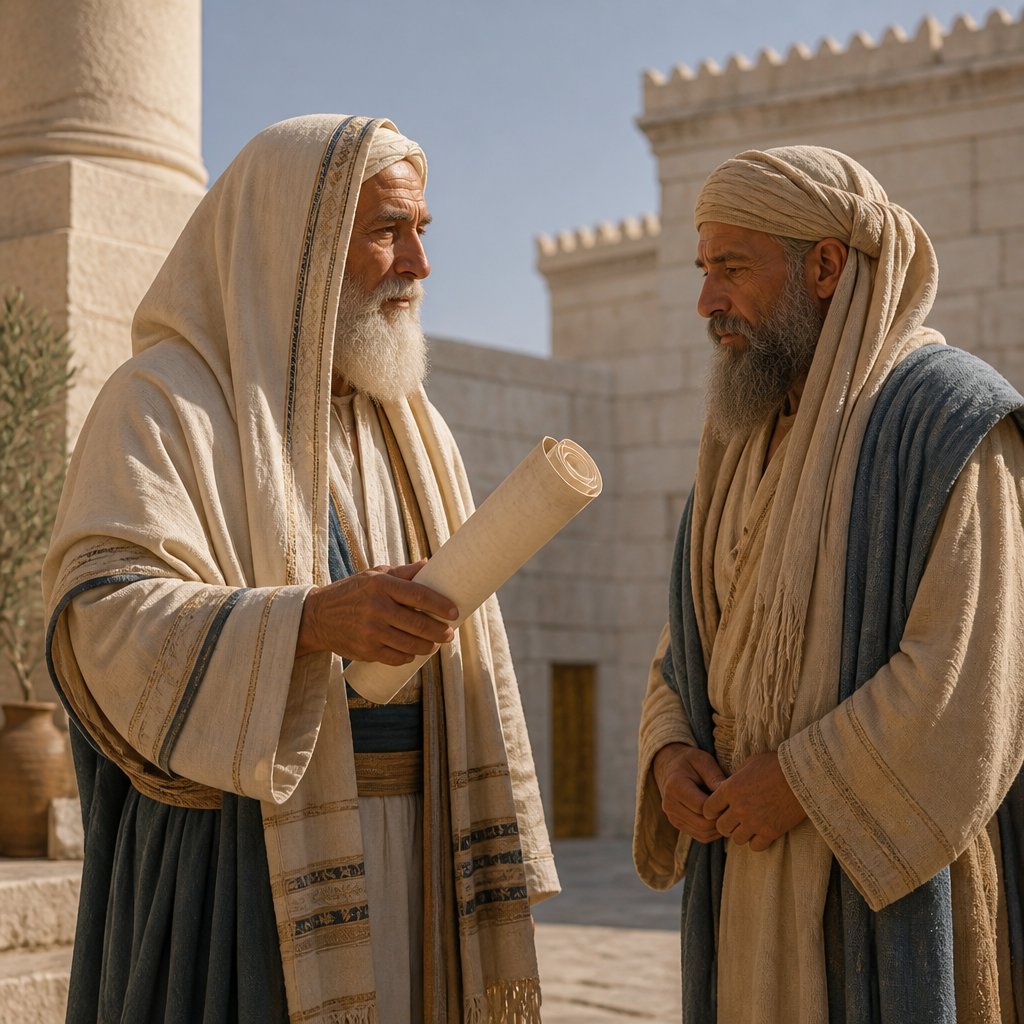
As we delve into the scriptures, we often find rich nuggets of truth hidden within the genealogy and lists that seem, at first glance, to be merely historical records. Nehemiah 12:19 states, "And of Joiarib, Mattenai; of Jedaiah, Uzzi;" (KJV). This verse serves as a bridge connecting the past to the present and illustrates the significance of identity and purpose in the community of God's people.
In the context of Nehemiah's narrative, these names belong to leaders and priests who played crucial roles in the restoration of Jerusalem after the Babylonian exile. The names Mattenai and Uzzi, while seemingly obscure, embody the lives of those who dedicated themselves to rebuilding not only the physical walls of Jerusalem but also the spiritual life of the city. Their mention signifies that every individual, no matter how minor their role might seem, has a significant part in God’s grand design.
The significance of names in the Bible is profound. Each name often reflects the character, purpose, or role of the individual within God’s plan. Mattenai can be interpreted in the context of 'gift of God,' while Uzzi means 'my strength.' Thus, when we consider these names, we are reminded that our identity in Christ is rooted in the gifts and strengths that God has given us. Each believer has been endowed with unique gifts and strengths to contribute to the body of Christ, as articulated in 1 Corinthians 12:4-7, "Now there are diversities of gifts, but the same Spirit. And there are differences of administrations, but the same Lord. And there are diversities of operations, but it is the same God which worketh all in all. But the manifestation of the Spirit is given to every man to profit withal."
In the rebuilding project undertaken by Nehemiah, every priest and leader listed holds significance. The dedication of these leaders signifies more than a physical restoration; it symbolizes a spiritual renewal amongst the people of Israel. They had lost their identity through decades of exile and disobedience. Upon their return, the restoration involved acknowledging who they were as a people set apart by God. This brings to mind our own journeys. Like the Israelites, many of us experience seasons of spiritual exile, isolation from the Lord due to various circumstances—be it sin, doubt, or hardships. The act of remembering our names, our identities as children of God, can lead us back to His loving embrace.
Reflecting on the warriors of faith mentioned in Nehemiah, we can ponder how often we feel insignificant in our walks with God. There are moments when we may feel that our contributions in service—whether in our families, churches, or communities—are minimal and go unnoticed. Yet, what we learn from Nehemiah 12:19 is that every act of faithfulness contributes to a larger story of restoration and redemption.
Our participation in God’s plans is no accident, just as the leaders and priests listed are no arbitrary names. God intricately weaves us into His story. The act of service, however small it may seem, is a vital thread in the fabric of God’s kingdom. As you reflect on your life, consider how God has uniquely equipped you with gifts that move His plans forward. Are you exercising the strength given to you like Uzzi? Are you recognizing the divine gifts bestowed upon you as Mattenai?
In conclusion, allow Nehemiah 12:19 to inspire you to embrace your identity and purpose in Christ. Each name represents a life transformed and committed to a common purpose—the restoration of God’s people. As you step forward in faith, trust that your contributions, when done for His glory, will not be in vain. Embrace your calling; you are part of something far greater than yourself.
Want to reflect more on Nehemiah 12:19?
Continue your spiritual journey with Bible Chat — an AI-powered tool for exploring God's Word through conversation. Ask questions, discover connections, and deepen your understanding.
Get Our Apps


Nehemiah 12:19 Artwork

Nehemiah 12:19 - "And of Joiarib, Mattenai; of Jedaiah, Uzzi;"
"And of Joiarib, Mattenai; of Jedaiah, Uzzi;" - Nehemiah 12:19

Nehemiah 11:1-19

Nehemiah 10:19 - "Hariph, Anathoth, Nebai,"

Nehemiah 12:26 - "These were in the days of Joiakim the son of Jeshua, the son of Jozadak, and in the days of Nehemiah the governor, and of Ezra the priest, the scribe."

Nehemiah 12:33 - "And Azariah, Ezra, and Meshullam,"

Nehemiah 12:5 - "Miamin, Maadiah, Bilgah,"

Nehemiah 12:2 - "Amariah, Malluch, Hattush,"

Nehemiah 12:4 - "Iddo, Ginnetho, Abijah,"

Nehemiah 12:3 - "Shechaniah, Rehum, Meremoth,"

Nehemiah 7:19 - "The children of Bigvai, two thousand threescore and seven."

Nehemiah 10:12 - "Zaccur, Sherebiah, Shebaniah,"

Nehemiah 12:6 - "Shemaiah, and Joiarib, Jedaiah,"

Nehemiah 12:12 - "And in the days of Joiakim were priests, the chief of the fathers: of Seraiah, Meraiah; of Jeremiah, Hananiah;"

Nehemiah 12:16 - "Of Iddo, Zechariah; of Ginnethon, Meshullam;"

Nehemiah 12:13 - "Of Ezra, Meshullam; of Amariah, Jehohanan;"

Nehemiah 12:20 - "Of Sallai, Kallai; of Amok, Eber;"

Nehemiah 12:34 - "Judah, and Benjamin, and Shemaiah, and Jeremiah,"

Nehemiah 12:15 - "Of Harim, Adna; of Meraioth, Helkai;"

Nehemiah 12:18 - "Of Bilgah, Shammua; of Shemaiah, Jehonathan;"

Nehemiah 12:14 - "Of Melicu, Jonathan; of Shebaniah, Joseph;"

Nehemiah 12:21 - "Of Hilkiah, Hashabiah; of Jedaiah, Nethaneel."
"Hariph, Anathoth, Nebai," - Nehemiah 10:19

Nehemiah 12:17 - "Of Abijah, Zichri; of Miniamin, of Moadiah, Piltai;"

Nehemiah 12:11 - "And Joiada begat Jonathan, and Jonathan begat Jaddua."

Nehemiah 7:12 - "The children of Elam, a thousand two hundred fifty and four."

Nehemiah 12:32 - "And after them went Hoshaiah, and half of the princes of Judah,"

"Miamin, Maadiah, Bilgah," - Nehemiah 12:5

"Shemaiah, and Joiarib, Jedaiah," - Nehemiah 12:6

"Zaccur, Sherebiah, Shebaniah," - Nehemiah 10:12