Legacy of Faith: The Generations of Leadership
"¶ And Jeshua begat Joiakim, Joiakim also begat Eliashib, and Eliashib begat Joiada," - Nehemiah 12:10
**Introduction**
In the historical tapestry of Israel’s return to Jerusalem, the lineage of priests and leaders is profoundly significant. Nehemiah 12:10 states, “And Jeshua begat Joiakim, Joiakim also begat Eliashib, and Eliashib begat Joiada.” At first glance, this verse may seem like merely a genealogy, a straightforward recounting of names and familial lines. Yet, it unfolds a deeper message about legacy, purpose, and spiritual responsibility.
**Understanding the Context**
The post-exilic period marked a time of restoration and rebuilding. After years of captivity, the Israelites returned to Jerusalem to restore their city and re-establish their worship of God. Jeshua, the high priest, was pivotal in these efforts, leading the people back to a right relationship with God. His offspring, Joiakim, Eliashib, and Joiada, would continue this crucial role across generations. As we reflect on this lineage, it becomes an emblem of faith passed down—a reminder that our spiritual legacies matter in God’s design.
**The Importance of Generational Faith**
In our world today, legacies are often bound to material success or professional accomplishments, but scripture emphasizes a different focus. This verse reminds us that true legacy is often spiritual. Jeshua’s decision to raise sons who continued in the ways of the Lord indicated a commitment to God’s covenant that transcended his own life.
**Jeshua: The Foundation**
Jeshua served not just as a father but as a spiritual leader. His name means ‘to save,’ and in a way, he laid down a blueprint for future generations. In our roles as parents, mentors, or leaders, we must ask ourselves: what kind of spiritual foundations are we establishing? When we prioritize prayer, Bible study, and communion with God, we instill the same values in those who come after us.
**Joiakim: The Continuity of God’s Work**
Following Jeshua, Joiakim continued in his father’s footsteps. His name translates to ‘Jehovah raises up,’ hinting at the work of God in ongoing leadership. Each name in this lineage reflects not merely familial ties, but an echoing of divine purpose. Leaders come and go, but those deeply connected to God’s mission—like Joiakim—help in maintaining continuity in faith and worship.
**Eliashib: The Rebuilders**
Eliashib’s name, meaning ‘God restores,’ emphasizes our calling to restoration within our families and communities. Each generation has opportunities to build upon the legacies given to them. Eliashib's vital role in rebuilding the walls of Jerusalem shows that our unity in purpose can strengthen our church and families. In this same spirit, our actions—whether in supporting church functions, volunteering, or mentoring the younger generations—can encourage those around us to contribute to the body of Christ.
**Joiada: The Next Generation**
Lastly, Joiada’s name means ‘Jehovah has known,’ signifying that God is intimately aware of and involved in our lives. As we lead by faith, we must trust that every prayer uttered, every Bible story shared, and every act of love is known by the Lord. Future generations, represented by Joiada, will carry the torch of faith passed down from those who went before them. It serves to remind us that there is a divine purpose in the legacy we leave.
**Conclusion**
In this short genealogy, we find encouragement, responsibility, and profound truth about our faith journey. Nehemiah 12:10 teaches us that our lives are intertwined, and our legacy holds the potential to impact others for generations. Let’s commit to nurturing our faith, honoring God in our actions, and sharing the love of Christ so that future generations can continue to run the race with endurance.
As we strive to build a legacy of faith, let us remember the words of Psalm 78:4 KJV, "We will not hide them from their children, showing to the generation to come the praises of the LORD, and his strength, and his wonderful works that he hath done." May we take this charge seriously, fostering a vibrant faith that resonates through the ages.
Want to reflect more on Nehemiah 12:10?
Continue your spiritual journey with Bible Chat — an AI-powered tool for exploring God's Word through conversation. Ask questions, discover connections, and deepen your understanding.
Get Our Apps


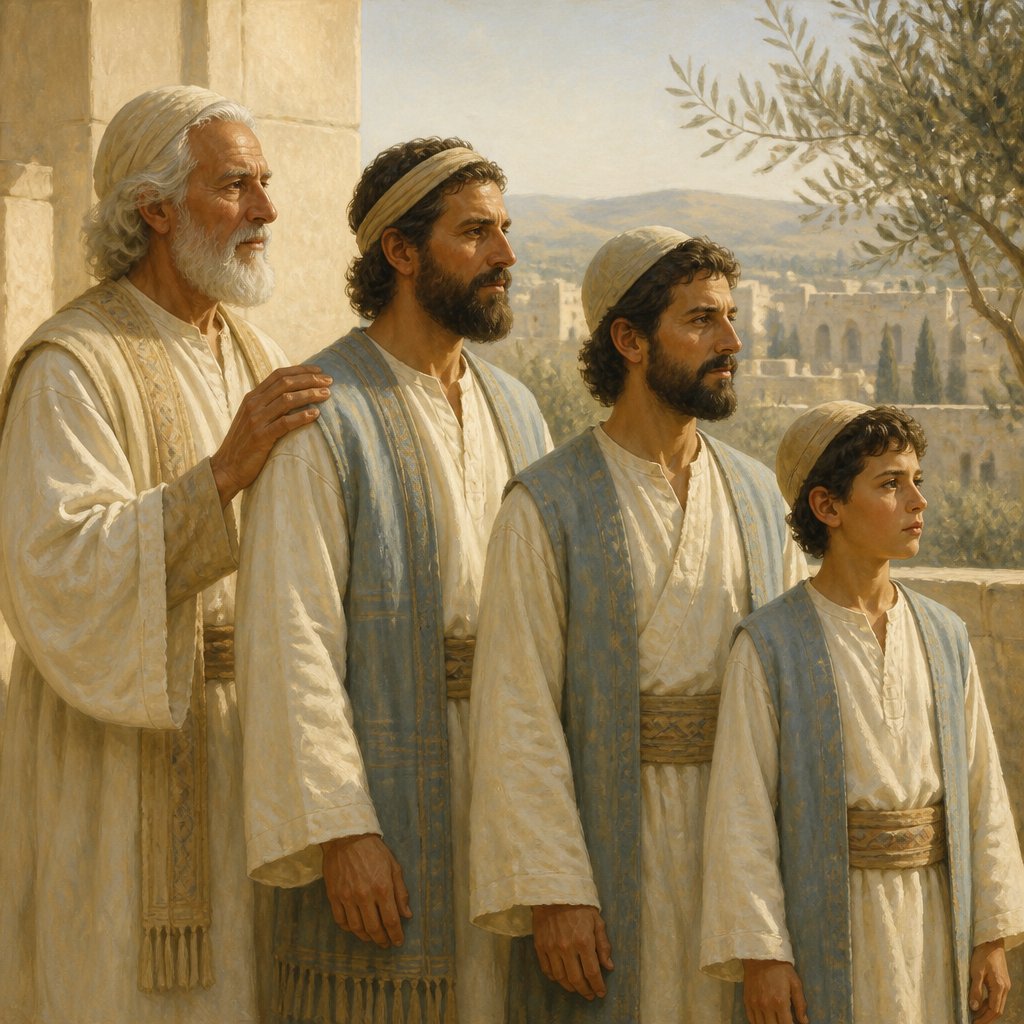
Nehemiah 12:10 Artwork

Nehemiah 12:10 - "¶ And Jeshua begat Joiakim, Joiakim also begat Eliashib, and Eliashib begat Joiada,"

"¶ And Jeshua begat Joiakim, Joiakim also begat Eliashib, and Eliashib begat Joiada," - Nehemiah 12:10

Nehemiah 10:12 - "Zaccur, Sherebiah, Shebaniah,"

"Zaccur, Sherebiah, Shebaniah," - Nehemiah 10:12

Nehemiah 10:1 - "Now those that sealed were, Nehemiah, the Tirshatha, the son of Hachaliah, and Zidkijah,"

Nehemiah 10:10 - "And their brethren, Shebaniah, Hodijah, Kelita, Pelaiah, Hanan,"

Nehemiah 8:10

Nehemiah 12:26 - "These were in the days of Joiakim the son of Jeshua, the son of Jozadak, and in the days of Nehemiah the governor, and of Ezra the priest, the scribe."

Nehemiah 8:10

Nehemiah 8:10

Nehemiah 12:5 - "Miamin, Maadiah, Bilgah,"

Nehemiah 12:33 - "And Azariah, Ezra, and Meshullam,"

Nehemiah 12:4 - "Iddo, Ginnetho, Abijah,"

Nehemiah 12:2 - "Amariah, Malluch, Hattush,"

Nehemiah 12:3 - "Shechaniah, Rehum, Meremoth,"

Nehemiah 12:6 - "Shemaiah, and Joiarib, Jedaiah,"

Nehemiah 10:24 - "Hallohesh, Pileha, Shobek,"

Nehemiah 10:22 - "Pelatiah, Hanan, Anaiah,"

Nehemiah 10:5 - "Harim, Meremoth, Obadiah,"

Nehemiah 10:23 - "Hoshea, Hananiah, Hashub,"

Nehemiah 10:21 - "Meshezabeel, Zadok, Jaddua,"

Nehemiah 10:7 - "Meshullam, Abijah, Mijamin,"

Nehemiah 10:11 - "Micha, Rehob, Hashabiah,"

Nehemiah 10:27 - "Malluch, Harim, Baanah."

Nehemiah 10:25 - "Rehum, Hashabnah, Maaseiah,"

Nehemiah 10:19 - "Hariph, Anathoth, Nebai,"

Nehemiah 10:6 - "Daniel, Ginnethon, Baruch,"

Nehemiah 12:12 - "And in the days of Joiakim were priests, the chief of the fathers: of Seraiah, Meraiah; of Jeremiah, Hananiah;"

Nehemiah 10:26 - "And Ahijah, Hanan, Anan,"

Nehemiah 10:16 - "Adonijah, Bigvai, Adin,"