Legacy of Faith: The Power of Family in God's Plan
"And Maaseiah the son of Baruch, the son of Col-hozeh, the son of Hazaiah, the son of Adaiah, the son of Joiarib, the son of Zechariah, the son of Shiloni." - Nehemiah 11:5
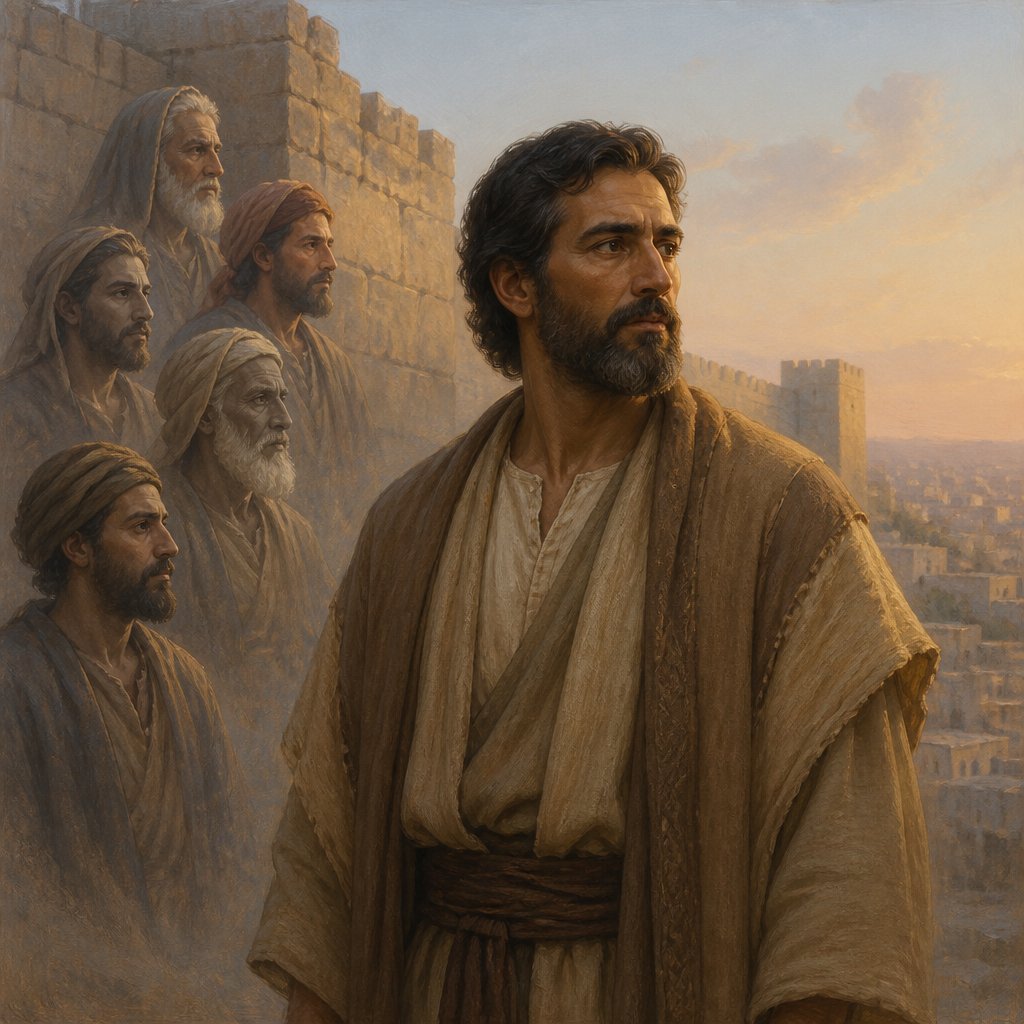
As we delve into Nehemiah 11:5, we encounter a seemingly straightforward genealogical record: "And Maaseiah the son of Baruch, the son of Col-hozeh, the son of Hazaiah, the son of Adaiah, the son of Joiarib, the son of Zechariah, the son of Shiloni." On the surface, it may appear to be a mere list of names, but woven within this passage lies a profound legacy of faith, purpose, and divine plan.
Genealogies in the Bible serve crucial purposes. They root individuals within the larger narrative of God’s covenant with His people. Each name represents a life, and every life narrates a story set by the Providence of God. As we study this particular lineage, we find ourselves reflecting on the significance of family in the formation of our identities and our roles in God’s greater plan.
### The Importance of Names
Firstly, it's important to understand the significance of names in biblical times. Each name carried meaning and often reflected the character or circumstances of the individual. The name "Maaseiah" means 'the works of the Lord.' Imagine being named for your life's purpose! For Maaseiah, this may be a call to remember that his life and actions should reflect the works of God. Likewise, we should ask ourselves: what does our name signify? What does our life reflect in the grand narrative God is weaving?
### Generational Faith
Maaseiah's lineage traces back through several generations, emphasizing the continuity of faith. In the ancestry mentioned, we see the names of Baruch, Col-hozeh, Hazaiah, Adaiah, Joiarib, Zechariah, and Shiloni—each playing a part in the broader history of Israel. These names remind us that faithfulness is often a collective journey rather than an individual endeavor. Our families, whether biological or spiritual, impact our faith and contribute to our understanding of God's work in the world.
As we consider these ancestors, we reflect on the lessons they may have imparted. They lived through tumultuous times, facing challenges just as we do today. Their names echo the trials and triumphs of generations past, reminding us that today’s struggles can also serve as fertile ground for future faith.
### A Call to Responsibility
In being part of a legacy, we are called into a profound responsibility. Each generation plays a role in shaping the next. Just as Maaseiah had the benefit of those who came before him, so do we. We are stewards of tradition, faith, and values. Are we equipping the next generation to know the Lord? What spiritual truths are we passing down? As parents, mentors, friends, or even peers, we hold a seat at the table of discipleship, where we can nurture faith and encourage a profound relationship with God.
### The Power of Community
Nehemiah 11 as a whole showcases a community coming together after exile to restore Jerusalem. The list of names involves not just physical rebuilding of walls but a rebuilding of identity as the people of God. Each individual mattered; each person’s contribution counted. In God’s community, there are no insignificant names. Every believer is endowed with unique gifts and purposes. Are we recognizing the contributions of those around us? Are we connected to a community that uplifts and shares in the common cause?
### Conclusion
As we reflect on the lineage of Maaseiah, we must ask ourselves poignant questions about our place within our families and faith communities. Are we honoring the legacies that have shaped us? Are we actively participating in the creation of a legacy that will echo through generations to come?
May we be inspired to embrace the beautiful tapestry of our ancestry while forging ahead to fulfill the call of God on our lives. Let the names listed be more than just distant connections; let them be reminders of the faithful works of our God. Let us live our lives in a way that says, "I am a product of a legacy, and I will pass on that legacy to those who follow."
In every generation, may we embody the works of the Lord, just as Maaseiah's lineage does, reminding us of the sacred bond we share as children of the Most High.
Want to reflect more on Nehemiah 11:5?
Continue your spiritual journey with Bible Chat — an AI-powered tool for exploring God's Word through conversation. Ask questions, discover connections, and deepen your understanding.
Get Our Apps


Nehemiah 11:5 Artwork

Nehemiah 11:5 - "And Maaseiah the son of Baruch, the son of Col-hozeh, the son of Hazaiah, the son of Adaiah, the son of Joiarib, the son of Zechariah, the son of Shiloni."
"And Maaseiah the son of Baruch, the son of Col-hozeh, the son of Hazaiah, the son of Adaiah, the son of Joiarib, the son of Zechariah, the son of Shiloni." - Nehemiah 11:5

Nehemiah 5:11 - "Restore, I pray you, to them, even this day, their lands, their vineyards, their oliveyards, and their houses, also the hundredth part of the money, and of the corn, the wine, and the oil, that ye exact of them."

Nehemiah 11:11-14

Nehemiah 11:13

Nehemiah 11:1-19

A biblical scene from Nehemiah 1:5-11 - Nehemiah, a Caucasian male in middle-eastern garb, is depicted respectfully requesting time from the king, a Middle-Eastern male seated on a throne. He is asking for the opportunity to return to Judah and help his people build a wall. The setting is a grand royal court marked by golden hues, opulent textiles, and architecturally rich columns. Nehemiah is the king's servant.

A biblical scene from Nehemiah 1:5-11 - Nehemiah, a Caucasian male in middle-eastern garb, is depicted respectfully requesting time from the king, a Middle-Eastern male seated at the dinner table while Nehemiah is serving his drink. He is asking for the opportunity to return to Judah and help his people build a wall. The setting is a grand royal court marked by golden hues, opulent textiles, and architecturally rich columns.

A biblical scene from Nehemiah 1:5-11 - Nehemiah, a middle-age Caucasian male in middle-eastern garb, is serving a drink to the Persian king, a Middle-Eastern male seated at the dinner table. The setting is a grand royal court marked by golden hues, opulent textiles, and architecturally rich columns.

A biblical scene from Nehemiah 1:5-11 - Nehemiah, a Caucasian male in middle-eastern garb, is depicted respectfully requesting time from the king, a Middle-Eastern male seated at the dinner table while Nehemiah is serving his drink. He is asking for the opportunity to return to Judah and help his people build a wall. The setting is a grand royal court marked by golden hues, opulent textiles, and architecturally rich columns.

A biblical scene from Nehemiah 1:5-11 - Nehemiah, a middle-age Caucasian male in middle-eastern garb and simple headdress, is standing, serving a drink to the Persian king, a Middle-Eastern male seated at the dinner table. The setting is a grand royal court marked by golden hues, opulent textiles, and architecturally rich columns.

A biblical scene from Nehemiah 1:5-11 - Nehemiah, a Caucasian male in middle-eastern garb, is depicted respectfully requesting time from the king, a Middle-Eastern male seated on a throne. He is asking for the opportunity to return to Judah and help his people build a wall. The setting is a grand royal court marked by golden hues, opulent textiles, and architecturally rich columns. Only the king and Nehemiah, the king's cup bearer, are in the room.

A biblical scene from Nehemiah 1:5-11 - Nehemiah, a middle-age Caucasian male in middle-eastern garb, is standing, serving a drink to the Persian king, a Middle-Eastern male seated at the dinner table. The setting is a grand royal court marked by golden hues, opulent textiles, and architecturally rich columns.

A biblical scene from Nehemiah 1:5-11 - Nehemiah, a Caucasian male in middle-eastern garb, is depicted respectfully requesting time from the king, a Middle-Eastern male seated at the dinner table while Nehemiah is serving his drink. He is asking for the opportunity to return to Judah and help his people build a wall. The setting is a grand royal court marked by golden hues, opulent textiles, and architecturally rich columns.

Nehemiah 11:34 - "Hadid, Zeboim, Neballat,"

Nehemiah 10:11 - "Micha, Rehob, Hashabiah,"

Nehemiah 11:33 - "Hazor, Ramah, Gittaim,"

Nehemiah 11:32 - "And at Anathoth, Nob, Ananiah,"

Nehemiah 11:26 - "And at Jeshua, and at Moladah, and at Beth-phelet,"

Nehemiah 11:29 - "And at En-rimmon, and at Zareah, and at Jarmuth,"

Nehemiah 10:5 - "Harim, Meremoth, Obadiah,"

Nehemiah 12:5 - "Miamin, Maadiah, Bilgah,"

Nehemiah 11:35 - "Lod, and Ono, the valley of craftsmen."

Nehemiah 11:28 - "And at Ziklag, and at Mekonah, and in the villages thereof,"

A biblical scene from Nehemiah 1:5-11 - Nehemiah, a Caucasian male in middle-eastern garb, is depicted respectfully requesting time from the king, a Middle-Eastern male seated on a throne. He is asking for the opportunity to return to Judah and help his people build a wall. The setting is a grand royal court marked by golden hues, opulent textiles, and architecturally rich columns.

Nehemiah 11:36 - "And of the Levites were divisions in Judah, and in Benjamin."

Nehemiah 11:10 - "Of the priests: Jedaiah the son of Joiarib, Jachin."

Nehemiah 12:11 - "And Joiada begat Jonathan, and Jonathan begat Jaddua."

Nehemiah 11:27 - "And at Hazar-shual, and at Beer-sheba, and in the villages thereof,"

Nehemiah 2:11 - "So I came to Jerusalem, and was there three days."