Dwelling in the Holy City: A Call to Commitment
"And the rulers of the people dwelt at Jerusalem: the rest of the people also cast lots, to bring one of ten to dwell in Jerusalem the holy city, and nine parts to dwell in other cities." - Nehemiah 11:1
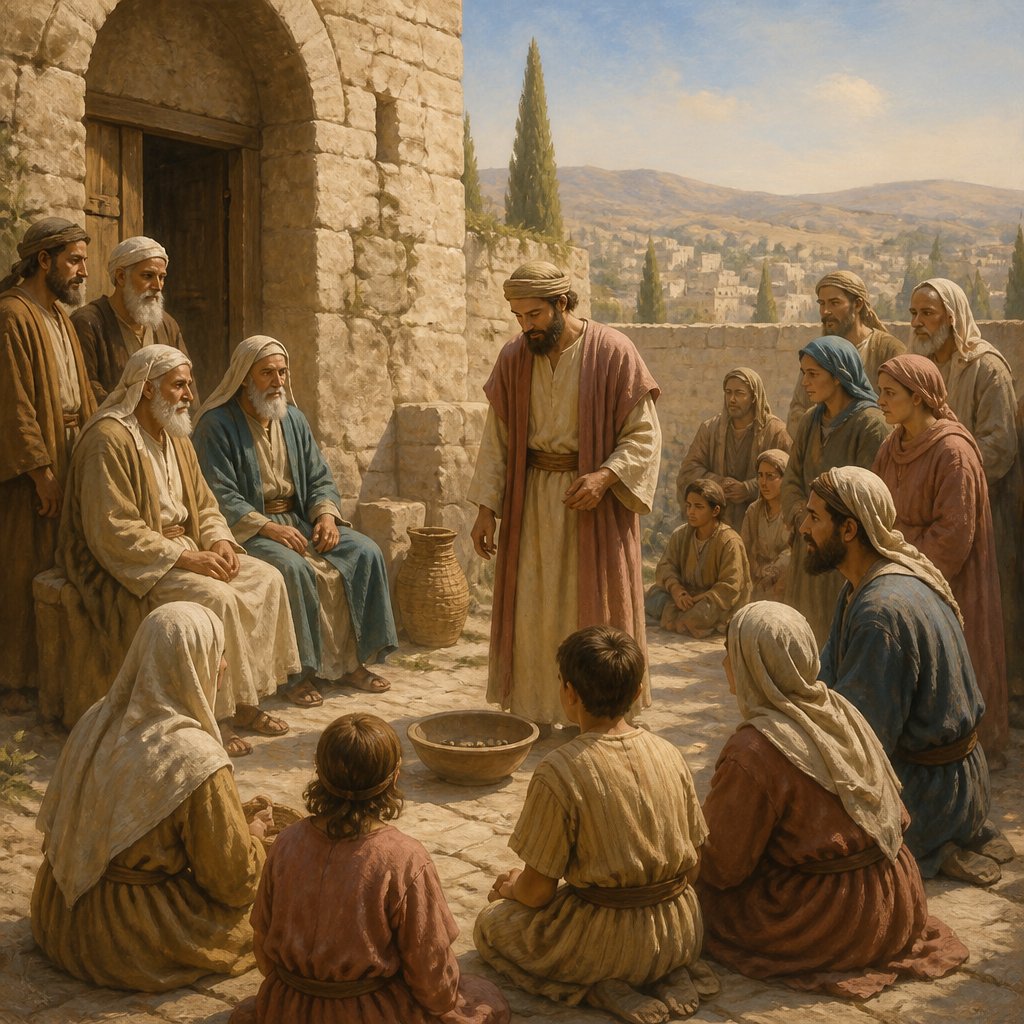
In the book of Nehemiah, we come to a pivotal moment in the lives of the Jewish people as they returned from Babylonian exile. Nehemiah 11:1 states, "And the rulers of the people dwelt at Jerusalem: the rest of the people also cast lots, to bring one of ten to dwell in Jerusalem the holy city, and nine parts to dwell in other cities." This verse encompasses not only a historical account but also profound spiritual implications for our lives today.
### A Time of Transition
The context of Nehemiah’s leadership is essential for understanding this verse. After years of exile, the Jewish people were finally allowed to return to their homeland and rebuild what was lost. Jerusalem, once a majestic city, was now in ruins. Yet, it was more than just broken walls that had to be restored; it was the very heart of the people that required rebuilding. By casting lots, the people demonstrated both a willingness to participate in the restoration and a reliance on God’s sovereignty in their choices. Amidst uncertainty and fear, they were making collective decisions that were significant for their community's future.
### Jerusalem: The Holy City
Jerusalem is more than just a geographical location; it represents the dwelling place of God among His people. In calling it the "holy city," Nehemiah emphasizes its sanctity and significance. It was in Jerusalem that the temple stood, a center of worship where the people experienced God’s presence in a unique and profound way. The act of dwelling in Jerusalem reflects a commitment to God’s covenant and the flourishing of their identity as a nation set apart for the Lord. The residents of Jerusalem would be the custodians of the city’s spiritual legacy, ensuring that worship, community, and the law of God would permeate their lives.
### The Importance of Sacrifice
The decision to cast lots reveals the people's understanding of sacrifice. Being willing to reside in the holy city meant accepting the responsibility of life surrounded by walls that needed to be rebuilt and lives that needed restoration. It was a commitment not only to physical labor but also to spiritual vigilance. To dwell in Jerusalem was to be on the front lines of re-establishing God's presence in their midst. The challenge of living within the city was significant, fraught with potential dangers and the threat of opposition from neighboring nations. Those who chose to dwell in the holy city exemplified bravery and a desire to serve God’s purpose.
### Our Modern-Day Jerusalem
As believers today, we are called to consider what our own “Jerusalem” looks like. For us, it may not be a physical city, but it represents a place where God’s presence abides among His people. It can be our local church, our community, or even our homes where we strive to reflect God’s light. Like the people of Nehemiah’s time, we too are faced with choices that require commitment and sacrifice to dwell in environments that honor God. Are we willing to be those who dwell in places where God’s influence can manifest? Are we choosing to engage in our communities, casting lots not just for ourselves but for others as well?
### A Call to Action
Nehemiah’s narrative is a beautiful reminder that we are not merely passive observers in God’s story. We are active participants, called to roll up our sleeves and engage in the work of renewal and restoration around us. This means living out our faith intentionally, praying for our communities, and finding ways to serve others. Every day, we have the chance to cast our lots toward the betterment of our cities, choosing to engage and dwell in ways that reflect God’s love.
### Conclusion
In reflection, Nehemiah 11:1 teaches us about commitment, sacrifice, and communal responsibility. Let each of us examine where God is calling us to dwell and how we can contribute to bringing His kingdom closer to our earthly cities. May we strive to be those who not only dwell in the holy city of our contemporary lives but also invite others to this sacred commitment, ensuring that God’s presence is evident in every corner of our world.
Want to reflect more on Nehemiah 11:1?
Continue your spiritual journey with Bible Chat — an AI-powered tool for exploring God's Word through conversation. Ask questions, discover connections, and deepen your understanding.
Get Our Apps


Nehemiah 11:1 Artwork

Nehemiah 11:1-19

Nehemiah 11:1 - "And the rulers of the people dwelt at Jerusalem: the rest of the people also cast lots, to bring one of ten to dwell in Jerusalem the holy city, and nine parts to dwell in other cities."
"And the rulers of the people dwelt at Jerusalem: the rest of the people also cast lots, to bring one of ten to dwell in Jerusalem the holy city, and nine parts to dwell in other cities." - Nehemiah 11:1

Nehemiah 11:11-14

Nehemiah 11:13

Nehemiah 11:34 - "Hadid, Zeboim, Neballat,"

Nehemiah 10:11 - "Micha, Rehob, Hashabiah,"

Nehemiah 11:33 - "Hazor, Ramah, Gittaim,"

Nehemiah 11:32 - "And at Anathoth, Nob, Ananiah,"

Nehemiah 11:26 - "And at Jeshua, and at Moladah, and at Beth-phelet,"

Nehemiah 11:29 - "And at En-rimmon, and at Zareah, and at Jarmuth,"

Nehemiah 11:35 - "Lod, and Ono, the valley of craftsmen."

Nehemiah 11:28 - "And at Ziklag, and at Mekonah, and in the villages thereof,"

Nehemiah 11:36 - "And of the Levites were divisions in Judah, and in Benjamin."

Nehemiah 11:10 - "Of the priests: Jedaiah the son of Joiarib, Jachin."

A biblical scene from Nehemiah 1:5-11 - Nehemiah, a Caucasian male in middle-eastern garb, is depicted respectfully requesting time from the king, a Middle-Eastern male seated at the dinner table while Nehemiah is serving his drink. He is asking for the opportunity to return to Judah and help his people build a wall. The setting is a grand royal court marked by golden hues, opulent textiles, and architecturally rich columns.

A biblical scene from Nehemiah 1:5-11 - Nehemiah, a Caucasian male in middle-eastern garb, is depicted respectfully requesting time from the king, a Middle-Eastern male seated on a throne. He is asking for the opportunity to return to Judah and help his people build a wall. The setting is a grand royal court marked by golden hues, opulent textiles, and architecturally rich columns. Nehemiah is the king's servant.

Nehemiah 12:11 - "And Joiada begat Jonathan, and Jonathan begat Jaddua."

Nehemiah 11:27 - "And at Hazar-shual, and at Beer-sheba, and in the villages thereof,"

Nehemiah 2:11 - "So I came to Jerusalem, and was there three days."

Nehemiah 11:11 - "Seraiah the son of Hilkiah, the son of Meshullam, the son of Zadok, the son of Meraioth, the son of Ahitub, was the ruler of the house of God."

A biblical scene from Nehemiah 1:5-11 - Nehemiah, a middle-age Caucasian male in middle-eastern garb, is serving a drink to the Persian king, a Middle-Eastern male seated at the dinner table. The setting is a grand royal court marked by golden hues, opulent textiles, and architecturally rich columns.

A biblical scene from Nehemiah 1:5-11 - Nehemiah, a Caucasian male in middle-eastern garb, is depicted respectfully requesting time from the king, a Middle-Eastern male seated at the dinner table while Nehemiah is serving his drink. He is asking for the opportunity to return to Judah and help his people build a wall. The setting is a grand royal court marked by golden hues, opulent textiles, and architecturally rich columns.

A biblical scene from Nehemiah 1:5-11 - Nehemiah, a Caucasian male in middle-eastern garb, is depicted respectfully requesting time from the king, a Middle-Eastern male seated on a throne. He is asking for the opportunity to return to Judah and help his people build a wall. The setting is a grand royal court marked by golden hues, opulent textiles, and architecturally rich columns. Only the king and Nehemiah, the king's cup bearer, are in the room.

A biblical scene from Nehemiah 1:5-11 - Nehemiah, a Caucasian male in middle-eastern garb, is depicted respectfully requesting time from the king, a Middle-Eastern male seated at the dinner table while Nehemiah is serving his drink. He is asking for the opportunity to return to Judah and help his people build a wall. The setting is a grand royal court marked by golden hues, opulent textiles, and architecturally rich columns.

A biblical scene from Nehemiah 1:5-11 - Nehemiah, a middle-age Caucasian male in middle-eastern garb and simple headdress, is standing, serving a drink to the Persian king, a Middle-Eastern male seated at the dinner table. The setting is a grand royal court marked by golden hues, opulent textiles, and architecturally rich columns.

"And at Anathoth, Nob, Ananiah," - Nehemiah 11:32

Nehemiah 1:1 - "The words of Nehemiah the son of Hachaliah. And it came to pass in the month Chisleu, in the twentieth year, as I was in Shushan the palace,"

"Hadid, Zeboim, Neballat," - Nehemiah 11:34

"Hazor, Ramah, Gittaim," - Nehemiah 11:33