Stewardship and Sacred Offerings: A Call to Faithfulness
"And that we should bring the firstfruits of our dough, and our offerings, and the fruit of all manner of trees, of wine and of oil, unto the priests, to the chambers of the house of our God; and the tithes of our ground unto the Levites, that the same Levites might have the tithes in all the cities of our tillage." - Nehemiah 10:37
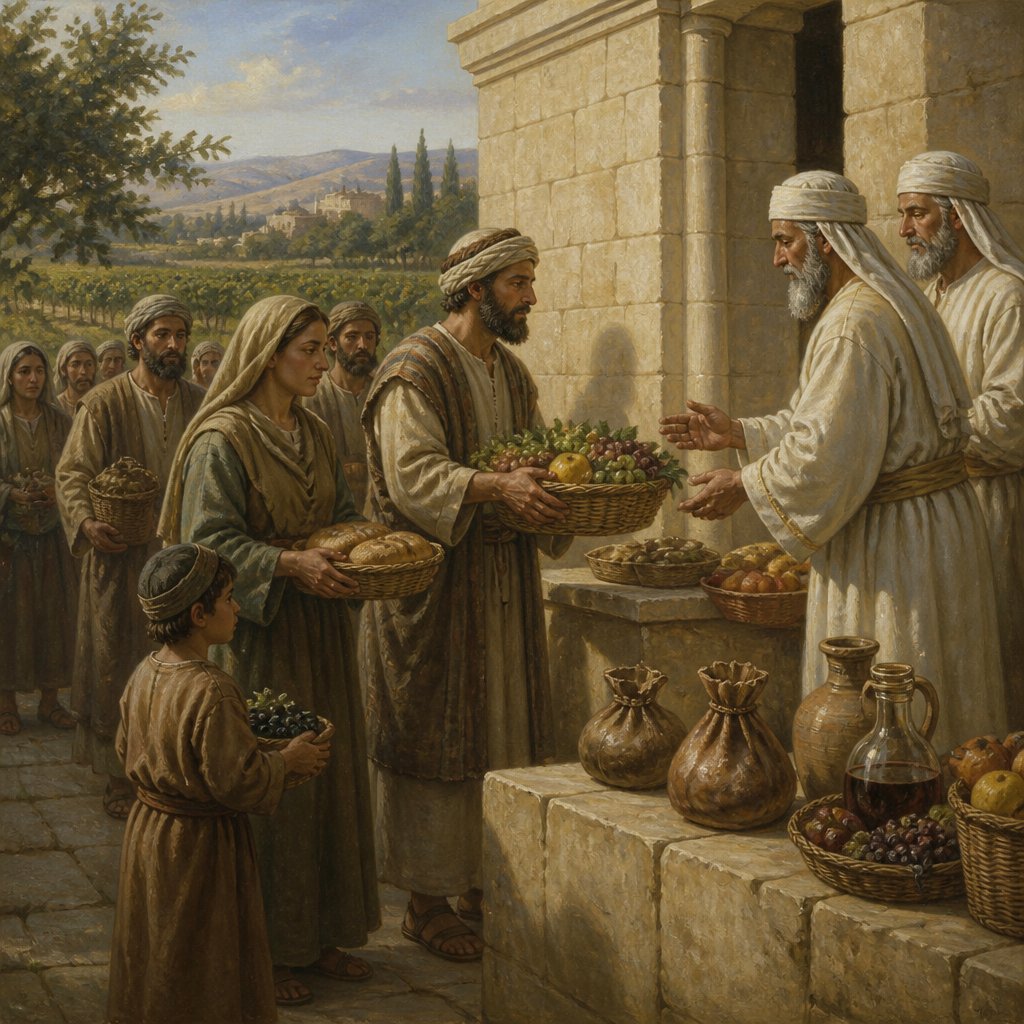
In the book of Nehemiah, we see a return from exile where the people of Israel were prompted to rebuild not just their homes and walls, but also their commitment to God. Nehemiah 10:37 calls the Israelites to bring their offerings and the firstfruits of their labor: "And that we should bring the firstfruits of our dough, and our offerings, and the fruit of all manner of trees, of wine and of oil, unto the priests, to the chambers of the house of our God; and the tithes of our ground unto the Levites, that the same Levites might have the tithes in all the cities of our tillage."
At the heart of this verse is an essential principle of stewardship and gratitude towards God. Let us delve deeper into its implications for us today, reflecting on the significance of offering our first fruits.
### The Meaning of Firstfruits
In ancient Israel, firstfruits represented the very best of what the harvest provided. It was an acknowledgment that everything belonged to God—the land, the crops, and indeed, life itself. The act of bringing firstfruits was both an obligation and a demonstration of thankfulness to God for His provision. When we set aside our first fruits for the Lord, we are proclaiming that we recognize His sovereignty over all aspects of our lives, especially the areas of productivity and abundance.
### Bringing our Offerings
God does not merely want our leftovers. When we bring our offerings, God desires our first and our best. In a world where we often prioritize our desires and needs first, this scripture serves as a potent reminder of the priority we ought to give to God in our financial and personal stewardship. This doesn’t only apply to our monetary contributions; it pertains to our time, talents, and treasures. Are we giving God our best in each area of our lives?
### Support for God’s Servants
The passage also addresses the importance of supporting those who serve the ministry. The priests and Levites were responsible for performing the sacred duties in the temple and maintaining the spiritual health of the community. This model inspires us to think about how we support our spiritual leaders today. Are we investing in those who shepherd our souls? By ensuring that the Levites receive the tithes, it ensured that the ministry could function effectively and that spiritual oversight was maintained.
In our modern context, supporting our church and the leaders who serve us is essential. This support could be in the form of tithes, but also through volunteering, prayers, and encouraging words. The broader community benefits when we honor those in ministry, allowing them to focus on their calling without the distraction of financial insecurity.
### A Community That Contributes
Moreover, this scripture lights the path towards communal responsibility in faith. The phrase "that the same Levites might have the tithes in all the cities of our tillage" signifies that each individual contribution indicated a collective commitment to God’s work within the community. Our contributions not only reflect our individual stewardship but also serve as a mechanism for community unity and strength in faith. When we all bring our best before God, it results in a robust ministry that meets the needs of the congregation and reaches out to the community.
### The Principle of Generosity
Ultimately, our giving and our offerings reflect our hearts and our understanding of God’s grace. Paul reiterates this principle in 2 Corinthians 9:7, stating, "Every man according as he purposeth in his heart, so let him give; not grudgingly, or of necessity: for God loveth a cheerful giver." God desires to cultivate a spirit of generosity within us, showcasing that our offerings stem from love and gratitude rather than obligation.
### Conclusion: A Call to Action
As we reflect on Nehemiah 10:37, let us consider how we can actively bring our firstfruits before God. This is not just a spiritual discipline, but a profound act of faith and reliance on His provision. By offering our best, supporting our ministry leaders, and committing ourselves to the well-being of our community, we stand in alignment with God’s purpose for our lives. Let our lives become an offering—a true firstfruit of our hearts dedicated to Him.
Want to reflect more on Nehemiah 10:37?
Continue your spiritual journey with Bible Chat — an AI-powered tool for exploring God's Word through conversation. Ask questions, discover connections, and deepen your understanding.
Get Our Apps


Nehemiah 10:37 Artwork

Nehemiah 10:37 - "And that we should bring the firstfruits of our dough, and our offerings, and the fruit of all manner of trees, of wine and of oil, unto the priests, to the chambers of the house of our God; and the tithes of our ground unto the Levites, that the same Levites might have the tithes in all the cities of our tillage."
"And that we should bring the firstfruits of our dough, and our offerings, and the fruit of all manner of trees, of wine and of oil, unto the priests, to the chambers of the house of our God; and the tithes of our ground unto the Levites, that the same Levites might have the tithes in all the cities of our tillage." - Nehemiah 10:37

Nehemiah 7:37 - "The children of Lod, Hadid, and Ono, seven hundred twenty and one."

Nehemiah 10:1 - "Now those that sealed were, Nehemiah, the Tirshatha, the son of Hachaliah, and Zidkijah,"

Nehemiah 10:10 - "And their brethren, Shebaniah, Hodijah, Kelita, Pelaiah, Hanan,"

Nehemiah 8:10

Nehemiah 8:10

Nehemiah 8:10

Nehemiah 10:22 - "Pelatiah, Hanan, Anaiah,"

Nehemiah 10:24 - "Hallohesh, Pileha, Shobek,"

Nehemiah 10:5 - "Harim, Meremoth, Obadiah,"

Nehemiah 10:21 - "Meshezabeel, Zadok, Jaddua,"

Nehemiah 10:23 - "Hoshea, Hananiah, Hashub,"

Nehemiah 10:7 - "Meshullam, Abijah, Mijamin,"

Nehemiah 10:25 - "Rehum, Hashabnah, Maaseiah,"

Nehemiah 10:11 - "Micha, Rehob, Hashabiah,"

Nehemiah 10:27 - "Malluch, Harim, Baanah."

Nehemiah 10:19 - "Hariph, Anathoth, Nebai,"

Nehemiah 10:6 - "Daniel, Ginnethon, Baruch,"

"The children of Lod, Hadid, and Ono, seven hundred twenty and one." - Nehemiah 7:37

Nehemiah 10:26 - "And Ahijah, Hanan, Anan,"

Nehemiah 10:16 - "Adonijah, Bigvai, Adin,"

Nehemiah 10:18 - "Hodijah, Hashum, Bezai,"

Nehemiah 10:4 - "Hattush, Shebaniah, Malluch,"

Nehemiah 10:2 - "Seraiah, Azariah, Jeremiah,"

Nehemiah 10:20 - "Magpiash, Meshullam, Hezir,"

Nehemiah 10:3 - "Pashur, Amariah, Malchijah,"

Nehemiah 10:17 - "Ater, Hizkijah, Azzur,"

Nehemiah 10:15 - "Bunni, Azgad, Bebai,"

Nehemiah 10:13 - "Hodijah, Bani, Beninu."