Faithfulness in Our Offerings: A Lesson from Nehemiah 10:34
"And we cast the lots among the priests, the Levites, and the people, for the wood offering, to bring it into the house of our God, after the houses of our fathers, at times appointed year by year, to burn upon the altar of the LORD our God, as it is written in the law:" - Nehemiah 10:34
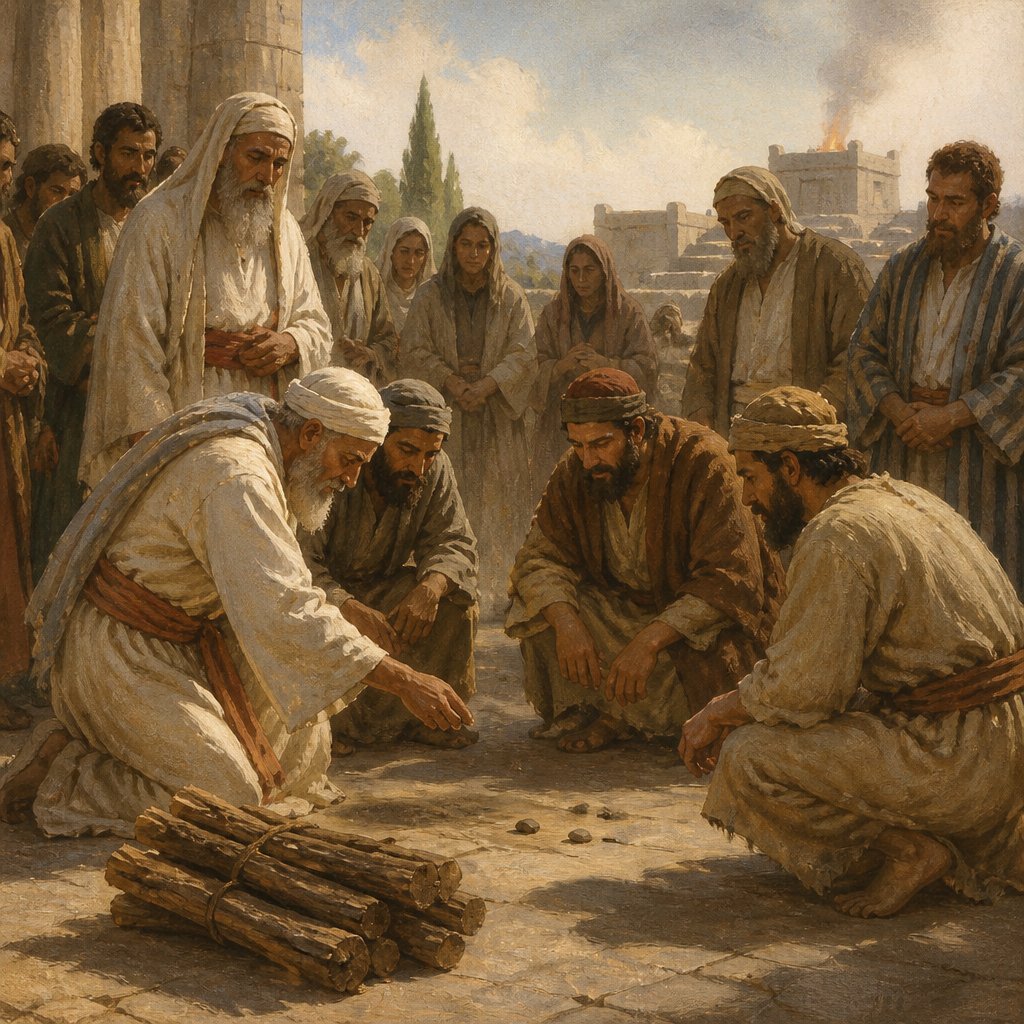
In the intricate narrative of Nehemiah, we witness a community rising from the ruins of their past, seeking restoration not just of their city but of their spiritual life as well. Nehemiah 10:34 presents a striking moment where the commitment of the people to their God is crystallized in solemn action: "And we cast the lots among the priests, the Levites, and the people, for the wood offering, to bring it into the house of our God, after the houses of our fathers, at times appointed year by year, to burn upon the altar of the LORD our God, as it is written in the law." This verse encapsulates the essence of faithfulness in stewardship and the deep reverence for God’s commandments.
The act of casting lots signifies a communal effort to ensure that the wood necessary for offerings would be supplied regularly and appropriately. This was not merely a practical concern; it was rooted in the very law of God that had been given to them. It represented an intentional act of devotion where the people acknowledged their duty to uphold the offerings required for worship. The phrase "after the houses of our fathers" indicates continuity with their heritage—an understanding that they weren’t just living for themselves, but for the generations that had come before them and for those yet to come.
Casting lots also suggests an element of seeking divine direction in their decision-making. By submitting to this system—however random it might appear—they were also submitting to God’s sovereignty and providence. It teaches us that God cares about the details of our lives and our offerings, big or small. We often fear the randomness of life, but through this biblical practice, we see that even randomness can be infused with divine purpose when we place our trust in the Lord.
The wood offering, which may seem like a minor detail, is significant when we consider what it represents. Wood was essential for the burnt offerings which symbolized complete surrender and consecration to God. In this ailing world, our lives can often feel like scattered ashes, but through offerings, we bring our fragmented selves back to God, allowing Him to ignite a fire of transformation. The dedicated bringing of wood foretells the dedication of our own lives—our time, talents, and resources—intended for glorifying God. As Paul reminds us in Romans 12:1, we are to present our bodies as living sacrifices, holy and acceptable to God, which is our reasonable service.
This verse also emphasizes the cyclical nature of worship—the “times appointed year by year.” Our worship should not be sporadic; it ought to flow consistently from a heart seeking God. The constancy of the wood offering serves as a reminder for us to cultivate a rhythm of giving and service in our lives as followers of Christ. How often do we default to sporadic worship and giving? Nehemiah’s community modeled the importance of structure in worship. They realized that in order to maintain a healthy relationship with God, the appointments of service and offerings were as vital as their personal devotion. Regular commitments help build a habit of worship, reinforcing our focus on God’s provision and presence.
As we reflect on Nehemiah 10:34, let us consider what practical step we can take in our lives to enhance our commitment to God. What offerings can we present—of time, resources, or service? How can we incorporate honor and reverence in our lives yearly, monthly, weekly, or even daily? Let us embrace faithfulness, ensuring that our sacrifices are embedded in a daily walk with God, continually reminding ourselves that every act of service becomes a part of the offering to our Lord. In this way, we foster not only a deeper relationship with God but also a flourishing community that seeks to honor Him together.
Want to reflect more on Nehemiah 10:34?
Continue your spiritual journey with Bible Chat — an AI-powered tool for exploring God's Word through conversation. Ask questions, discover connections, and deepen your understanding.
Get Our Apps


Nehemiah 10:34 Artwork

Nehemiah 10:34 - "And we cast the lots among the priests, the Levites, and the people, for the wood offering, to bring it into the house of our God, after the houses of our fathers, at times appointed year by year, to burn upon the altar of the LORD our God, as it is written in the law:"
"And we cast the lots among the priests, the Levites, and the people, for the wood offering, to bring it into the house of our God, after the houses of our fathers, at times appointed year by year, to burn upon the altar of the LORD our God, as it is written in the law:" - Nehemiah 10:34

Nehemiah 11:34 - "Hadid, Zeboim, Neballat,"

Nehemiah 12:34 - "Judah, and Benjamin, and Shemaiah, and Jeremiah,"

"Hadid, Zeboim, Neballat," - Nehemiah 11:34

Nehemiah 7:34 - "The children of the other Elam, a thousand two hundred fifty and four."

"Judah, and Benjamin, and Shemaiah, and Jeremiah," - Nehemiah 12:34

Nehemiah 10:1 - "Now those that sealed were, Nehemiah, the Tirshatha, the son of Hachaliah, and Zidkijah,"

Nehemiah 10:10 - "And their brethren, Shebaniah, Hodijah, Kelita, Pelaiah, Hanan,"

Nehemiah 8:10

Nehemiah 8:10

Nehemiah 8:10

Nehemiah 10:24 - "Hallohesh, Pileha, Shobek,"

Nehemiah 10:22 - "Pelatiah, Hanan, Anaiah,"

Nehemiah 10:5 - "Harim, Meremoth, Obadiah,"

Nehemiah 10:23 - "Hoshea, Hananiah, Hashub,"

Nehemiah 10:21 - "Meshezabeel, Zadok, Jaddua,"

Nehemiah 10:7 - "Meshullam, Abijah, Mijamin,"

Nehemiah 10:11 - "Micha, Rehob, Hashabiah,"

Nehemiah 10:27 - "Malluch, Harim, Baanah."

Nehemiah 10:25 - "Rehum, Hashabnah, Maaseiah,"

Nehemiah 10:19 - "Hariph, Anathoth, Nebai,"

Nehemiah 10:6 - "Daniel, Ginnethon, Baruch,"

Nehemiah 10:26 - "And Ahijah, Hanan, Anan,"

Nehemiah 10:16 - "Adonijah, Bigvai, Adin,"

Nehemiah 10:18 - "Hodijah, Hashum, Bezai,"

Nehemiah 10:20 - "Magpiash, Meshullam, Hezir,"

Nehemiah 10:3 - "Pashur, Amariah, Malchijah,"

Nehemiah 10:17 - "Ater, Hizkijah, Azzur,"

Nehemiah 10:4 - "Hattush, Shebaniah, Malluch,"