Guardians of Godly Relationships
"And that we would not give our daughters unto the people of the land, nor take their daughters for our sons:" - Nehemiah 10:30
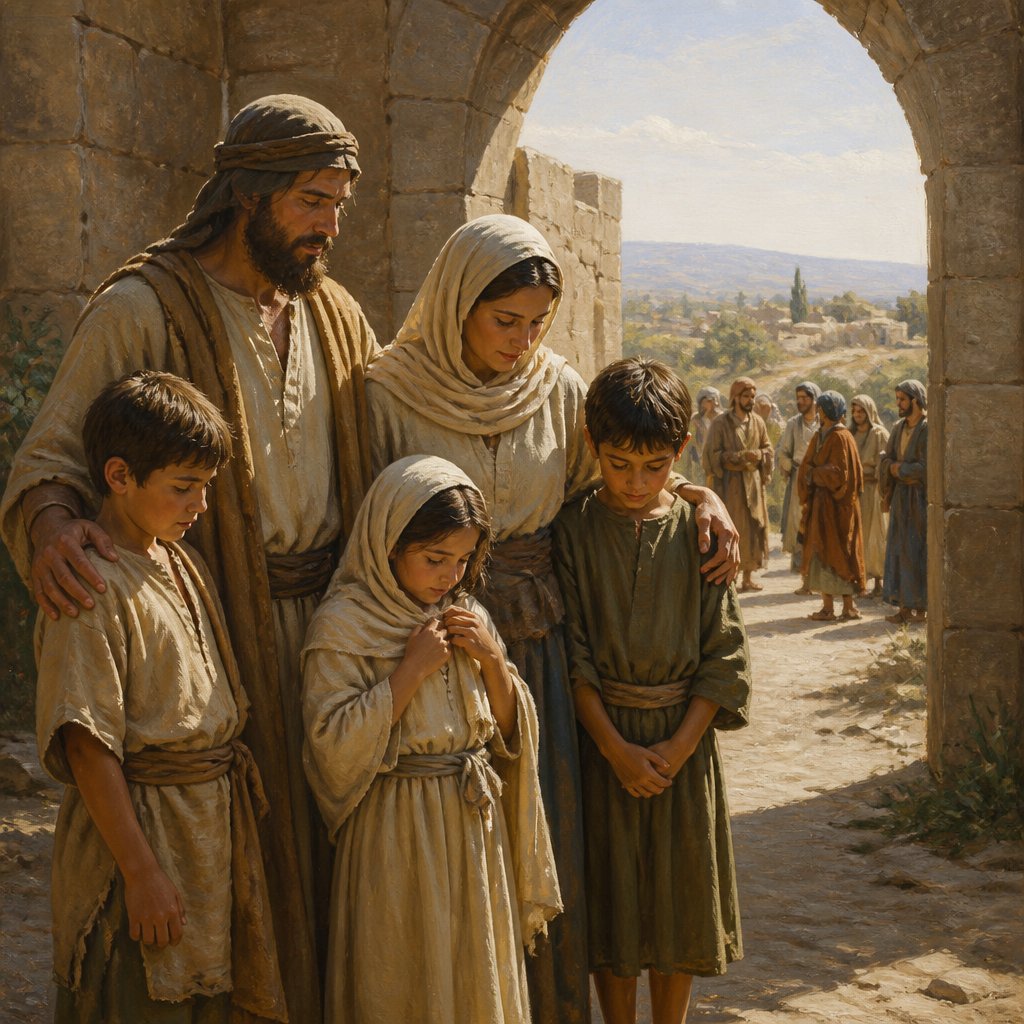
The Book of Nehemiah stands as a powerful testament to the importance of rebuilding not just walls, but also the community and spirituality of the Israelites. In Nehemiah 10:30, we read a poignant commitment made by the people: "And that we would not give our daughters unto the people of the land, nor take their daughters for our sons." This verse encapsulates a vital principle that transcends time and culture—protection of the family unit and the steadfast adherence to God’s covenant.
To understand the weight of this proclamation, we must remember the historical context. After returning from Babylonian exile, the Israelites faced the challenge of re-establishing their identity and faith amidst surrounding nations with differing beliefs and practices. Their commitment to not intermarrying with the peoples of the land was not merely a matter of social policy but a deeply spiritual decision. It reflected their desire to maintain their unique identity as God’s chosen people.
As believers today, we can draw significant lessons from this commitment. First and foremost, it highlights the importance of protecting our children’s spiritual heritage. Intermarriage, in this context, symbolized a coupling not only of individuals but also of divergent worldviews and customs. The risk was that the faith of the fathers could be diluted or compromised, leading the next generation away from their covenant with God. In many ways, the parallels are present in our own lives. What influences are we inviting into our families?
It’s worth taking a step back and reflecting on the relationships we cultivate around us. Are our friendships, partnerships, and connections building our faith, or are they challenging our convictions? The commitment expressed in Nehemiah 10:30 challenges us to scrutinize the environments in which we place our families. It encourages us to build relationships that foster spiritual growth and uphold our values. Our children must see and experience faith lived out in every interaction to foster a lasting commitment to God.
Moreover, the verse invites us to consider our role as guardians for our families. The Israelites recognized the need to be intentional and proactive in their relationships. As modern-day parents or mentors, we have a similar responsibility. We need to be aware of the influences we allow into our children’s lives, whether through friendships, entertainment, or educational institutions. As it states in Proverbs 22:6, "Train up a child in the way he should go: and when he is old, he will not depart from it." This requires both vigilance and patience, understanding that true formation occurs over time through consistent example and teaching.
Additionally, Nehemiah 10:30 emphasizes the concept of covenant. Our families are part of a broader covenant community—the Body of Christ. We must act in the spirit of collective responsibility. The decisions we make individually impact not only our immediate families but the larger Christian community. Supporting families in their commitment to raise faithful children helps to reinforce a culture that honors God’s design for relationships and families.
Finally, let us not overlook the grace embedded in these convictions. God understands our struggles and recognizes our intentions. While Nehemiah’s verse reflects the heart of a people returning to the Lord, it is also a reminder of God's readiness to forgive and restore. If we find ourselves needing to adjust our relationship choices or mend our family paths, we can rest assured that our God is faithful to guide us.
As we navigate our vastly interconnected world, let us be inspired by the spirit of Nehemiah 10:30. May we commit ourselves anew to guarding our families, nurturing environments filled with faith and integrity, and upholding our covenant with God. In doing so, we honor God first and equip our children to carry forward the legacy of faith—a legacy that will impact generations to come.
Want to reflect more on Nehemiah 10:30?
Continue your spiritual journey with Bible Chat — an AI-powered tool for exploring God's Word through conversation. Ask questions, discover connections, and deepen your understanding.
Get Our Apps


Nehemiah 10:30 Artwork
Nehemiah 10:30 - "And that we would not give our daughters unto the people of the land, nor take their daughters for our sons:"
"And that we would not give our daughters unto the people of the land, nor take their daughters for our sons:" - Nehemiah 10:30

Nehemiah 7:30 - "The men of Ramah and Geba, six hundred twenty and one."

Nehemiah 12:30 - "And the priests and the Levites purified themselves, and purified the people, and the gates, and the wall."

Nehemiah 10:1 - "Now those that sealed were, Nehemiah, the Tirshatha, the son of Hachaliah, and Zidkijah,"

Nehemiah 10:10 - "And their brethren, Shebaniah, Hodijah, Kelita, Pelaiah, Hanan,"

Nehemiah 8:10

Nehemiah 8:10

Nehemiah 8:10

Nehemiah 10:24 - "Hallohesh, Pileha, Shobek,"

Nehemiah 10:22 - "Pelatiah, Hanan, Anaiah,"

Nehemiah 10:5 - "Harim, Meremoth, Obadiah,"

Nehemiah 10:23 - "Hoshea, Hananiah, Hashub,"

Nehemiah 10:21 - "Meshezabeel, Zadok, Jaddua,"

Nehemiah 10:7 - "Meshullam, Abijah, Mijamin,"

Nehemiah 10:11 - "Micha, Rehob, Hashabiah,"

Nehemiah 10:27 - "Malluch, Harim, Baanah."

Nehemiah 10:25 - "Rehum, Hashabnah, Maaseiah,"

Nehemiah 10:19 - "Hariph, Anathoth, Nebai,"

Nehemiah 10:6 - "Daniel, Ginnethon, Baruch,"

Nehemiah 10:26 - "And Ahijah, Hanan, Anan,"

Nehemiah 10:16 - "Adonijah, Bigvai, Adin,"

Nehemiah 10:18 - "Hodijah, Hashum, Bezai,"

Nehemiah 10:20 - "Magpiash, Meshullam, Hezir,"

Nehemiah 10:3 - "Pashur, Amariah, Malchijah,"

Nehemiah 10:17 - "Ater, Hizkijah, Azzur,"

Nehemiah 10:4 - "Hattush, Shebaniah, Malluch,"

Nehemiah 10:2 - "Seraiah, Azariah, Jeremiah,"

Nehemiah 10:12 - "Zaccur, Sherebiah, Shebaniah,"

Nehemiah 10:15 - "Bunni, Azgad, Bebai,"