The Cost of Vanity: Reflections on Matthew 2:16
"¶ Then Herod, when he saw that he was mocked of the wise men, was exceeding wroth, and sent forth, and slew all the children that were in Bethlehem, and in all the coasts thereof, from two years old and under, according to the time which he had diligently enquired of the wise men." - Matthew 2:16
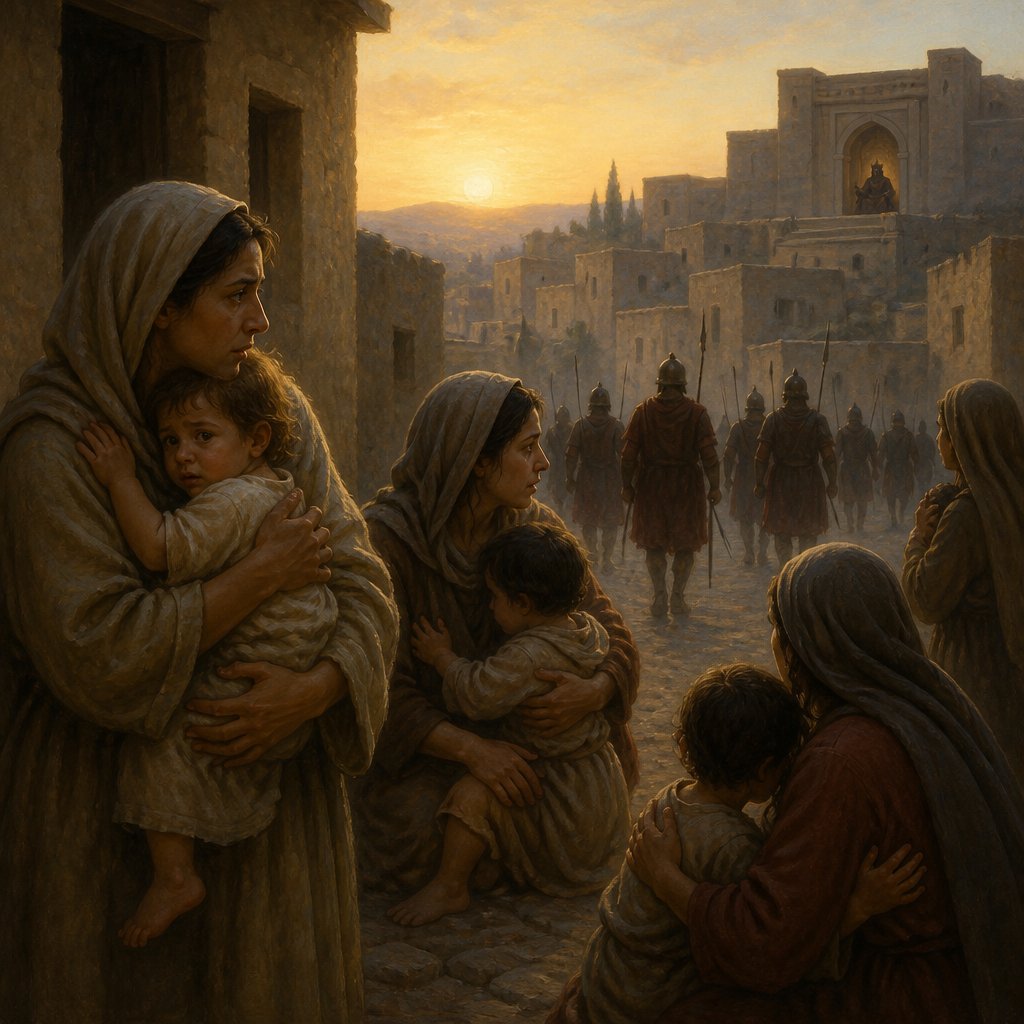
The story told in Matthew 2:16 is a heart-wrenching account of King Herod’s unyielding ambition and brutal wrath. The scripture states, "Then Herod, when he saw that he was mocked of the wise men, was exceeding wroth, and sent forth, and slew all the children that were in Bethlehem, and in all the coasts thereof, from two years old and under, according to the time which he had diligently enquired of the wise men" (KJV). In this single verse, we witness the depths of human depravity and the tragic consequences of vanity and pride.
At the heart of Herod’s actions lies an unyielding desire for control over his kingdom. Despite his title as king, Herod’s reign was marked by paranoia and insecurity. He was deeply troubled by the news of a newborn king, a child prophesied to become the Messiah. To Herod, this was not merely an announcement of a rival; it was an affront to his very existence. His sense of identity was tied to power and supremacy, and the thought of being usurped drove him into a rage that had devastating consequences.
Herod’s actions reveal the destructive nature of unchecked pride and the lengths to which individuals may go to maintain their position, whether in the political realm or personal life. Rather than seeking out peace or understanding, Herod resorted to violence, commanding the murder of innocent children in Bethlehem. The weight of his choice cannot be overlooked; every action has a consequence, and in this case, it was the loss of countless young lives. The tragedy illustrates how vanity, when left unchecked, can spiral into atrocities, reflecting an utter disregard for human life and the common good.
As we reflect on Herod’s response, we can’t help but consider the broader implications of his actions. The slaughter of innocents symbolizes the ongoing battle between good and evil, and how, throughout history, innocents have often been caught in the crossfire of human sinfulness. It serves as a grim reminder of the cost of our vanities and the weight of our decisions. Herod, a king blinded by desire, failed to see the true value of what he was sacrificing in his pursuit of control.
This verse invites us to examine the motivations driving our own actions and ambitions. Are we, like Herod, allowing pride to dictate our responses to challenges? In our workplaces, our families, or our communities, are we willing to step on others to achieve what we desire, or do we seek cooperation and love?
Contrasting Herod's actions with those of the wise men provides further insights. While Herod responded to the confirmation of his fears with violence, the wise men, guided by a star, sought after truth and humility. They traveled great distances, bringing gifts to honor the Christ child, representing an immense contrast to Herod’s response. Their journey was characterized by faith, obedience, and a heart to worship, revealing that true greatness lies not in power, but in humility.
In our pursuit of success and recognition, let us strive to embody the spirit of the wise men. May we continually seek truth, not fearing humility but embracing it as part of our journey. Let us remember that we serve a God who values life and calls us to love and cherish one another, even when ambition seems to beckon us towards destruction. We are also reminded that our God is capable of bringing good out of the most tragic circumstances, as seen in the ultimate delivery of Jesus as a gift for humanity.
This scripture ultimately calls us to lay down our vanities and surrender our ambitions to God’s purpose. Let us remember that in the eyes of God, every life is precious, and may we always choose paths that honor His likeness in each person we encounter.
Want to reflect more on Matthew 2:16?
Continue your spiritual journey with Bible Chat — an AI-powered tool for exploring God's Word through conversation. Ask questions, discover connections, and deepen your understanding.
Get Our Apps


Matthew 2:16 Artwork

Matthew 2:16 - "¶ Then Herod, when he saw that he was mocked of the wise men, was exceeding wroth, and sent forth, and slew all the children that were in Bethlehem, and in all the coasts thereof, from two years old and under, according to the time which he had diligently enquired of the wise men."
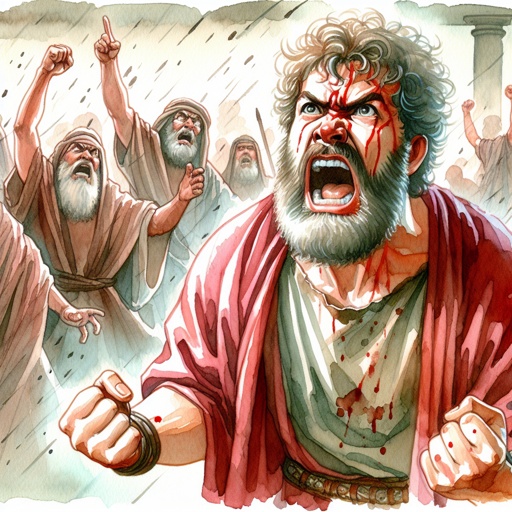
Matthew 2:16 Then Herod, when he saw that he was deceived by the wise men, was exceedingly angry; and he sent forth and put to death all the male children who were in Bethlehem and in all its districts, from two years old and under, according to the time which he had determined from the wise men.
"¶ Then Herod, when he saw that he was mocked of the wise men, was exceeding wroth, and sent forth, and slew all the children that were in Bethlehem, and in all the coasts thereof, from two years old and under, according to the time which he had diligently enquired of the wise men." - Matthew 2:16

Matthew 16:2 - "He answered and said unto them, When it is evening, ye say, It will be fair weather: for the sky is red."

Matthew 3:16

Matthew 3:16

Matthew 3:16

Matthew 16:25

Matthew 16:16 - "And Simon Peter answered and said, Thou art the Christ, the Son of the living God."

Matthew 19:16-17

Matthew 27:16 - "And they had then a notable prisoner, called Barabbas."

Matthew 12:16 - "And charged them that they should not make him known:"

Matthew 24:16 - "Then let them which be in Judaea flee into the mountains:"

Matthew 16:2-3 - "He answered them, “When it is evening, you say, ‘It will be fair weather, for the sky is red.’ And in the morning, ‘It will be stormy today, for the sky is red and threatening.’ You know how to interpret the appearance of the sky, but you cannot interpret the signs of the times."

"He answered and said unto them, When it is evening, ye say, It will be fair weather: for the sky is red." - Matthew 16:2

Matthew 13:16 - "But blessed are your eyes, for they see: and your ears, for they hear."

Matthew 1:1-16 Jesus geneology.

Matthew 26:16 - "And from that time he sought opportunity to betray him."

Matthew 15:16 - "And Jesus said, Are ye also yet without understanding?"

Matthew 17:16 - "And I brought him to thy disciples, and they could not cure him."

Matthew 16:20 - "Then charged he his disciples that they should tell no man that he was Jesus the Christ."

Matthew 14:16 - "But Jesus said unto them, They need not depart; give ye them to eat."

Matthew 16:7 - "And they reasoned among themselves, saying, It is because we have taken no bread."

Matthew 16:15 - "He saith unto them, But whom say ye that I am?"

Matthew 16:10 - "Neither the seven loaves of the four thousand, and how many baskets ye took up?"

Matthew 16:12 - "Then understood they how that he bade them not beware of the leaven of bread, but of the doctrine of the Pharisees and of the Sadducees."

Matthew 1:16 - "And Jacob begat Joseph the husband of Mary, of whom was born Jesus, who is called Christ."

"And Simon Peter answered and said, Thou art the Christ, the Son of the living God." - Matthew 16:16

Matthew 20:16 - "So the last shall be first, and the first last: for many be called, but few chosen."

Matthew 16:6 - "¶ Then Jesus said unto them, Take heed and beware of the leaven of the Pharisees and of the Sadducees."