The Crowd’s Choice: A Reflection on Public Opinion and Personal Faith
"But the chief priests and elders persuaded the multitude that they should ask Barabbas, and destroy Jesus." - Matthew 27:20
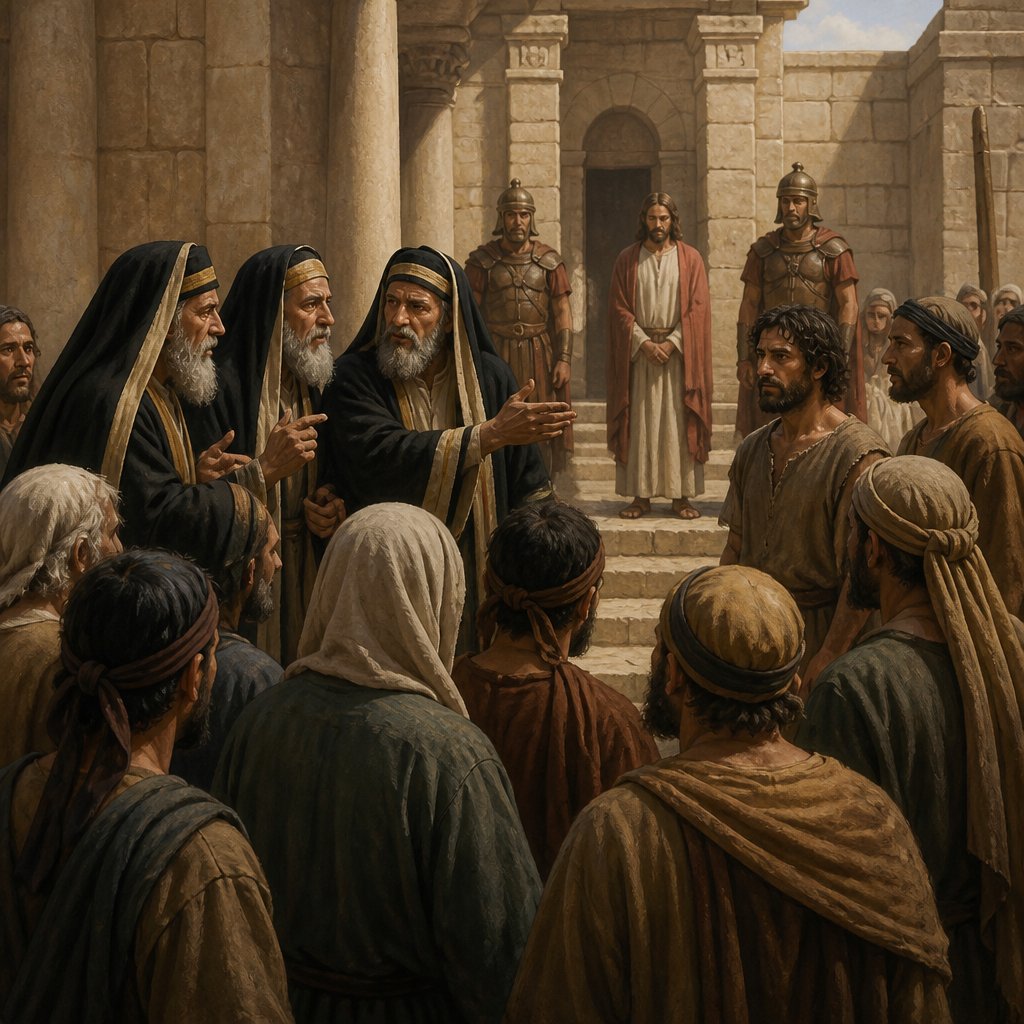
In the narrative of the Passion, we encounter a striking moment in Matthew 27:20, which states, "But the chief priests and elders persuaded the multitude that they should ask Barabbas, and destroy Jesus." This scene takes place during the trial of Jesus, where Pilate presents a custom to release a prisoner during the Passover. He offers the crowd a choice between Barabbas, a notorious criminal, and Jesus, the innocent son of God. The significance of this choice resonates deeply within us, urging reflection on the power of public opinion and the challenge of individual faith.
First, it’s essential to grasp the context of this drama. The religious and political leaders—"the chief priests and elders"—manipulate the crowd, showcasing their influence. Their ability to sway the multitude poses a question we must ponder: How easily do we allow ourselves to be influenced by the crowd? The gathering was composed of people who had once praised Jesus as the Messiah, yet in a matter of hours, they turned against Him. This moment speaks volumes about human nature and our susceptibility to external pressures. We often attempt to fit in, perhaps even subconsciously, leading us away from the truths we claim to believe.
The chief priests and elders employed persuasion to lead the crowd astray. This tactic echoes throughout time; the act of convincing others to take a particular stance on moral dilemmas exists today as it did then. We see this in various aspects of life: social media, politics, and everyday conversations often sway public thought away from righteousness. The question we must ponder is: Who are we listening to? Whose voices shape our opinions on faith, morality, and life decisions? Paul’s exhortation in Romans 12:2 encourages Christians, "And be not conformed to this world: but be ye transformed by the renewing of your mind..." We must regularly examine our thoughts and beliefs, ensuring they align with Scripture instead of societal norms.
Moreover, the choice presented to the multitude symbolizes the stark contrast between two paths: the path of destruction and the path of salvation. Barabbas represents rebellion, violence, and self-preservation, while Jesus embodies sacrifice, love, and redemption. The crowd chose the former, demonstrating how easily we can prioritize worldly desires over divine purposes. It challenges us to examine: What are we choosing in our lives? Are we drawn towards the easy route that aligns with our comfort and desires, or do we willingly embrace the path of Christ, which often demands sacrifice and submission?
This passage also reignites the importance of personal faith amid group dynamics. Each individual in that crowd had the power to voice their preference and stand for Jesus, yet they faltered. The multitude is often a depiction of collective thoughts and actions, contrasting sharply with the calling of individual believers. Jesus invites us into personal relationship and accountability. We must foster our faith, nurturing it through personal study, prayer, and community, so that when push comes to shove, we can stand firm in our belief, even if it means standing apart from the crowds.
Finally, think about Jesus’ silence during this trial. Christ, knowing the will of the Father, allowed the crowd to choose Barabbas over Him, reflecting deep humility and obedience. His choice to endure mockery, pain, and ultimately death was rooted in His unwavering love for humanity. In our own lives, the call to follow Jesus requires similar commitment and self-denial. We must place His will above our comfort, trusting that His plans surpass anything we could conjure on our own.
As we meditate on Matthew 27:20, let us be mindful of the forces that influence our choices. May we seek to anchor our identities firmly in Christ, showing courage to stand against the tide of public opinion when it contradicts our faith. Ultimately, the choice is ours, and may we always choose Jesus.
Want to reflect more on Matthew 27:20?
Continue your spiritual journey with Bible Chat — an AI-powered tool for exploring God's Word through conversation. Ask questions, discover connections, and deepen your understanding.
Get Our Apps


Matthew 27:20 Artwork

Matthew 27:20 - "But the chief priests and elders persuaded the multitude that they should ask Barabbas, and destroy Jesus."

"But the chief priests and elders persuaded the multitude that they should ask Barabbas, and destroy Jesus." - Matthew 27:20

Matthew 27:20-23 - "But the chief priests and the elders persuaded the crowd to ask for Barabbas and to have Jesus executed. “Which of the two do you want me to release to you?” asked the governor. “Barabbas,” they answered. “What shall I do, then, with Jesus who is called the Messiah?” Pilate asked. They all answered, “Crucify him!” “Why? What crime has he committed?” asked Pilate. But they shouted all the louder, “Crucify him!”"
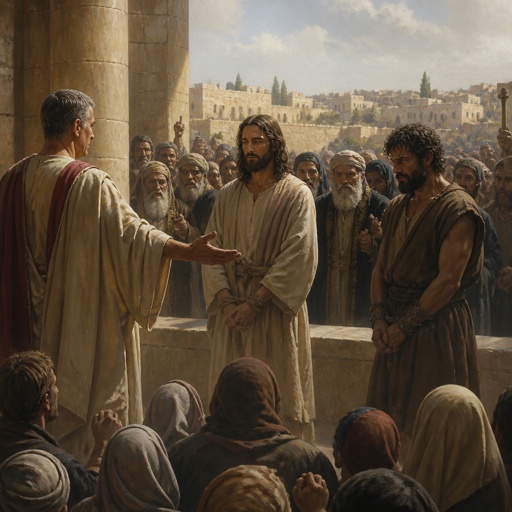
"But the chief priests and the elders persuaded the crowd to ask for Barabbas and to have Jesus executed. “Which of the two do you want me to release to you?” asked the governor. “Barabbas,” they answered. “What shall I do, then, with Jesus who is called the Messiah?” Pilate asked. They all answered, “Crucify him!” “Why? What crime has he committed?” asked Pilate. But they shouted all the louder, “Crucify him!”" - Matthew 27:20-23

Matthew 20:27 - "And whosoever will be chief among you, let him be your servant:"

"And whosoever will be chief among you, let him be your servant:" - Matthew 20:27

Matthew 27:46

Matthew 27:35

Matthew 24:27

Matthew 27:26

Matthew 27:26

Matthew 27: 38

Exodus 27:20

Exodus 27:20

John 20:27

Exodus 27:20

John 20:27

Matthew 27:27 - "Then the soldiers of the governor took Jesus into the common hall, and gathered unto him the whole band of soldiers."

Matthew 7:24-27

Exodus 27:19-20

Matthew 27:16 - "And they had then a notable prisoner, called Barabbas."

Matthew 27:36 - "And sitting down they watched him there;"

Matthew 27:18 - "For he knew that for envy they had delivered him."

Matthew 22:27 - "And last of all the woman died also."

Matthew 27:39 - "¶ And they that passed by reviled him, wagging their heads,"

Matthew 17:20

Matthew 18:20

matthew 20:3

Matthew 18:20

Matthew 18:20