The Goodness of the Master: A Reflection on Matthew 20:15
"Is it not lawful for me to do what I will with mine own? Is thine eye evil, because I am good?" - Matthew 20:15
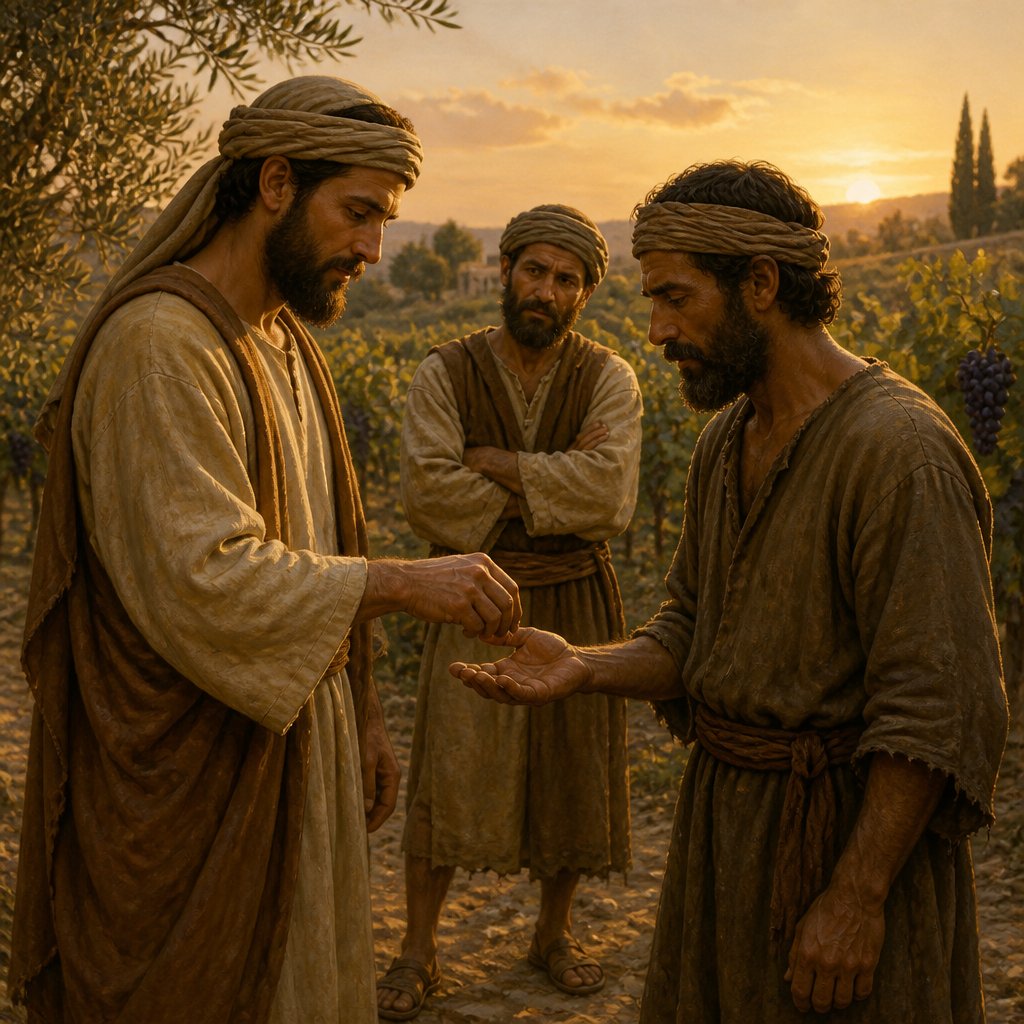
As we delve into the parable of the laborers in the vineyard, particularly focusing on the profound statement from Matthew 20:15, we are invited to consider the heart of God and how our perceptions often skew our understanding of His goodness. The verse reads: "Is it not lawful for me to do what I will with mine own? Is thine eye evil, because I am good?"
In the context of this parable, Jesus employs a narrative to illustrate the kingdom of heaven and the radical nature of divine grace. Here, the landowner hires workers at different times throughout the day: some at dawn, others at midday, and still others at the eleventh hour. When the day ends, he pays all the workers the same wage, which incites jealousy among those who worked longer. In their complaint, we see a tendency that resides in all of us—the desire for fairness dictated by our standards rather than God's generosity.
The question Jesus poses at the end of this parable invites us to reflect deeply on the nature of good and evil from God’s perspective. "Is thine eye evil, because I am good?" This poignant inquiry urges us to examine how we view God's goodness—not only in relation to ourselves but towards others. An "evil eye" in biblical terms signifies envy or a begrudging spirit, questioning the fairness of what God deems good. In the earnestness of our own toil, we often fall prey to the temptation of jealousy, silently questioning why God's grace seems to flow more freely upon others.
Consider the laborers who were hired first. Their response is a reflection of human nature. They worked under the assumption that their labor earned them a right to more sustenance. They viewed the vineyard owner’s generosity through the lens of their struggle and effort. But herein lies a profound principle: God's grace is not earned but freely given. The vine may yield its fruit to those who labor tirelessly throughout the day, yet it also provides sustenance to those who arrive late, at the very end of the day, through no effort of their own.
In our faith journeys, we often gauge our worthiness based on our accomplishments, church attendance, or service in ministry. Meanwhile, God operates from a place of infinite grace, where every soul is equally valued and cherished. This abundance confronts our mindset of scarcity: that if another receives grace, it diminishes the grace available to us. Such a narrow view recalls the bigger truth about God's unwavering love. He desires to pull us closer into His embrace, not by our striving, but by our surrender.
As we meditate on the statement of the landowner, we are reminded that God’s sovereignty and His choices are not up for debate. "Is it not lawful for me to do what I will with mine own?" God's authority and decisions regarding His blessings and grace rest inherently with Him alone. Our role is to embrace this reality without resentment while cultivating a heart that rejoices in the goodness of others. Rejoicing in another's blessings allows us not only to see God’s goodness at work in their lives but also to share in that joy.
Thus, let us strive to transform our "evil eyes" of envy and comparison into instruments of gratitude and celebration. In response to God’s relentless goodness, may we allow ourselves to bask in the grace He lavishes upon us, irrespective of how others perceive their share. Instead of measuring our worth against another’s position, we should collectively lift our voices in thanks, recognizing that there is enough of the Father’s love to go around. In this, we find true freedom—a release from the chains of competition and comparison.
In closing, let us remember that grace is not about what we deserve, but about the unfathomable generosity of a good Master who invites us into His vineyard to share in the fruit of His labor, regardless of how long or hard we think we have worked.
Want to reflect more on Matthew 20:15?
Continue your spiritual journey with Bible Chat — an AI-powered tool for exploring God's Word through conversation. Ask questions, discover connections, and deepen your understanding.
Get Our Apps


Matthew 20:15 Artwork

Matthew 20:15 - "Is it not lawful for me to do what I will with mine own? Is thine eye evil, because I am good?"

"Is it not lawful for me to do what I will with mine own? Is thine eye evil, because I am good?" - Matthew 20:15

Matthew 15 : 1-20

Matthew 15:20 - "These are the things which defile a man: but to eat with unwashen hands defileth not a man."

"These are the things which defile a man: but to eat with unwashen hands defileth not a man." - Matthew 15:20

matthew 15 matthew 15:10

Matthew 15:19-20 - "For out of the heart come evil thoughts—murder, adultery, sexual immorality, theft, false testimony, slander. These are what defile a person; but eating with unwashed hands does not defile them."

Matthew 17:20

Matthew 18:20

matthew 20:3

Matthew 18:20

Matthew 18:20

Matthew 17:20

Matthew 15:18-20 - "But the things that come out of a person's mouth come from the heart, and these defile them. For out of the heart come evil thoughts—murder, adultery, sexual immorality, theft, false testimony, slander. These are what defile a person; but eating with unwashed hands does not defile them."

Matthew 26:15

Matthew 26:15

Matthew 15:23

Matthew 24:15

Matthew 28:19-20

matthew 5 13-20

Matthew 20:29-34

Matthew 15:15 - "Then answered Peter and said unto him, Declare unto us this parable."

Matthew 5:15

Matthew 15:23

Matthew 5:15

Matthew 28: 19-20

Matthew 28:19-20

Matthew 28:19-20

Matthew 20:20 - "¶ Then came to him the mother of Zebedee's children with her sons, worshipping him, and desiring a certain thing of him."

Genesis 15:20