The Unseen Kingdom: Understanding Our Place in Christ
"He saith, Yes. And when he was come into the house, Jesus prevented him, saying, What thinkest thou, Simon? of whom do the kings of the earth take custom or tribute? of their own children, or of strangers?" - Matthew 17:25
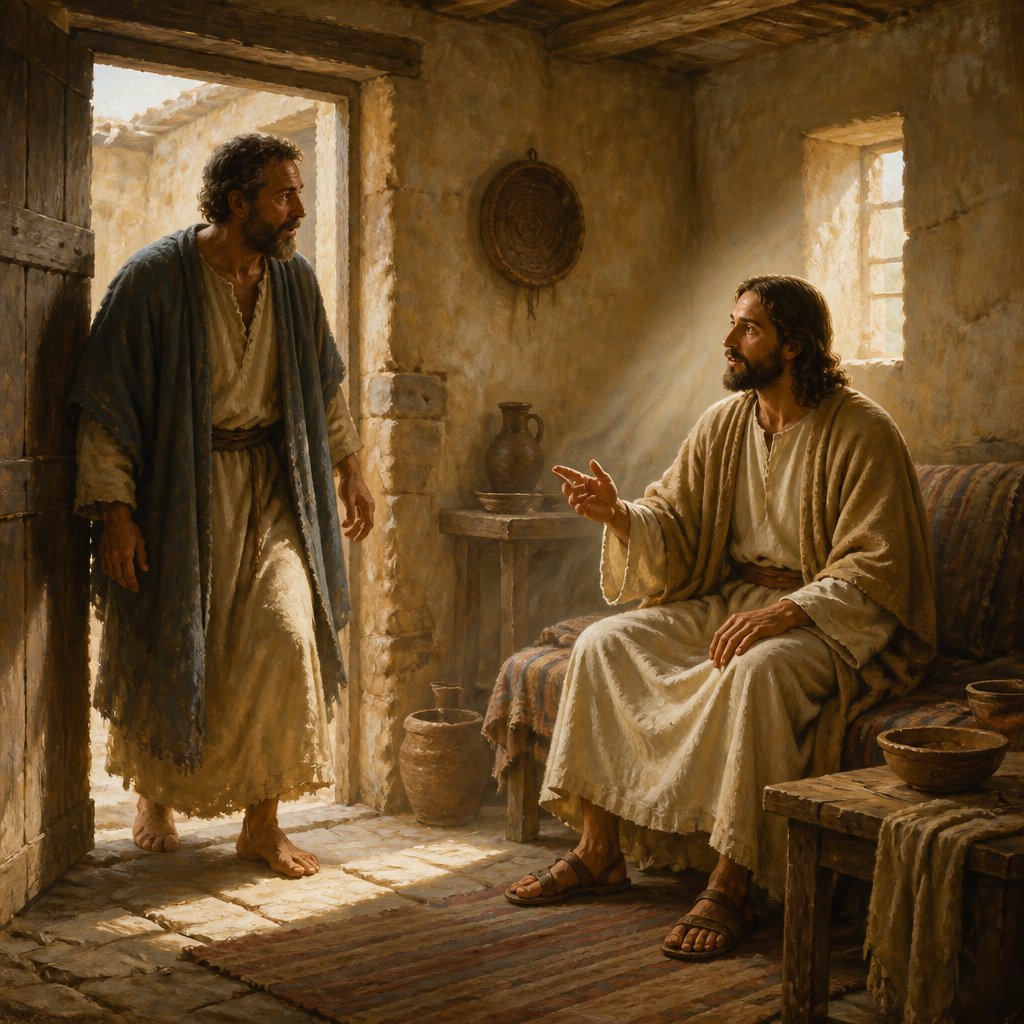
In Matthew 17:25, we find a fascinating interaction between Jesus and Peter that holds tremendous significance for us not only as believers but also as children of the King. The verse reads: "He saith, Yes. And when he was come into the house, Jesus prevented him, saying, What thinkest thou, Simon? of whom do the kings of the earth take custom or tribute? of their own children, or of strangers?" In this moment, Jesus is revealing a profound truth about identity, inheritance, and the nature of God's kingdom.
To set the scene, Peter is approached regarding the temple tax, a form of tribute that was levied on the Jewish people. As a faithful disciple, Peter instinctively responds to the inquiry with a quick affirmation of compliance, but he carries this weight into the house where he meets Jesus. It is essential to note that the word "prevented" here means "to go before," indicating that Jesus, in His omniscience, was aware of Peter's thoughts and the pressures of the situation. Jesus, in His gentle yet profound manner, initiates a crucial discussion with Peter about the expectations placed upon him as a child of God.
He asks Peter about the kings of the earth: do they tax their own children, or do they tax strangers? This rhetorical question illustrates a spiritual principle that transcends earthly customs. In the earthly realm, it is customary for kings to impose taxes on those who are outside their family, unfamiliar faces who belong to a different category—strangers. However, Jesus points to a divine truth that speaks of our sonship in the Kingdom of God. As children of the King, who shall tax us when we are heirs to an eternal inheritance and part of a royal lineage?
This conversation leads us to contemplate our identity in Christ. As believers, we share in a heavenly heritage. Romans 8:17 assures us, "And if children, then heirs; heirs of God, and joint-heirs with Christ; if so be that we suffer with him, that we may be also glorified together." Thus, we are reminded that, just as Jesus is not bound by the worldly customs of taxation, neither are we compelled to maintain our identity based on the earthly systems of recognition and acceptance.
Jesus proceeds even further to emphasize that, while He is indeed the Son of God—the ultimate heir of the Kingdom—He chooses to humble Himself by complying with the tax. He tells Peter to go fishing and to find a coin in the fish's mouth to pay the temple tax for both of them. Here, we see a beautiful picture of God's provision and the miraculous nature of our relationship with Him. Jesus does not simply dodge the expectations; instead, He provides for them in a manner that emphasizes trust and deliverance.
In this passage, we learn about the balance between standing in our identity and the humility required in our earthly interactions. The challenge for us, as followers of Christ, is to navigate the world without losing sight of who we are in Him. We must engage in the customs of our society when called to do so, understanding that God ultimately prevails over all taxation and tributes. Our ultimate allegiance is not to earthly kingdoms but to the heavenly realm.
As you reflect on this interaction between Jesus and Peter, consider your own place in the Kingdom. Are you living as someone who recognizes their identity as a child of God? Are you navigating the demands of life with both confidence in Christ’s provision and humility in earthly matters? May we be encouraged to view the world through the lens of our divine inheritance and engage in this world as ambassadors of Christ's love and grace. Let us remember that we are not strangers to God, but beloved children, called to reflect His glory to all we encounter.
Want to reflect more on Matthew 17:25?
Continue your spiritual journey with Bible Chat — an AI-powered tool for exploring God's Word through conversation. Ask questions, discover connections, and deepen your understanding.
Get Our Apps


Matthew 17:25 Artwork

Matthew 17:25 - "He saith, Yes. And when he was come into the house, Jesus prevented him, saying, What thinkest thou, Simon? of whom do the kings of the earth take custom or tribute? of their own children, or of strangers?"
"He saith, Yes. And when he was come into the house, Jesus prevented him, saying, What thinkest thou, Simon? of whom do the kings of the earth take custom or tribute? of their own children, or of strangers?" - Matthew 17:25

Matthew 25:17 - "And likewise he that had received two, he also gained other two."
"And likewise he that had received two, he also gained other two." - Matthew 25:17

Matthew 25:25

Matthew 25: 14-25

Matthew 26:25

Matthew 16:25

Matthew 25:21

Matthew 25:23

matthew 25:31

Matthew 25:21

Matthew 17:17-18

Matthew 17:17-18

Matthew 25:23

Matthew 21:25

Matthew 25:25 - "And I was afraid, and went and hid thy talent in the earth: lo, there thou hast that is thine."

Genesis 25-17

Genesis 17-25

Matthew 25:11-13

Matthew 6:25 – 34

Matthew 25:4 - "But the wise took oil in their vessels with their lamps."

Matthew 17:20

Matthew 6:17

Matthew 17:20

Joshua 6:17-25

Numbers 25:17 - "Vex the Midianites, and smite them:"

Matthew 25:5 - "While the bridegroom tarried, they all slumbered and slept."

Matthew 24:25 - "Behold, I have told you before."

Matthew 25:7 - "Then all those virgins arose, and trimmed their lamps."