The Mystery of the Messiah: Understanding Matthew 16:20
"Then charged he his disciples that they should tell no man that he was Jesus the Christ." - Matthew 16:20

In the profound discourse found in Matthew 16:20, we encounter a pivotal moment in the Gospel narrative where Jesus, having revealed His true identity to His disciples, commands them, “Then charged he his disciples that they should tell no man that he was Jesus the Christ.” This injunction serves as a gateway to understanding not only the nature of Jesus’ mission but the intricate relationship between divine revelation and human understanding.
To grasp the depth of this command, we must first consider the context in which it is given. Just prior to this verse, Peter has recognized Jesus as “the Christ, the Son of the living God” (Matthew 16:16). This moment of revelation is a culmination of the disciples’ journey with Jesus thus far—they have witnessed His miracles, heard His teachings, and lived alongside Him. Yet, despite Peter’s declaration, Jesus insists they keep this truth confidential.
One interpretation of this directive relates to the timing and nature of Jesus’ ministry. Through the Gospels, we see a repeated focus on the Kingdom of God being evident in the coming of the Messiah; however, the concept of Messiah did not align with the prevailing Jewish expectations of a political liberator or an earthly king. Jesus was not simply an earthly Messiah; He was the divine Savior whose mission transcended the expectations of His contemporaries. By telling His disciples to remain silent about His identity, Jesus was emphasizing that the full understanding of His messianic role would not be fully realized until His death and resurrection.
Moreover, this command reveals the enigmatic nature of Jesus. Throughout His earthly ministry, He often operated in a mode of concealment. His miracles, while public, were shrouded in His teachings about humility, secrecy, and the deeper spiritual truths of the Kingdom. In Matthew 13, when He shares the parables, He often explains to the disciples that He speaks in parables so that only those who are open to understanding would grasp the truth (Matthew 13:10-17). In this light, the command in Matthew 16:20 showcases the strategic nature of Jesus’ mission—He was deliberately orchestration the unfolding of His identity in a manner that would eventually lead to the fulfillment of God’s plan of redemption.
The disciples’ silence, however, is not merely about tactical evasion; it raises questions of faith and understanding. The disciples had to wrestle with this knowledge internally before they could articulate it externally. This reflects a spiritual maturation that each believer is invited to partake in. It suggests that faith is not merely about knowing who Jesus is but about understanding the implications of that knowledge for our lives and for the world around us. How often do we sit with the truth of Christ in our own hearts, grappling with what it means for us before we rush to share it? The call is to deepen our encounter with Christ before we utter His name to the world.
In our own journey of faith, we might feel compelled to share our experiences and revelations about Jesus, and rightly so. Yet, Matthew 16:20 invites us to consider how ready we are to truly reflect the fullness of Christ’s message. Are we engaging in diligent prayer, seeking wisdom from the Holy Spirit to understand the depth and nuances of our faith? This is the essence of discipleship—the ongoing struggle to comprehend Christ in His entirety, which prepares us to share Him more authentically with others.
Ultimately, this verse serves as a reminder of the mystery surrounding Jesus. His identity as the Messiah is rich with meaning and complexity, beckoning us to explore deeper than surface-level understanding. As we reflect on this passage, let us consider how we can embrace and nurture our relationship with Christ, allowing the Holy Spirit to guide us in revealing His truths in the appropriate time and manner. Let us be disciples devoted to deepening our relationship with Christ, so when we do share His name, we do so with conviction, clarity, and an understanding of the majesty that comes with being 'Jesus the Christ'.
Want to reflect more on Matthew 16:20?
Continue your spiritual journey with Bible Chat — an AI-powered tool for exploring God's Word through conversation. Ask questions, discover connections, and deepen your understanding.
Get Our Apps


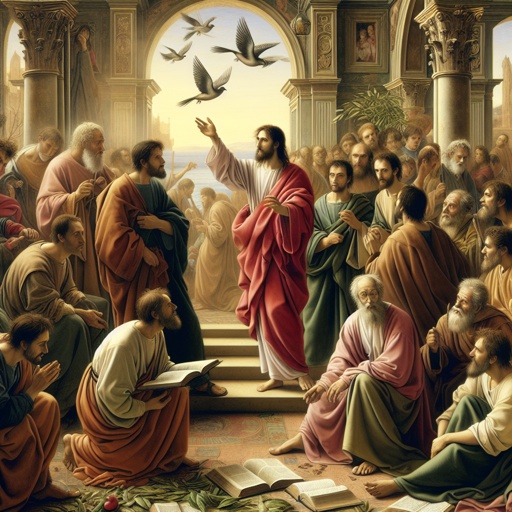
Matthew 16:20 Artwork

Matthew 16:20 - "Then charged he his disciples that they should tell no man that he was Jesus the Christ."

"Then charged he his disciples that they should tell no man that he was Jesus the Christ." - Matthew 16:20

Matthew 20:16 - "So the last shall be first, and the first last: for many be called, but few chosen."

"So the last shall be first, and the first last: for many be called, but few chosen." - Matthew 20:16

Matthew 3:16

Matthew 18:20

Matthew 17:20

Matthew 3:16

Matthew 3:16

matthew 20:3

Matthew 18:20

Matthew 18:20

Matthew 17:20

Matthew 16:25

Matthew 16:16 - "And Simon Peter answered and said, Thou art the Christ, the Son of the living God."

matthew 5 13-20

Matthew 28:19-20

Matthew 20:29-34

Matthew 28:19-20

Matthew 28: 19-20

Matthew 28:19-20

Matthew 15 : 1-20

Matthew 20:20 - "¶ Then came to him the mother of Zebedee's children with her sons, worshipping him, and desiring a certain thing of him."

Mark 16:20
Mark 16:20

Deuteronomy 20:16
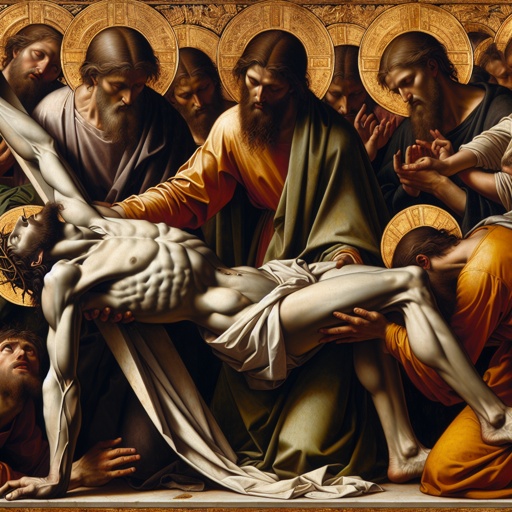
Mark 16:20

Genesis 20-16

Mark 16:20

Deuteronomy 20:16