The Divine Paradox of Need and Law
"How he entered into the house of God, and did eat the shewbread, which was not lawful for him to eat, neither for them which were with him, but only for the priests?" - Matthew 12:4
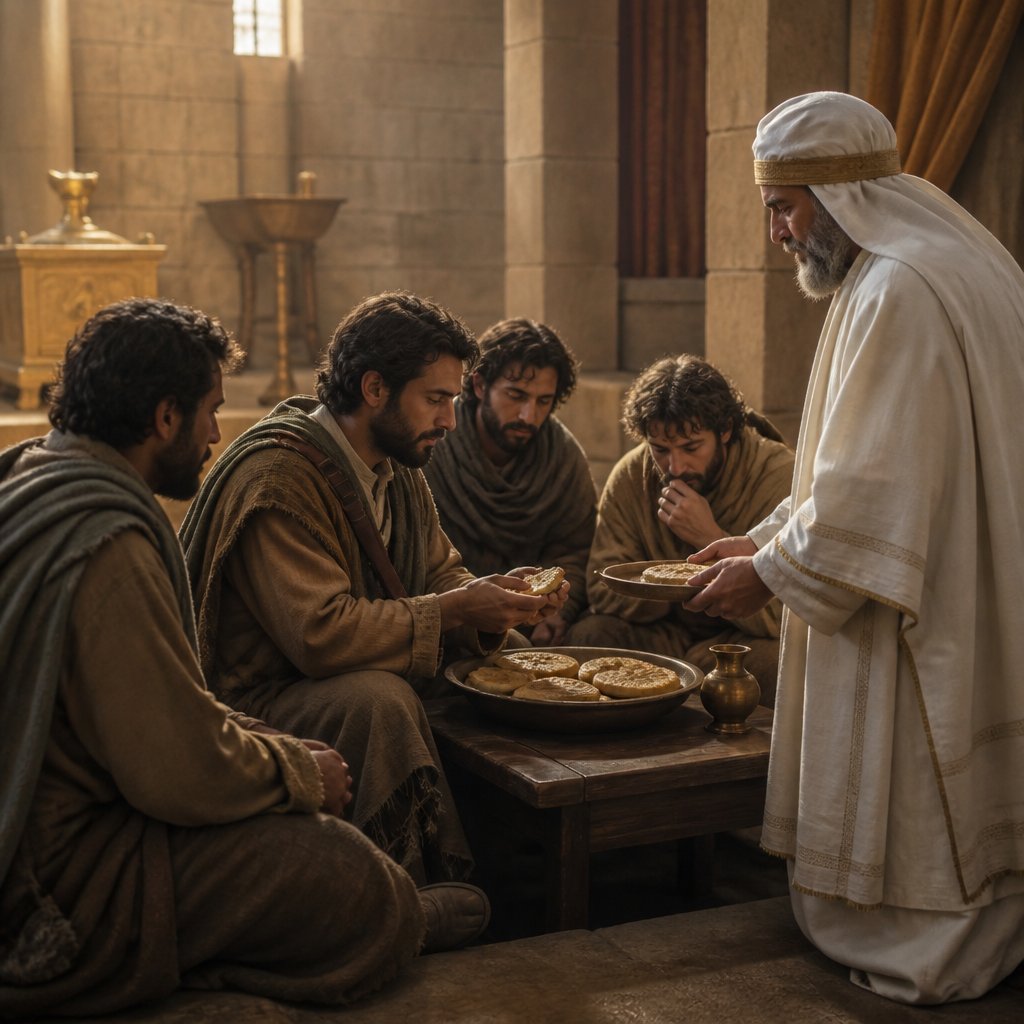
Matthew 12:4 (KJV) states: "How he entered into the house of God, and did eat the shewbread, which was not lawful for him to eat, neither for them which were with him, but only for the priests?" This powerful verse draws us into a deeper understanding of the nature of God’s laws, His blessings, and the relational essence of our walk with Him.
In this passage, Jesus refers to an incident involving King David, who, along with his men, found himself in dire need while fleeing from Saul. They arrived at Nob, to the house of God, seeking sustenance. However, the only food available was the shewbread—consecrated bread that only priests were permitted to eat. By consuming the shewbread, David not only broke the ceremonial law but also showcased a profound truth about the intent of God’s word.
At first glance, this act seems to challenge the very emphasis of obedience to the law. The Mosaic Law had clear stipulations regarding the shewbread, which was to remain untouched except by the priests. This raises a critical question: What does God desire from us in times of need? Is it mere compliance with the law or a heart aligned with compassion and necessity?
This scenario sheds light on the nature of legalism versus the heart of God. Jesus uses this example to highlight that while laws are essential and maintain order, they must be interpreted through the lens of love, mercy, and human need. It prompts us to consider the nature of God, who desires mercy over sacrifice (Matthew 9:13). The juxtaposition between law and love is not merely a battle between right and wrong; it is a call to understand the heart behind divine instructions.
The shewbread represents the moments in life where divine provision is available, even when it seems unconventional. Jesus uses the example of David to teach that there are instances when human need transcends ceremonial purity. It serves as a reminder that our relationship with God is deeply relational rather than merely transactional. Can we imagine a God who would encourage us to seek Him for sustenance, even when it feels against the rules?
Living in today’s world often presents us with laws, rules, and expectations that may seem rigid and unyielding. We frequently encounter situations where the rules may not reflect the realities of our lives. In those moments, how do we respond? Like David, do we boldly approach our Father in Heaven, trusting His provision and grace to guide us through dilemmas that challenge our understanding?
This teaching pushes us to focus on the heart of worship rather than simply the outward expressions of religious observance. Jesus’ response shows that our relationship with God should not be confined by fear of breaking laws when our hearts are aligned with His. David's daring act in a moment of necessity illustrated a principle central to Christ's ministry: God prioritizes our heart’s intent over rigid adherence to the law.
As we navigate our faith journey, we must remember that God’s love is foundational. In every interaction, He beckons us towards understanding, grace, and mercy. Consider how we might share that love with others caught in their struggles, perhaps trapped by legalism or fear.
In conclusion, Matthew 12:4 calls us to reflect on our understanding of God’s law in our lives. We are invited to experience divine grace that meets our needs and liberates us from the constraints of legalism. It challenges us to be conduits of grace and mercy, revealing a God who heals the broken and nourishes the hungry. Therefore, let us approach His presence boldly, acknowledging our needs, while delighting in the fact that He sees our hearts, and in that, He offers unending grace.
Want to reflect more on Matthew 12:4?
Continue your spiritual journey with Bible Chat — an AI-powered tool for exploring God's Word through conversation. Ask questions, discover connections, and deepen your understanding.
Get Our Apps


Matthew 12:4 Artwork

Matthew 12:4 - "How he entered into the house of God, and did eat the shewbread, which was not lawful for him to eat, neither for them which were with him, but only for the priests?"
"How he entered into the house of God, and did eat the shewbread, which was not lawful for him to eat, neither for them which were with him, but only for the priests?" - Matthew 12:4

Matthew 4:12 - "¶ Now when Jesus had heard that John was cast into prison, he departed into Galilee;"

"¶ Now when Jesus had heard that John was cast into prison, he departed into Galilee;" - Matthew 4:12

Matthew 3:11-12

Matthew 3:11-12

Matthew 3:12

Matthew 3:12

Matthew 23:12

Matthew 7:12

Matthew 23:12

Matthew 7:12

Matthew 3:12

Matthew 2:1-12

Matthew 12:36-37

Matthew 5:1 a 12

Matthew 5:8-12

Matthew 2:1-12

matthew 12:36-37

Matthew 2:1-12

Matthew 5:1 a 12

Matthew 2:1-12

Matthew 12:36-37

Matthew 12:12 - "How much then is a man better than a sheep? Wherefore it is lawful to do well on the sabbath days."

Matthew 10:12 - "And when ye come into an house, salute it."

Matthew 4:10

Matthew 4:1

Matthew 6:4

Matthew 12:21 - "And in his name shall the Gentiles trust."

Matthew 12:16 - "And charged them that they should not make him known:"