Healing on the Sabbath: A Heart of Compassion
"¶ And, behold, there was a man which had his hand withered. And they asked him, saying, Is it lawful to heal on the sabbath days? that they might accuse him." - Matthew 12:10
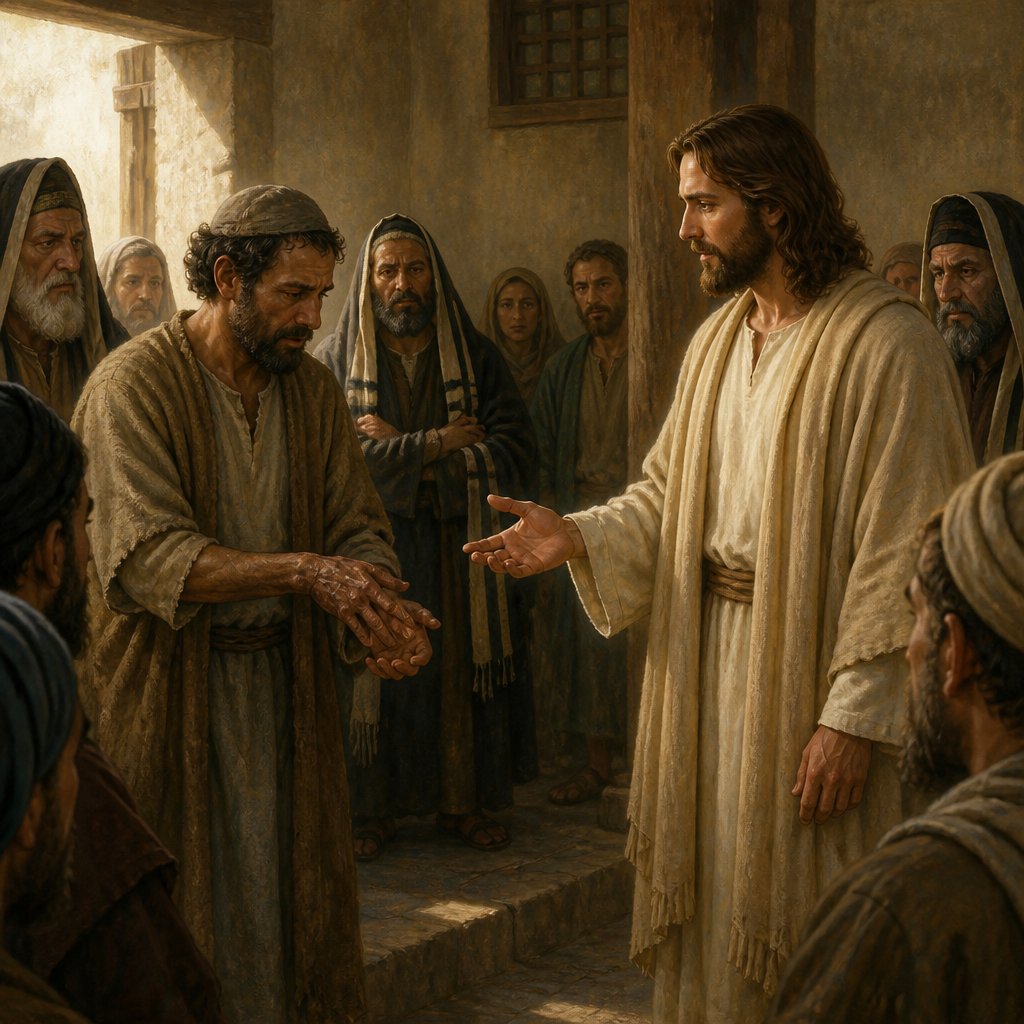
***Scripture: Matthew 12:10 (KJV)***
*“And, behold, there was a man which had his hand withered. And they asked him, saying, Is it lawful to heal on the sabbath days? that they might accuse him.”*
In this poignant moment captured in the Gospel of Matthew, we are introduced to a scene that challenges our understanding of law, compassion, and the purpose of rest. The narrative places us alongside Jesus, who confronts a critical question posed by the Pharisees regarding the keeping of the Sabbath. On this holy day of rest, the Pharisees, known for their stringent interpretations of the Law, are not simply interested in the fulfillment of the Sabbath rest. Instead, they seek to trap Jesus into a debate, ready to accuse Him of breaking the law by healing a man’s withered hand.
The man with the withered hand becomes the focal point of this story. His condition has rendered him unable to work fully, likely impacting not only his life but also that of his family. The implications of disability in the first-century Jewish context extended beyond physical impairment; it often bore social stigma, and the individuals were sometimes considered unclean or under divine disfavor. To witness the suffering of such a man on a day deemed sacred, must have stirred Jesus' heart with compassion.
Jesus responded to the inquiry with a profound understanding of compassion over ritualistic law. He posed a question of his own meant to reveal the heart of the Sabbath: *“What man shall there be among you, that shall have one sheep, and if it fall into a pit on the Sabbath day, will he not lay hold on it, and lift it out?”* (Matthew 12:11). In this rhetorical question, Jesus illustrates that even the most mundane acts of care extend beyond the strict boundaries of the Sabbath law. The love for the one, the specific need in front of us, takes precedence.
The lesson we draw from this scripture extends beyond the historical context of Sabbath observance. It challenges us in our daily interactions and how we regard those who are suffering around us. Are we, like the Pharisees, more concerned with the letter of the law rather than the essence of love and mercy? It is easy to become trapped in our routines, adhering strictly to protocols and rituals that, while valuable, can sometimes overshadow the compassionate action we are called to exemplify.
Furthermore, Jesus' ultimate declaration, *“It is lawful to do well on the sabbath days,”* (Matthew 12:12) provides us a foundational principle on the nature of God’s law. In God’s kingdom, the law of love and compassion supersedes ritualistic observance. The Sabbath was intended as a gift to humanity, a time to step back from our labors and reconnect with our Creator and those around us. When we turn our focus inward and restrict our actions to mere legalistic adherence, we risk losing sight of the very heart of God, who is inherently loving and merciful.
As we contemplate this passage, let us ask ourselves: Are there *withered hands* in our lives or communities that are in need of healing? Who are the individuals suffering under the weight of sin, physical ailment, or emotional hardship? Let us be reminded today that every moment provides us with an opportunity to embody the love of Christ—to lift the burden of the ailing, to carry the outcast, to extend grace during moments when rules might suggest otherwise.
In conclusion, the challenge of this scripture takes root deep within our hearts, prompting us toward action. As we observe the Sabbath—or any day—let us do so with a heart open to acts of kindness, healing, and compassion. For in these moments, we truly reflect the character of Christ, who came not to condemn but to heal the broken. May our lives echo His compassion, for true rest is found in loving others as He loves us.
Want to reflect more on Matthew 12:10?
Continue your spiritual journey with Bible Chat — an AI-powered tool for exploring God's Word through conversation. Ask questions, discover connections, and deepen your understanding.
Get Our Apps


Matthew 12:10 Artwork
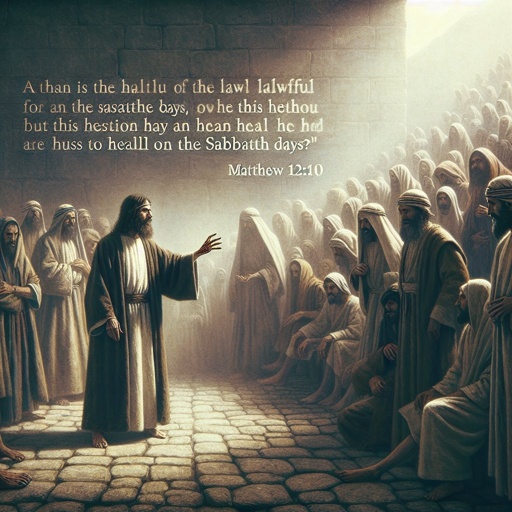
Matthew 12:10 - "¶ And, behold, there was a man which had his hand withered. And they asked him, saying, Is it lawful to heal on the sabbath days? that they might accuse him."

Matthew 12:10-12 - "And a man was there whose hand was withered. And they questioned Jesus, asking, "Is it lawful to heal on the Sabbath?"—so that they might accuse Him. And He said to them, "What man is there among you who has a sheep, and if it falls into a pit on the Sabbath, will he not take hold of it and lift it out? How much more valuable then is a man than a sheep! So then, it is lawful to do good on the Sabbath.""
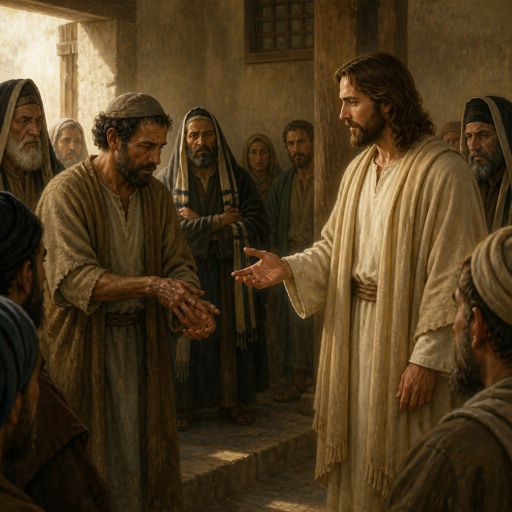
"¶ And, behold, there was a man which had his hand withered. And they asked him, saying, Is it lawful to heal on the sabbath days? that they might accuse him." - Matthew 12:10
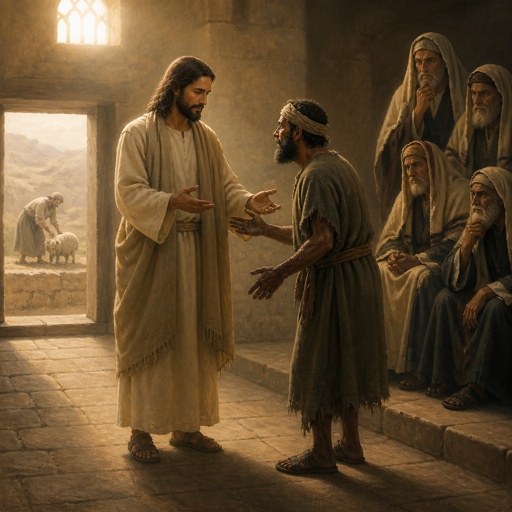
"And a man was there whose hand was withered. And they questioned Jesus, asking, "Is it lawful to heal on the Sabbath?"—so that they might accuse Him. And He said to them, "What man is there among you who has a sheep, and if it falls into a pit on the Sabbath, will he not take hold of it and lift it out? How much more valuable then is a man than a sheep! So then, it is lawful to do good on the Sabbath."" - Matthew 12:10-12

Matthew 10:12 - "And when ye come into an house, salute it."

"And when ye come into an house, salute it." - Matthew 10:12

matthew 15 matthew 15:10

Matthew 3:11-12

Matthew 3:11-12

Matthew 3:12

Matthew 3:12

Matthew 23:12

Matthew 7:12

Matthew 23:12

Matthew 7:12

Matthew 3:12

Matthew 1:10

Matthew 18:10

Matthew 1:10

Matthew 4:10

Matthew 10:3 - "Philip, and Bartholomew; Thomas, and Matthew the publican; James the son of Alphaeus, and Lebbaeus, whose surname was Thaddaeus;"

for the workman is worthy his meat Matthew 10:10

for the workman is worthy of his meat Matthew 10:10

Matthew 2:1-12

Matthew 12:36-37

Matthew 5:1 a 12

matthew 12:36-37

Matthew 5:8-12

Matthew 2:1-12

Matthew 2:1-12