The Unchanging Bread of Life
"But Jesus said unto her, Let the children first be filled: for it is not meet to take the children's bread, and to cast it unto the dogs." - Mark 7:27
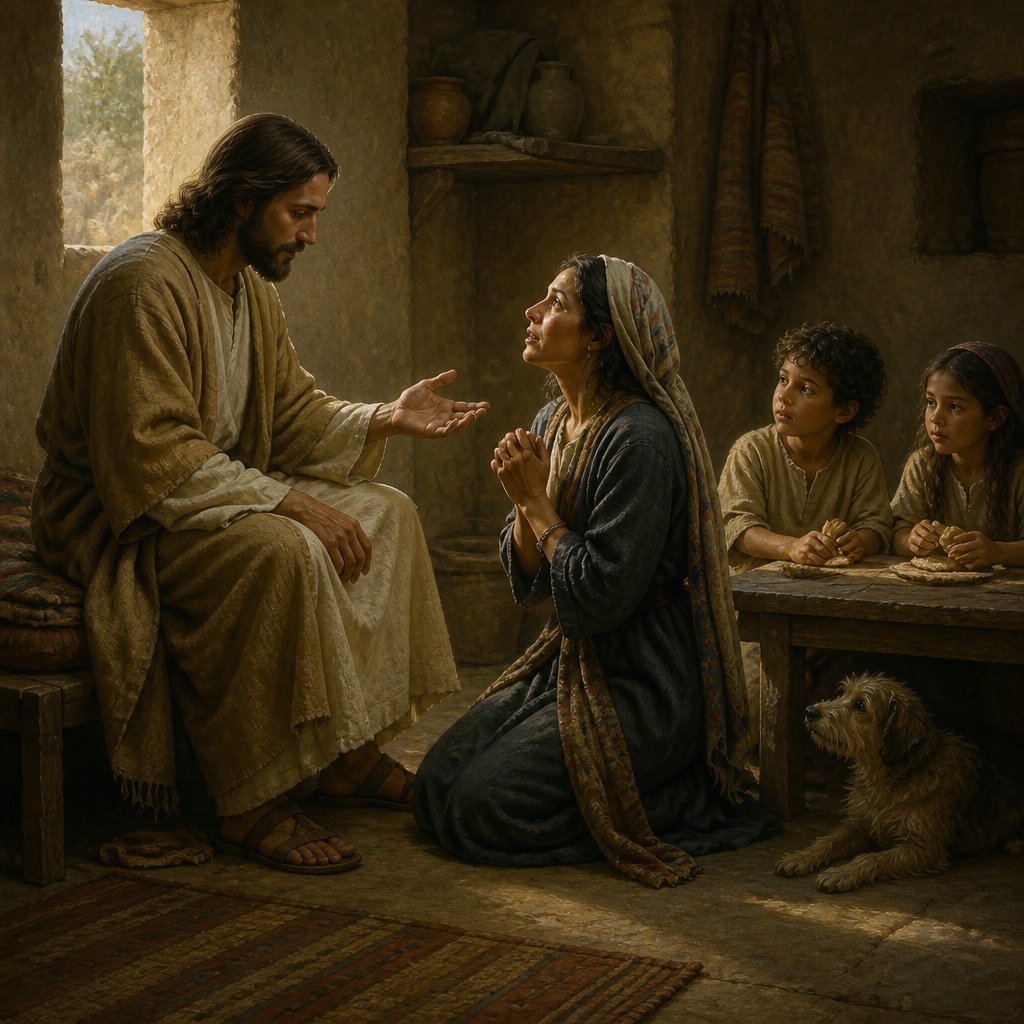
In Mark 7:27 (KJV), we find a profound moment in the ministry of Jesus, where he dialogues with a Syrophenician woman who seeks healing for her daughter. The verse reads: "But Jesus said unto her, Let the children first be filled: for it is not meet to take the children's bread, and to cast it unto the dogs."
At first glance, Jesus' words may seem harsh or unkind, particularly when he refers to the woman's request as akin to tossing the bread meant for children to dogs. However, a closer examination reveals the depth of this encounter and the remarkable truths this moment unveils about faith, inclusion, and the transformative nature of God’s love.
**Understanding the Bread**
In biblical times, bread was a staple of nourishment, symbolizing sustenance and life. Jesus refers to “the children’s bread,” indicating the blessings and promises that were initially extended to the Israelites—the chosen people of God. By asserting that it is not right to take this bread and cast it to the dogs, Jesus is highlighting the order of divine blessing but is also inviting us into a deeper understanding of His mission.
The term “dogs” in the Jewish context can be understood to refer to Gentiles, as the Jews often viewed non-Jews in this derogatory light. However, it is crucial to note that the woman's response reveals an extraordinary aspect of faith that transcends societal barriers and boundaries. Her clever reply, "Yes, Lord: yet the dogs under the table eat of the children's crumbs" (Mark 7:28, KJV), illustrates her deep understanding of grace and divine mercy. She recognizes that even the smallest portion of God's blessing is sufficient and powerful.
**A Lesson on Faith**
The interaction signifies a significant turning point in understanding God's grace. In her humility and desperation, the Syrophenician woman teaches us that faith does not rely solely on privilege or position within God’s family; it reaches out and grasps for hope under any circumstance. Her acknowledgment of being unworthy echoes throughout Scripture and connects to God's overarching message of inclusion.
This is where we start to see the truth of the Gospel shine forth. Through Jesus’ ministry, he eventually extends the invitation to all—Jew and Gentile alike. His reference to the “children” hints at the larger plan of salvation that includes all of mankind. As followers of Christ, we must recognize that we are called to extend God’s love to everyone, regardless of their background.
**The Transformative Power of Perspective**
When we approach our faith and God’s blessings, it invites us to examine our own perspective. Are we seeking bread for ourselves alone, or are we willing to see the crumbs that fall from the table of God’s grace? This woman teaches us to be present and aware of the blessings that even the "leftovers" of God can bring. She embodies the fervent faith that reminds us that God’s capacity to bless is never limited by our circumstances; His abundance overflows beyond our expectations.
As believers, we sometimes find ourselves in a position where we feel unworthy—a sentiment this woman encapsulates. Yet, her confidence in God’s compassion reminds us that His love does not discriminate. It calls us to a place of faith where we approach God boldly, reminding ourselves that even the smallest amount of His grace can transform circumstances.
**Conclusion**
In conclusion, Mark 7:27 not only offers a lesson in humility and persistent faith but calls us to be agents of grace in a world that often draws dividing lines. Let us strive to extend the invitation of God’s love to all, reaching out not just for ourselves but also offering crumbs of hope to those who are marginalized or overlooked. In God’s kingdom, there is always more than enough bread to go around, and His table is set wide for anyone who calls upon His name.
Want to reflect more on Mark 7:27?
Continue your spiritual journey with Bible Chat — an AI-powered tool for exploring God's Word through conversation. Ask questions, discover connections, and deepen your understanding.
Get Our Apps


Mark 7:27 Artwork
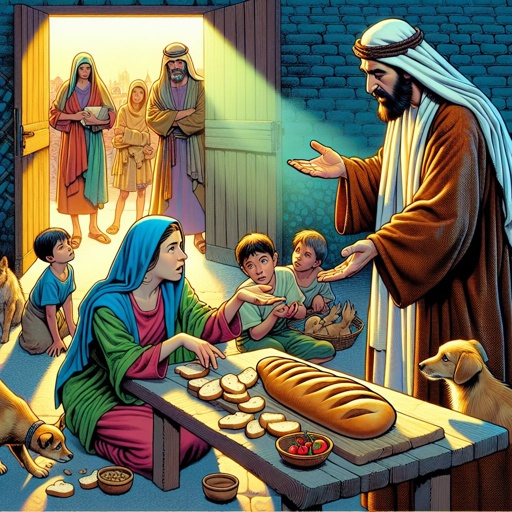
Mark 7:27 - "But Jesus said unto her, Let the children first be filled: for it is not meet to take the children's bread, and to cast it unto the dogs."
"But Jesus said unto her, Let the children first be filled: for it is not meet to take the children's bread, and to cast it unto the dogs." - Mark 7:27

Mark 2:27

Mark 8:27 - 35

Mark 8:27 - 35

Mark 8:27 - 35

Mark 8:27 - 35

Mark 8:27 - 35

Mark 9:27 - "But Jesus took him by the hand, and lifted him up; and he arose."

Mark 2:27 - "And he said unto them, The sabbath was made for man, and not man for the sabbath:"

Mark 12:27 - "He is not the God of the dead, but the God of the living: ye therefore do greatly err."

Mark 13:7

Mark 13:7

Mark 8:7

Mark 13:7

Mark 5:27 - "When she had heard of Jesus, came in the press behind, and touched his garment."

Mark 15:27 - "And with him they crucify two thieves; the one on his right hand, and the other on his left."

Mark 7:7 - "Howbeit in vain do they worship me, teaching for doctrines the commandments of men."

Mark 10:27 - "And Jesus looking upon them saith, With men it is impossible, but not with God: for with God all things are possible."

Mark 11:27 - "And they come again to Jerusalem: and as he was walking in the temple, there come to him the chief priests, and the scribes, and the elders,"

Mark 4:27 - "And should sleep, and rise night and day, and the seed should spring and grow up, he knoweth not how."

Mark 7:31-37

Mark 7:31-37

Proverbs 7:26-27

Mark 2:27-28 - "And he said unto them, The sabbath was made for man, and not man for the sabbath: Therefore the Son of man is Lord also of the sabbath."

Mark 7:7 (KJVA) 7 Howbeit in vain do they worship me, teaching for doctrines the commandments of men.

Mark 7:7 (KJVA) 7 Howbeit in vain do they worship me, teaching for doctrines the commandments of men.

Matthew 7:24-27

Mark 7:7 (KJVA) 7 Howbeit in vain do they worship me, teaching for doctrines the commandments of men.

Mark 7:7 (KJVA) 7 Howbeit in vain do they worship me, teaching for doctrines the commandments of men.