The Nature of Goodness: Reflecting on Mark 10:18
"And Jesus said unto him, Why callest thou me good? there is none good but one, that is, God." - Mark 10:18

In Mark 10:18, we encounter a profound exchange between Jesus and a rich young ruler who approaches Him with a question of eternal significance. The verse states, "And Jesus said unto him, Why callest thou me good? there is none good but one, that is, God." This brief yet impactful interaction highlights a fundamental truth about goodness and the nature of Christ. It invites us to deeper reflection on our understanding of goodness, authority, and our relationship with God.
To many, goodness is often measured by societal standards, behaviors, and achievements. We recognize the good in the acts of kindness, charity, and moral integrity displayed by individuals. However, Jesus redirects our attention away from human benchmarks and towards the divine measure of goodness—God Himself. In a world where terms like 'good' are tossed around casually, we need to understand Jesus' statement more deeply.
When the young ruler addressed Jesus as good, Jesus did not outright reject the compliment; rather, He sought to clarify the nature of goodness. By stating, "there is none good but one, that is, God," Jesus is not denying His divinity but illuminating the singular source of all goodness. This moment is an invitation for us to examine our definitions of good and our motivations in calling someone or something good. Are we looking to the perfect standard of God, or are we conforming our understanding to the shifting paradigms of human acceptance?
He raises an essential question: Why do we call anything good? When we label a person or behavior as "good," are we measuring up to God's absolute goodness, or are we operating from a partial and flawed human perspective? Recognizing that all goodness originates from God is humbling. It encourages us to seek not just to emulate good behavior but to align our hearts and minds with the source of goodness. This realization compels us to pursue a relationship with God, who is the ultimate standard, rather than settling for the superficialities of human accolades.
Jesus' response also serves to place Him firmly within the context of divinity and authority. By denying the title of 'good' in a human sense, He challenges us to rethink our understanding of who He is. Jesus is good because He is God. His goodness is not momentary or conditional; it stands eternal and unchanging against the backdrop of an often morally ambiguous world. When we acknowledge Jesus as good, we are not merely affirming a point of character; we are recognizing Him as the embodiment of God's nature.
Furthermore, this verse beckons us to acknowledge our own shortcomings and the flawed moral standings we often navigate. If we think of ourselves as inherently "good," we risk failing to recognize our faults before the holiness of God. In Romans 3:10, it reminds us, "As it is written, There is none righteous, no, not one." The contrast between God's goodness and our human condition points towards the need for redemption. It underscores why the grace of Christ is so essential—only in Him do we find true goodness and hope for transformation.
As we reflect on Mark 10:18, let us commit ourselves to pursue a relationship with God—the source of all goodness. In our interactions, may we strive for more than mere good deeds; let us embody the goodness that comes from knowing Christ and walking in His ways. Instead of labeling people or actions as good based solely on their contributions to society, we must cultivate a heart that discerns through the lens of God’s word and the spirit of Christ.
In prayer, ask the Lord to help you understand the greatness of His goodness and to reflect that in your life. May you be an ambassador of His goodness wherever you go, understanding that this is not a goodness of self-achievement but one that derives from His grace and transformative work within us. Let us never forget that to call Jesus good is to recognize our greater need for Him, putting our faith not in our works but in His righteousness and love.
Want to reflect more on Mark 10:18?
Continue your spiritual journey with Bible Chat — an AI-powered tool for exploring God's Word through conversation. Ask questions, discover connections, and deepen your understanding.
Get Our Apps


Mark 10:18 Artwork

Mark 10:18 - "And Jesus said unto him, Why callest thou me good? there is none good but one, that is, God."

"And Jesus said unto him, Why callest thou me good? there is none good but one, that is, God." - Mark 10:18

Mark 10
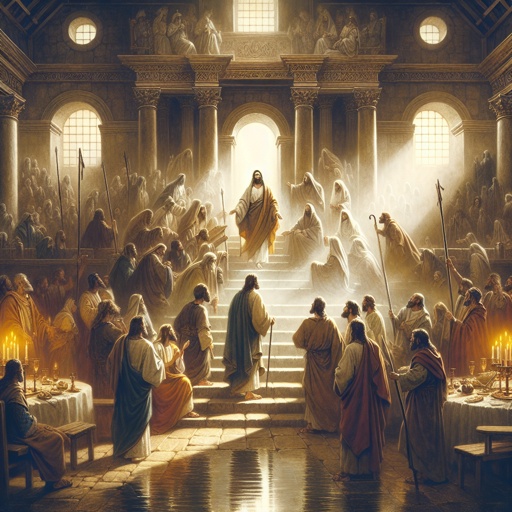
Mark 10

Mark 10

Mark 10

Mark 2:10

Mark 10:46

Mark 10:31

Mark 10:10 - "And in the house his disciples asked him again of the same matter."
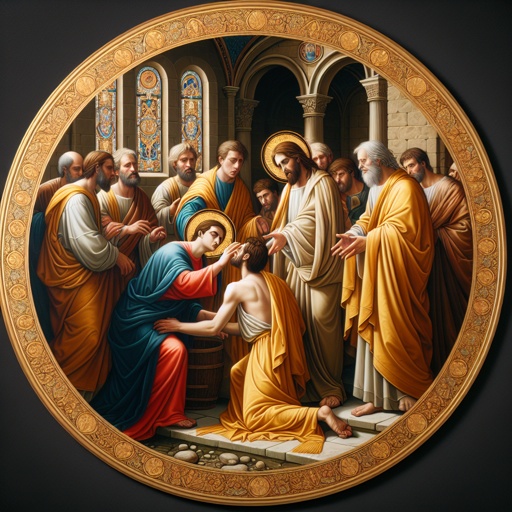
Mark 10:46

Mark 10:46

Mark 1:18 - "And straightway they forsook their nets, and followed him."

Mark 13:18 - "And pray ye that your flight be not in the winter."

Mark 15:18 - "And began to salute him, Hail, King of the Jews!"

Mark 4:18 - "And these are they which are sown among thorns; such as hear the word,"

Mark 10:35-45

Mark 10:17-30

Mark 10:35-45

Mark 10:13–16

Mark 10:17-30

Mark 10:35-45

Mark 10:35-45

Revelation 13:18 Mark of the Beast 666

Mark 10:44 - "And whosoever of you will be the chiefest, shall be servant of all."

Mark 12:18 - "¶ Then come unto him the Sadducees, which say there is no resurrection; and they asked him, saying,"

Mark 10:31 - "But many that are first shall be last; and the last first."

Mark 13:10 - "And the gospel must first be published among all nations."

Mark 8:18 - "Having eyes, see ye not? and having ears, hear ye not? and do ye not remember?"

Job 18:2 - "How long will it be ere ye make an end of words? mark, and afterwards we will speak."