The Hunger of the Heart: Lessons from David's Need
"And Jesus answering them said, Have ye not read so much as this, what David did, when himself was an hungred, and they which were with him;" - Luke 6:3
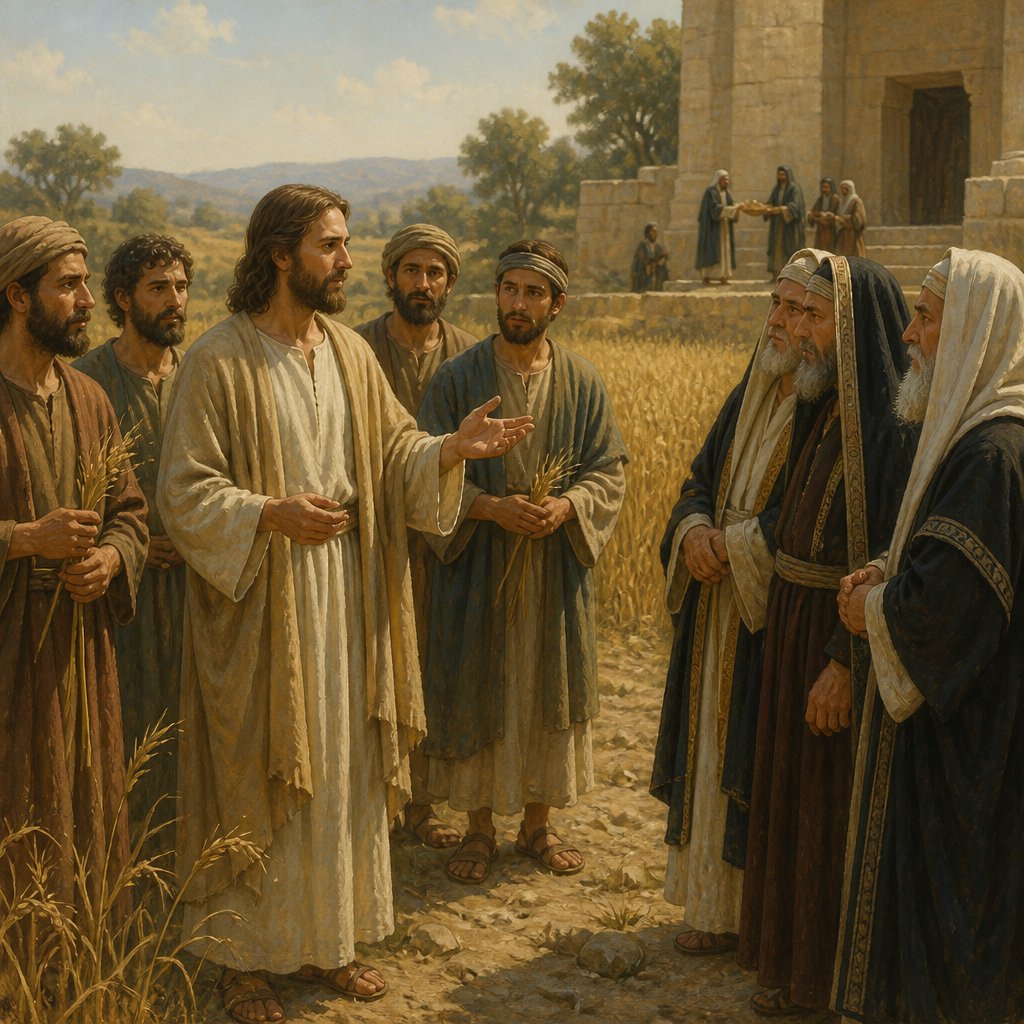
The passage in Luke 6:3, "And Jesus answering them said, Have ye not read so much as this, what David did, when himself was an hungred, and they which were with him;" carries a profound message that resonates deeply with our spiritual lives today. This verse emerges amidst a controversy concerning the behavior of Jesus' disciples on the Sabbath day. The Pharisees, rigid in their interpretations of the Law, questioned the actions of the disciples as they plucked corn to satisfy their immediate hunger. Jesus, in response, directs their attention to a historical account from Scripture, pointing to David to illustrate the nature of need, mercy, and the principles of divine compassion.
To understand the weight of this verse, we must delve deeper into the historical context. David, the anointed king of Israel, had been fleeing from Saul, enduring hunger and hardship alongside his men. In 1 Samuel 21, when he sought sustenance, he went to the house of God and requested the showbread that was reserved for the priests. David’s urgent need for food prompted him to act outside the ceremonial boundaries of the Law, showing that human need is a priority over strict legalism. This narrative echoes an essential truth: there are times when mercy must triumph over ritualistic observance.
Jesus’ reference to David serves multiple purposes. First, it emphasizes that even the greatest king of Israel had to break the prescribed rules when faced with desperate need. David was not only a man after God’s own heart but also a man who understood that mercy is a higher calling than mere observance of the law. When faith intersects with need, it highlights the compassionate nature of God. God does not delight in legalistic rituals when people are suffering; rather, He calls us into a deeper relational understanding with Him and with one another.
Moreover, in highlighting David’s story, Jesus challenges the Pharisees' rigid interpretation of the Law. He calls attention to the essence of the Law itself: love and compassion. The Sabbath, which was instituted for rest, healing, and restoration, was being exploited by the religious leaders to impose guilt and burden upon the very people it was meant to bless. Jesus reveals that the heart of God is not a distant observer of rules but an intimate participant in the struggles of His people. He understands our needs and our hunger, both physical and spiritual.
This verse prompts us to reflect on our own lives. How often do we find ourselves in a place of spiritual, emotional, or physical hunger? Are we aware of our needs, or are we so caught up in the routine of our faith that we neglect to acknowledge our hunger? Jesus invites us to come to Him with our genuine needs, encouraging us that He cares for our souls and hearts above all else. Just as He pointed the Pharisees to David, He points us to the fact that we are called to be merciful, to love our neighbors, and to understand the needs of those around us.
In the modern world, we encounter needs daily; perhaps it’s a friend struggling with illness, a colleague facing personal turmoil, or even our own overlooked wounds. The challenge is to prioritize people over policies, love over law, and compassion over conventions. When we see others in need, how do we respond? Do we become like the Pharisees, distant and detached, or do we allow the Lord to ignite within us a desire to act justly and love mercy?
As we meditate on Luke 6:3, let us remember that there's deeper revelation hidden in these seemingly simple words. God desires a relationship with us. He wants us to recognize our hungers and bring them to Him, knowing that He, in His mercy, will meet us right where we are. Let us strive to embody the love, grace, and mercy that Jesus exemplified, living in a way that reflects His heart for those who hunger, both physically and spiritually.
Want to reflect more on Luke 6:3?
Continue your spiritual journey with Bible Chat — an AI-powered tool for exploring God's Word through conversation. Ask questions, discover connections, and deepen your understanding.
Get Our Apps


Luke 6:3 Artwork

Luke 6:3 - "And Jesus answering them said, Have ye not read so much as this, what David did, when himself was an hungred, and they which were with him;"

"And Jesus answering them said, Have ye not read so much as this, what David did, when himself was an hungred, and they which were with him;" - Luke 6:3

Luke 3:1-6

Luke 3:1-6

luke 3:1-6

Luke 3:6 - "And all flesh shall see the salvation of God."

"And all flesh shall see the salvation of God." - Luke 3:6

Luke 6

luke 6: 27

luke 6:30

Luke 6: 27-38

Luke 6:21-26

Luke 13:6-9

Luke 6:27-38

Luke 6:21-26

Luke 14:6 - "And they could not answer him again to these things."

Luke 3:3 - "And he came into all the country about Jordan, preaching the baptism of repentance for the remission of sins;"

Luke 6:6 - "And it came to pass also on another sabbath, that he entered into the synagogue and taught: and there was a man whose right hand was withered."

Luke 6:18 - "And they that were vexed with unclean spirits: and they were healed."

Luke 18:6 - "And the Lord said, Hear what the unjust judge saith."

Luke 6:36 - "Be ye therefore merciful, as your Father also is merciful."

Luke 24:3 - "And they entered in, and found not the body of the Lord Jesus."

Luke 6:38 Give, and it will be given to you

Luke 6:15 - "Matthew and Thomas, James the son of Alphaeus, and Simon called Zelotes,"

Luke 6:16 - "And Judas the brother of James, and Judas Iscariot, which also was the traitor."

Luke 15:3 - "¶ And he spake this parable unto them, saying,"

Luke 19:6 - "And he made haste, and came down, and received him joyfully."
![Luke 2:3 NIV
[3] And everyone went to their own town to register.](https://media.bible.art/624b3d4a-2c40-4bf2-bc2f-1d6418c32a14-thumbnail.jpg)
Luke 2:3 NIV [3] And everyone went to their own town to register.

Luke 9:6 - "And they departed, and went through the towns, preaching the gospel, and healing every where."

Luke 5:6 - "And when they had this done, they inclosed a great multitude of fishes: and their net brake."