Called by Name: The Purpose of the Twelve
"Simon, (whom he also named Peter,) and Andrew his brother, James and John, Philip and Bartholomew," - Luke 6:14
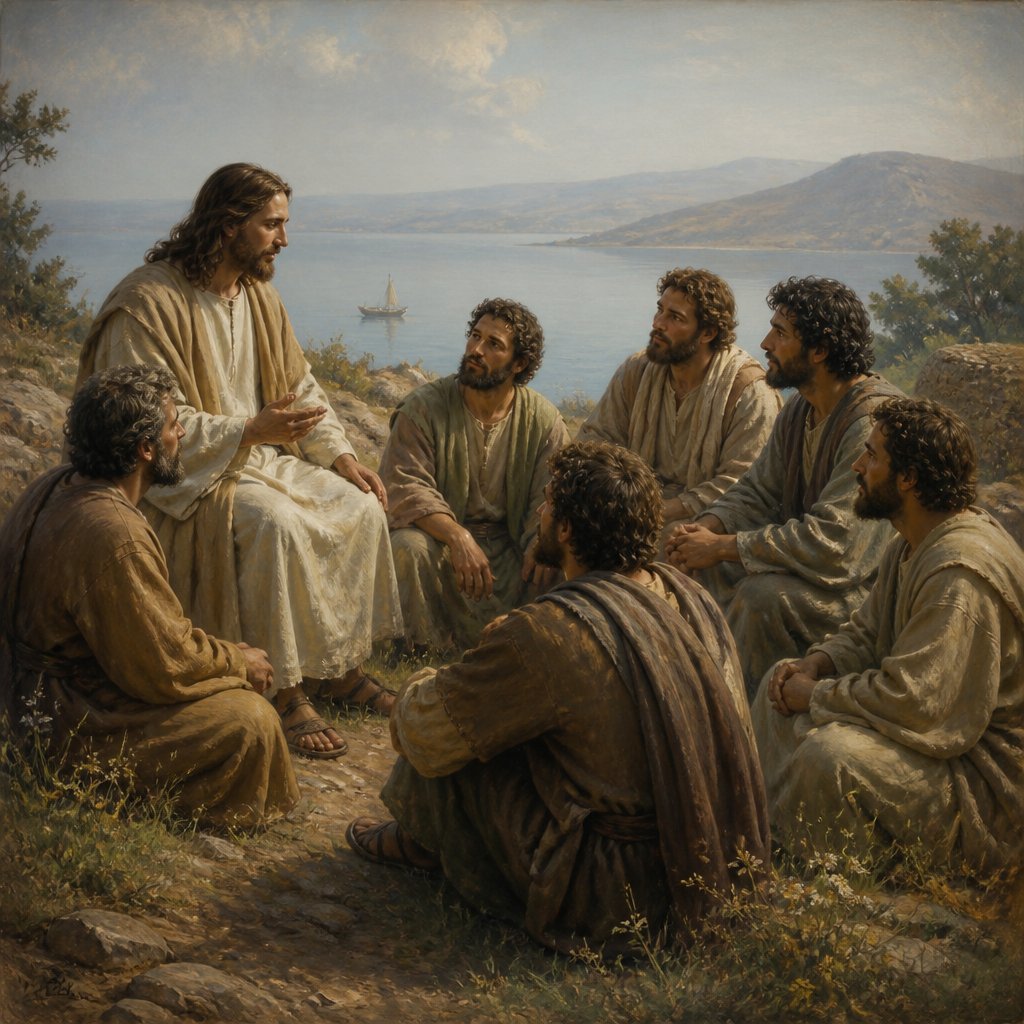
In the Gospel of Luke 6:14, we read, “Simon, (whom he also named Peter,) and Andrew his brother, James and John, Philip and Bartholomew.” This verse marks a pivotal moment in Jesus’ ministry, where He formally calls forth His twelve apostles. Each name etched in this scripture carries a weight of purpose, divine selection, and individual calling, illustrating a masterclass in understanding God's plan for our lives.
To better appreciate the significance of this moment, we must first understand the socio-cultural context of Jesus’ time. The nation of Israel was embroiled in Roman oppression, long awaited for a Messiah. It was within this turmoil that Jesus selected His twelve disciples—ordinary men from varied backgrounds—to be the foundational leaders of His mission. This act of calling was not just an appointment but a transformation that would shape history.
Consider Simon, who would become Peter—the Rock. His name change signifies a new identity, a calling that diverged from his fishing profession. Jesus saw in Simon not the imperfect man burdened by doubt and fear, but the steadfast leader destined to build His Church. This speaks volumes to us today; we, too, have been given new identities in Christ. In our moments of insecurity, when we feel inadequate or defined by our past mistakes, we can find hope in the truth that, like Peter, we are called by name. Our shortcomings do not disqualify us; instead, they prepare us for a purpose greater than ourselves.
Andrew, Peter’s brother, is often overshadowed by Peter’s prominence, yet his role as a passionate evangelist cannot be understated. He brought Peter to Jesus, recognizing the potential in his brother. This reveals the principle of influence we wield in our relationships. Are we, like Andrew, willing to lead others to Christ? Our calling is not only about our impact on grand stages but also our ability to guide those closest to us toward the truth, encouraging them to fulfill their God-given destiny.
Then we encounter James and John, known as the Sons of Thunder. Their zealous nature indicates that Jesus chooses individuals from all walks of life, with diverse personalities and temperaments, illustrating that His call is inclusive. God doesn’t need perfect people; He needs willing hearts. This assures us that our personalities, even our fiery tempers or tender spirits, are not impediments but rather tools for His glory.
Philip and Bartholomew offer us further reflection on the nature of divine calling. Philip’s inquisitive mind brought both confusion and clarity as he sought to understand the Messiah, while Bartholomew, perhaps Nathaniel, represents those who may initially question before they commit. Their stories portray the journey of faith—not every call is met with immediate understanding or enthusiasm. Jesus invites us to engage in a personal relationship, to wrestle with our doubts, and to come to Him with our questions. Divine calling isn’t about an instantaneous transformation; it’s about a progressive revelation of who He is and who we are called to be in Him.
In this simple yet profound verse from Luke, we find a blueprint for our own lives as Christians. We are reminded that God knows our names and our hearts—He has a plan for each of us, tailored to our individual gifts and passions. As we reflect on the lives of these early disciples, may we choose to accept our calling and step forward in faith. Let us commit ourselves to be true disciples, just as they were, listening to His voice, embracing our identity in Christ, and leading others to Him with the same fervor.
Thus, every name in that list has a purpose and represents a personal calling. Today, as you meditate on this passage, ask yourself: What is God calling me to do? How can I encourage others toward their divine purpose? Remember, like the apostles, we are all named and claimed for His mission.
Want to reflect more on Luke 6:14?
Continue your spiritual journey with Bible Chat — an AI-powered tool for exploring God's Word through conversation. Ask questions, discover connections, and deepen your understanding.
Get Our Apps


Luke 6:14 Artwork

Luke 6:14 - "Simon, (whom he also named Peter,) and Andrew his brother, James and John, Philip and Bartholomew,"
"Simon, (whom he also named Peter,) and Andrew his brother, James and John, Philip and Bartholomew," - Luke 6:14

Luke 14:6 - "And they could not answer him again to these things."
"And they could not answer him again to these things." - Luke 14:6

Luke 6

Luke 14:14 - "And thou shalt be blessed; for they cannot recompense thee: for thou shalt be recompensed at the resurrection of the just."

Luke 11:14-15

Luke 18:9-14

Luke 11:1-14

Luke 14:25 - 33

Luke 11:1-14

Luke 2:13-14

Luke 18: 9-14

Luke 2:13-14

luke 6: 27

luke 6:30

Colossians 4:14 - "Luke, the beloved physician, and Demas, greet you."

Luke 6: 27-38

Luke 6:21-26

Luke 13:6-9

Luke 3:1-6

Luke 3:1-6

Luke 6:27-38

Luke 6:21-26

luke 3:1-6

Luke 14:30 - "Saying, This man began to build, and was not able to finish."

Luke 24:14 - "And they talked together of all these things which had happened."

Luke 10:14 - "But it shall be more tolerable for Tyre and Sidon at the judgment, than for you."

Luke 14:2 - "And, behold, there was a certain man before him which had the dropsy."

Luke 6:6 - "And it came to pass also on another sabbath, that he entered into the synagogue and taught: and there was a man whose right hand was withered."