The Legacy of David: A Lineage of Promise
"Which was the son of Melea, which was the son of Menan, which was the son of Mattatha, which was the son of Nathan, which was the son of David," - Luke 3:31
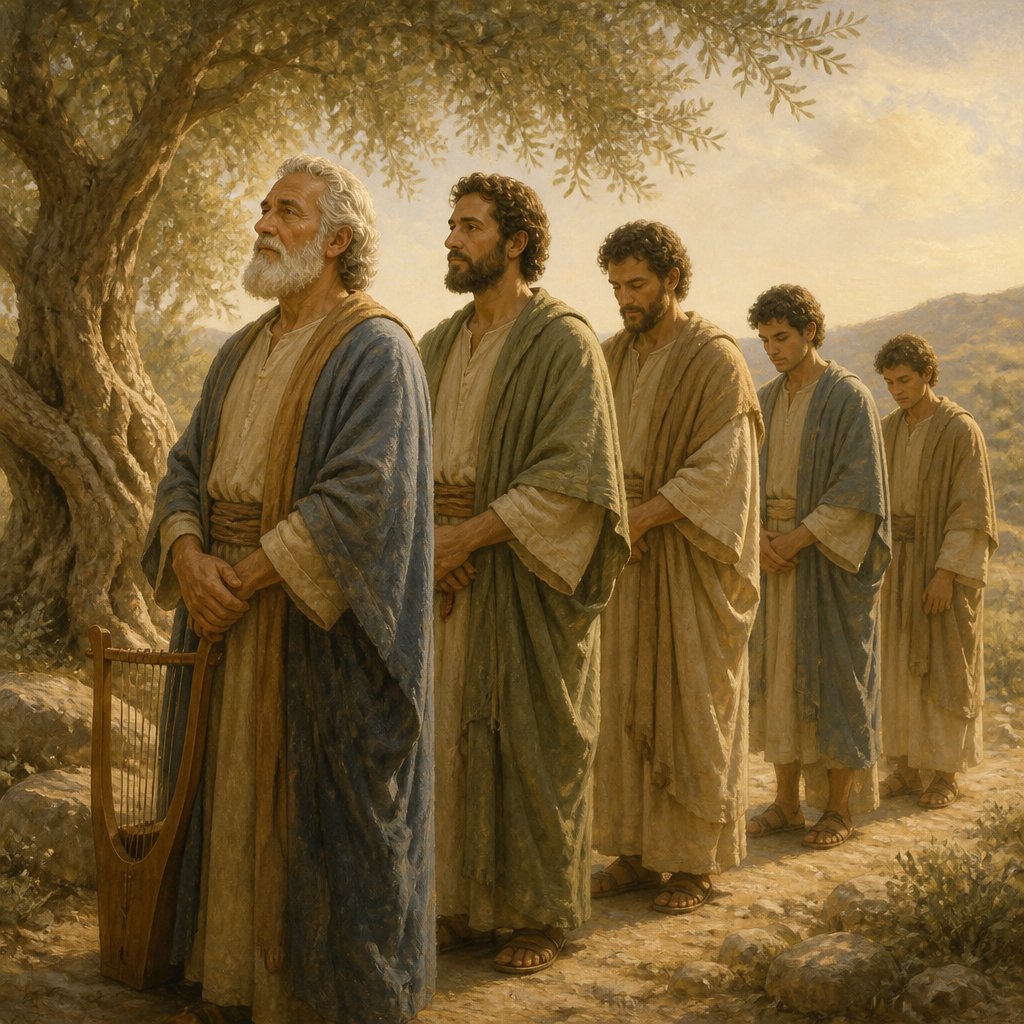
As we delve into Luke 3:31, we encounter a passage that, at first glance, may seem like a list of names, yet it carries profound significance: "Which was the son of Melea, which was the son of Menan, which was the son of Mattatha, which was the son of Nathan, which was the son of David" (KJV). This genealogy not only establishes the lineage of Jesus Christ but also reaffirms God’s promise and His faithfulness throughout generations.
Genealogies in the Bible often serve as a reminder of God’s involvement in the history of His people. In tracing the lineage of Christ back to David, we encounter the fulfillment of divine promises given to David about his descendants. In 2 Samuel 7:12-13, God tells David, "And when thy days be fulfilled, and thou shalt sleep with thy fathers, I will set up thy seed after thee, which shall proceed out of thy bowels, and I will establish his kingdom. He shall build an house for my name, and I will stablish the throne of his kingdom forever." These words echo through generations and culminate in the birth of Jesus Christ, the eternal King promised to David.
David’s legacy is a rich tapestry of faith, failure, and forgiveness. He was a man after God's own heart (1 Samuel 13:14), yet he was not without his flaws. His life teaches us about the complexity of human nature and the depth of God's grace. It reminds us that God can raise up His plans through imperfect vessels. In recognizing Jesus as the Son of David, we are also reminded of God's unyielding commitment to His promises, which transcends human shortcomings.
In the context of Luke 3:31, the mention of Nathan, David’s son, is significant. While Solomon, another son of David, became known for his wisdom and the building of the temple, Nathan’s role remains pivotal because he was the prophet who confronted David regarding his sin with Bathsheba. Through Nathan, we see God's desire for repentance and restoration, emphasizing the importance of accountability in our spiritual journey. Jesus being a descendant of Nathan suggests that His mission was to bring reconciliation and restoration to humanity. He was sent not to condemn but to save (John 3:17).
Moreover, the genealogy of Jesus serves as a powerful reminder of God’s inclusivity. In a society that typically emphasized pure lineage, the lineage of Christ includes individuals who might otherwise be overlooked - women like Rahab and Ruth, and even King Manasseh, known for his idolatry. This paints a picture of the expansive reach of God’s grace. In the Messiah, barriers of race, gender, and past sin are dismantled, welcoming all into the family of faith.
Reflecting on this lineage invites us to consider our own family trees. What stories are embedded in our backgrounds? How do they reflect God’s faithfulness? While we might encounter brokenness and overshadowed tales, we can also find spaces of grace, just as David’s life did. Our genealogy might be imperfect, but God’s plan remains perfect and unstoppable.
As we go about our days, let us remember that we too are part of a divine narrative that connects us to the promises of God. Just as those in Jesus’s lineage were part of God's unfolding story, we are all called to play our part in the continuing story of faith. Let us hold tight to the assurance that, just as God fulfilled His promises to David, He is faithful to fulfill His promises to us—drawing us deeper into relationship with Him through Jesus.
In closing, Luke 3:31 encourages us not to view our lives as isolated events but as chapters in God's grand story of redemption. Let us celebrate the legacy of David, the promise fulfilled in Christ, and the part we play in continuing that legacy today—embracing a living faith that points others to the enduring hope found in Jesus.
Want to reflect more on Luke 3:31?
Continue your spiritual journey with Bible Chat — an AI-powered tool for exploring God's Word through conversation. Ask questions, discover connections, and deepen your understanding.
Get Our Apps


Luke 3:31 Artwork

Luke 3:31 - "Which was the son of Melea, which was the son of Menan, which was the son of Mattatha, which was the son of Nathan, which was the son of David,"
"Which was the son of Melea, which was the son of Menan, which was the son of Mattatha, which was the son of Nathan, which was the son of David," - Luke 3:31

luke 3:1-6

Luke 3:1-6

Luke 3:1-6

Luke 1:31

Luke 22:31-32 - "Luke 22:31-32: And the Lord said, Simon, Simon, behold, Satan hath desired to have you, that he may sift you as wheat: But I have prayed for thee, that thy faith fail not: and when thou art converted, strengthen thy brethren."

Luke 23:31 - "For if they do these things in a green tree, what shall be done in the dry?"

Luke 2:31 - "Which thou hast prepared before the face of all people;"

Luke 3:1 - "Now in the fifteenth year of the reign of Tiberius Caesar, Pontius Pilate being governor of Judaea, and Herod being tetrarch of Galilee, and his brother Philip tetrarch of Ituraea and of the region of Trachonitis, and Lysanias the tetrarch of Abilene,"

Luke 24:31 - "And their eyes were opened, and they knew him; and he vanished out of their sight."

Luke 8:31 - "And they besought him that he would not command them to go out into the deep."

Luke 5:31 - "And Jesus answering said unto them, They that are whole need not a physician; but they that are sick."

Luke 4:31 - "And came down to Capernaum, a city of Galilee, and taught them on the sabbath days."

Judges 3:31

Luke 7:31 - "¶ And the Lord said, Whereunto then shall I liken the men of this generation? and to what are they like?"

Luke 20:31 - "And the third took her; and in like manner the seven also: and they left no children, and died."

Luke 6:31 - "And as ye would that men should do to you, do ye also to them likewise."

Luke 9:31 - "Who appeared in glory, and spake of his decease which he should accomplish at Jerusalem."

Luke 12:31 - "¶ But rather seek ye the kingdom of God; and all these things shall be added unto you."

Mark 3:31-34

Lamentations 3:31 - "For the Lord will not cast off for ever:"

Luke 15:31 - "And he said unto him, Son, thou art ever with me, and all that I have is thine."

Luke 10:31 - "And by chance there came down a certain priest that way: and when he saw him, he passed by on the other side."

Luke 1:31 - "And, behold, thou shalt conceive in thy womb, and bring forth a son, and shalt call his name JESUS."

Luke 16:31 - "And he said unto him, If they hear not Moses and the prophets, neither will they be persuaded, though one rose from the dead."

Job 31:3 - "Is not destruction to the wicked? and a strange punishment to the workers of iniquity?"

Luke 21:31 - "So likewise ye, when ye see these things come to pass, know ye that the kingdom of God is nigh at hand."

Luke 22:31 - "¶ And the Lord said, Simon, Simon, behold, Satan hath desired to have you, that he may sift you as wheat:"

Proverbs 3:31 - "¶ Envy thou not the oppressor, and choose none of his ways."