A Life Dedicated: The Prayerful Pursuit of Anna
"And she was a widow of about fourscore and four years, which departed not from the temple, but served God with fastings and prayers night and day." - Luke 2:37
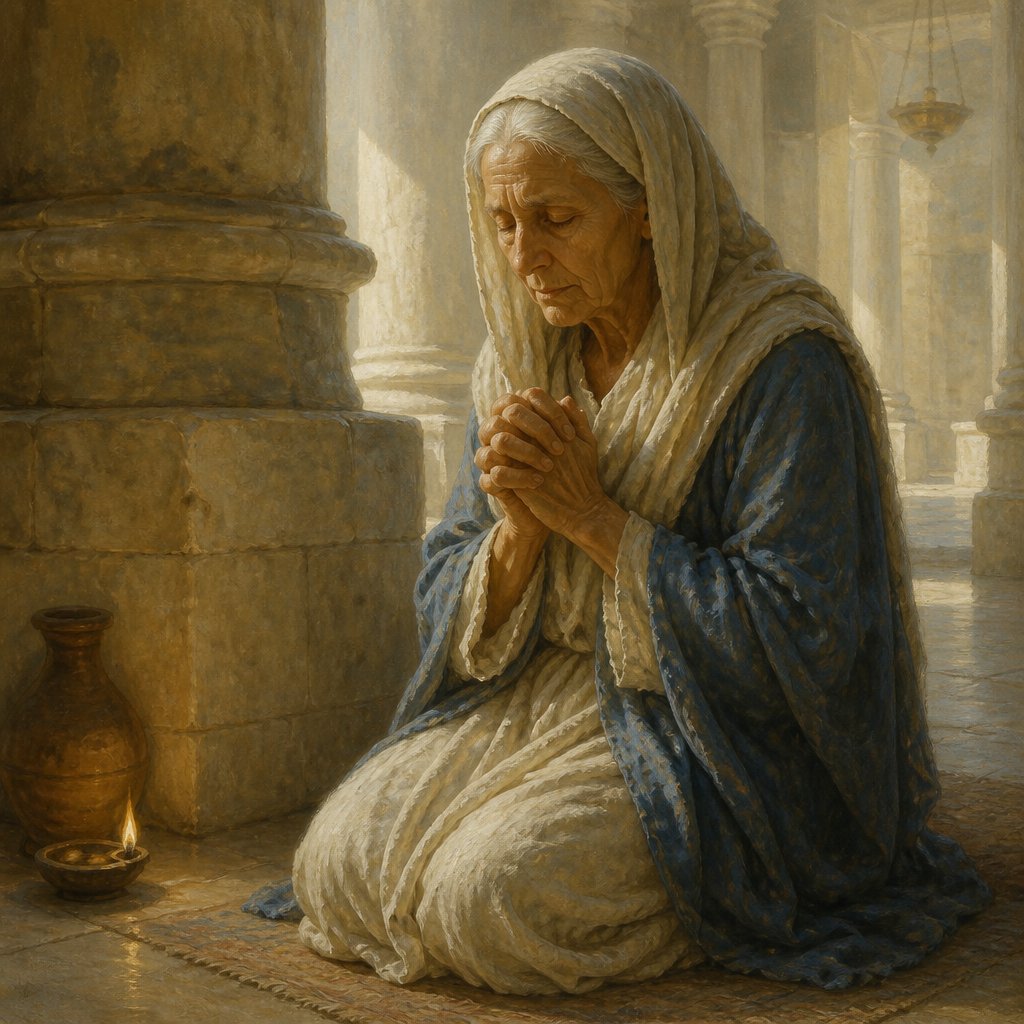
In the heart of Luke 2:37, we encounter a remarkable figure named Anna, whose life epitomizes devotion and faithfulness: "And she was a widow of about fourscore and four years, which departed not from the temple, but served God with fastings and prayers night and day." This verse speaks profoundly to the essence of a life dedicated to God, illuminating several vital lessons that we can incorporate into our spiritual journey.
Anna was not just a widow; she was a woman of depth and purpose. At four score and four years, she had lived a long life filled with experiences of both joy and sorrow. The loss of her husband must have been a monumental chapter in her life, yet it did not define her. Instead, she chose to channel her grief into something far greater. The widowhood and trials she faced drew her closer to God rather than further away. In our own lives, we often encounter pain and loss that may tempt us to withdraw from our faith. Anna’s example challenges us to respond differently—to lean into our relationship with God, allowing our hardships to be transformed into opportunities for deeper faith.
Her dedication in the temple exemplifies what it means to seek God continuously. Anna did not merely visit the temple; she "departed not from the temple." This persistence in worship and service paints a compelling picture of her priority—God was first in her life. In a world that bombards us with distractions and alternatives, we, too, are called to commit our time and focus to seeking God. This commitment is not merely about physical presence but embodies a heart posture that remains unwavering in times of trial and tribulation. When we prioritize our relationship with God, we create space for Him to work in our hearts and lives.
Furthermore, Anna’s service manifests itself through "fastings and prayers night and day." These practices reveal that her faith was active and intentional. Fasting, an often-overlooked discipline, is a means through which we can detach from worldly desires and seek spiritual nourishment. In a culture consumed with instant gratifications, Anna’s choice to fast calls us to reassess what we invest our time and energy in. When we willingly give up something, be it food or distractions, we open ourselves up to hear God’s voice more clearly and experience His presence more intimately.
Anna's lifelong commitment to prayer also indicates a deep connection with God. Prayer is the lifeline of our faith journey, allowing us to communicate, express our innermost thoughts, and seek guidance. Anna’s dedication to fasting and prayer was not a ritualistic obligation; it was a heartfelt service aimed at building her relationship with her Creator. As we navigate our own paths, how often do we engage in persistent, earnest prayer? How much time do we dedicate to simply being in God's presence? Anna urges us to cultivate a discipline of prayer that goes beyond asking for needs, but rather seeking communion with God.
Lastly, Anna’s life exemplifies the beauty of patience and anticipation. She spent years within the temple, awaiting the fulfillment of God's promise. When Mary and Joseph brought baby Jesus to the temple, Anna recognized Him instantly as the Messiah. Her anticipation and faith culminated in that moment of recognition. In our spiritual journeys, we must embrace patience as we wait for God to reveal His plans in our lives. Anna teaches us that our waiting is not absence but an active expectation rooted in faith.
In conclusion, Anna's life offers profound insight into a life marked by prayer, dedication, and anticipation. As we reflect on Luke 2:37, let us aspire to embody her spirit—committing ourselves to serve God wholeheartedly, seeking Him through prayer and fasting, and patiently awaiting His promises. May we draw strength from her faithfulness as we navigate our own paths, aspiring to be steadfast in our devotion to God, night and day.
Want to reflect more on Luke 2:37?
Continue your spiritual journey with Bible Chat — an AI-powered tool for exploring God's Word through conversation. Ask questions, discover connections, and deepen your understanding.
Get Our Apps


Luke 2:37 Artwork

Luke 2:37

Luke 2:37

Luke 2:37

Luke 2:37

Luke 2:37

Luke 2:37 - "And she was a widow of about fourscore and four years, which departed not from the temple, but served God with fastings and prayers night and day."
"And she was a widow of about fourscore and four years, which departed not from the temple, but served God with fastings and prayers night and day." - Luke 2:37

Luke (1:37) For nothing will be impossible with God.”

Luke (1:37) For nothing will be impossible with God.”

Luke (1:37) For nothing will be impossible with God.”

Luke (1:37) For nothing will be impossible with God.”

Luke (1:37) For nothing will be impossible with God.”

Luke (1:37) For nothing will be impossible with God.”

Luke (1:37) For nothing will be impossible with God.”

Luke (1:37) For nothing will be impossible with God.”

Luke (1:37) For nothing will be impossible with God.”

Luke (1:37) For nothing will be impossible with God.”

Luke (1:37) For nothing will be impossible with God.”

Luke (1:37) For nothing will be impossible with God.”

Luke (1:37) For nothing will be impossible with God.”

Luke (1:37) For nothing will be impossible with God.”

Luke (1:37) For nothing will be impossible with God.”

Luke (1:37) For nothing will be impossible with God.”

Luke (1:37) For nothing will be impossible with God.”

Luke (1:37) For nothing will be impossible with God.”

Luke (1:37) For nothing will be impossible with God.”

Luke (1:37) For nothing will be impossible with God.”

Luke (1:37) For nothing will be impossible with God.”

Luke (1:37) For nothing will be impossible with God.”

Luke (1:37) For nothing will be impossible with God.”