Breaking Bread: The Communion of Christ
"And it came to pass, as he sat at meat with them, he took bread, and blessed it, and brake, and gave to them." - Luke 24:30
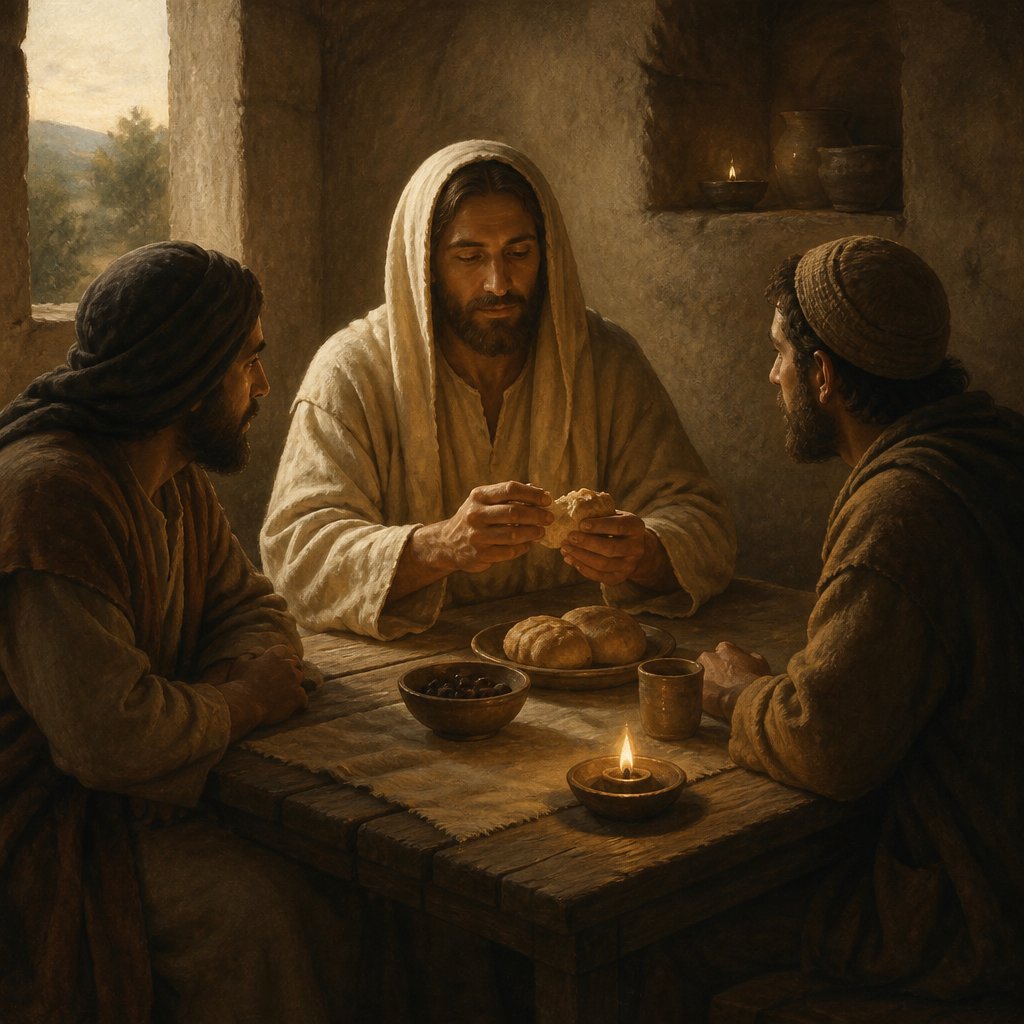
In the Gospel of Luke, chapter 24, we encounter a pivotal moment that speaks volumes about companionship, recognition, and the deep communion with Christ. The verse specifically states, “And it came to pass, as he sat at meat with them, he took bread, and blessed it, and brake, and gave to them” (Luke 24:30, KJV). Herein lies a profound narrative, not just about a meal but about the very essence of relationship and revelation.
The context of this event unfolds on the road to Emmaus, where two despondent disciples, disheartened by recent events—the crucifixion of Jesus—find themselves in an unexpected dialogue with a stranger. This stranger, who is later revealed to be the resurrected Jesus, engages them and interprets the scriptures, igniting a flicker of hope within their hearts. The journey is not solely physical; it is also spiritual—a transition from despair to enlightenment.
As they arrive at their destination, the disciples invite this stranger to share a meal with them. The act of inviting someone into your home is an act of intimacy and acceptance. It signifies trust and a desire for connection. In the Jewish tradition, sharing a meal is one of the most sacred acts of fellowship. It transcends mere sustenance; it embodies love, community, and the sharing of lives.
When Jesus “took bread, and blessed it, and brake, and gave to them,” he initiates a powerful moment. Bread, a staple of life in biblical times, represents nourishing sustenance—not only in physical terms but also spiritually. Jesus, in breaking this bread, gives to them more than just food; he presents a revelation of his presence and purpose.
The act of breaking bread is deeply symbolic in scripture. It reflects the Last Supper, where he broke bread with his disciples, symbolizing his body which would be broken for them. In this moment at Emmaus, Jesus once again shares in the symbolism of bread, inviting the disciples into communion with him. It invites us to reflect on our own lives and the extent to which we allow Christ to share our daily bread.
What is particularly moving is the moment of recognition that follows the breaking of the bread. It is only after he blesses and breaks it that their eyes are opened, and they recognize him. This divine act serves as a reminder that sometimes, we may engage with Christ without fully recognizing him. We can be in the midst of spiritual discussions, attend gatherings, or even read scripture, yet miss who He truly is in our lives.
This passage challenges us to seek deeper communion with Christ. Are we merely going through the motions in our faith life? How often do we invite Jesus into our hearts and homes, allowing him to bless and break the bread of our daily experiences? He wants to be intimately involved in every aspect of our lives, from the mundane to the miraculous. When we invite him in and take time to be present with him, our hearts are stirred, and our spiritual eyes are opened to see Him in our lives.
Furthermore, this verse calls us to extend this invitation to others. Just as Jesus broke bread with his disciples, we too are called to share the love of Christ with those around us. Through acts of service, sharing meals, and creating spaces of fellowship, we can reflect Christ's love and presence in our communities.
In conclusion, let us remember the profound significance of breaking bread with Christ. Let it lead us to recognition, communion, and a deeper understanding of his purpose in our lives. The next time we partake in a meal, let us invite Christ's presence into our midst, allowing him to bless not just the bread but also our hearts, our homes, and our community.
Want to reflect more on Luke 24:30?
Continue your spiritual journey with Bible Chat — an AI-powered tool for exploring God's Word through conversation. Ask questions, discover connections, and deepen your understanding.
Get Our Apps


Luke 24:30 Artwork

Luke 24:30 - "And it came to pass, as he sat at meat with them, he took bread, and blessed it, and brake, and gave to them."
"And it came to pass, as he sat at meat with them, he took bread, and blessed it, and brake, and gave to them." - Luke 24:30

Genesis 24-30

Luke 1:30

luke 9:30

luke 6:30

Matthew 24:30-31

Matthew 24:30-31

Matthew 24:30-31

Matthew 24:30-31

Matthew 24:30-31

Matthew 24:30-31

Matthew 24:30-31

Matthew 24:30-31

Matthew 24:30-31

Matthew 24:30-31

luke 9:29- 30

Joshua 24:30 the location of mountains

african american luke 10:30

Luke 24:1

Luke 24:35

Luke 24:42

Luke 21:24

Luke 13:24

luke 24:17

Luke 14:30 - "Saying, This man began to build, and was not able to finish."

Luke 2:30 - "For mine eyes have seen thy salvation,"

Luke 20:30 - "And the second took her to wife, and he died childless."

Proverbs 24:30 - "I went by the field of the slothful, and by the vineyard of the man void of understanding;"

Proverbs 30:24 - "There be four things which are little upon the earth, but they are exceeding wise:"