Walking the Road to Emmaus: A Journey of Revelation and Understanding
"¶ And, behold, two of them went that same day to a village called Emmaus, which was from Jerusalem about threescore furlongs." - Luke 24:13
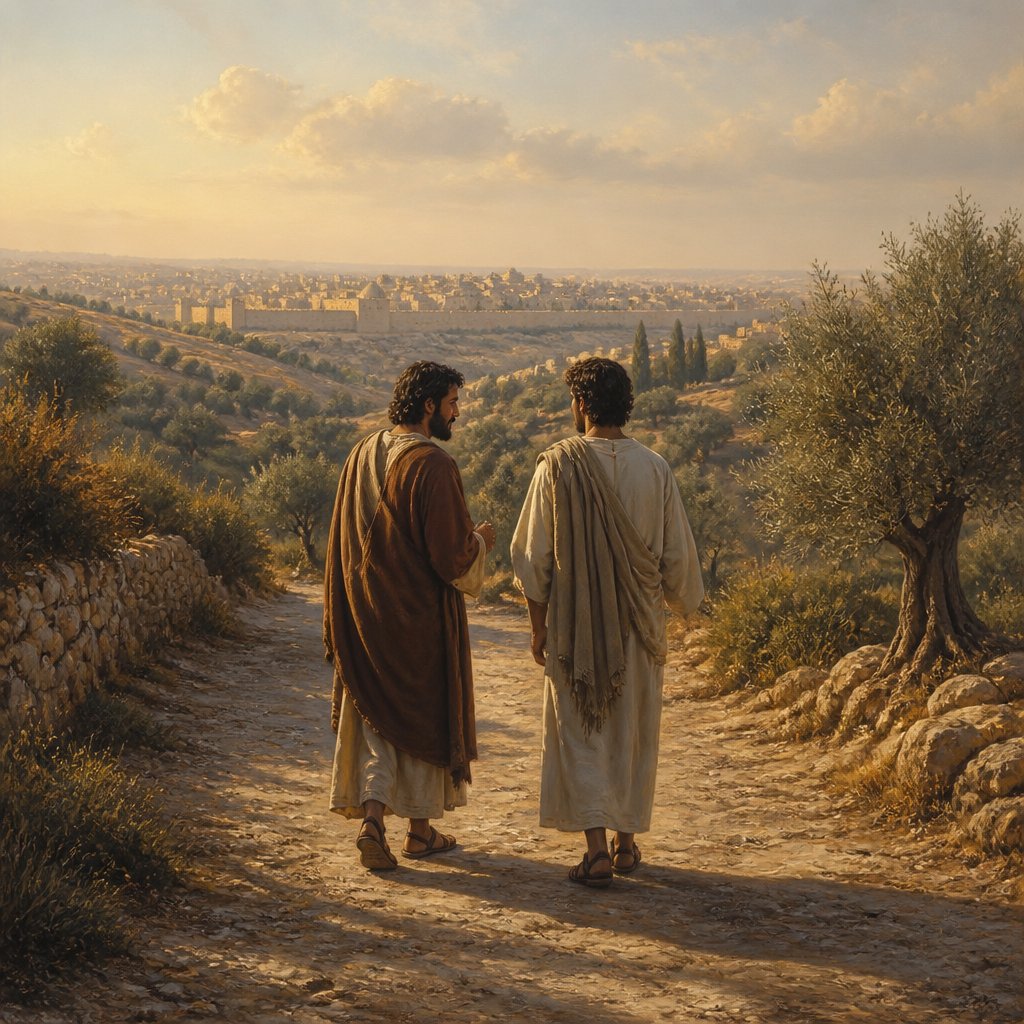
The story of the two disciples walking to Emmaus on the day of the resurrection, as recorded in Luke 24:13, encapsulates a profound journey of sorrow transformed into joy, confusion into clarity, and despair into hope. This moment in scripture is more than a mere travelogue; it serves as a metaphorical walk for all believers in times of doubt or distress.
"And, behold, two of them went that same day to a village called Emmaus, which was from Jerusalem about threescore furlongs" (Luke 24:13, KJV). This verse sets the stage for an encounter with the risen Lord, occurring on what began as a dark day filled with despair. The two disciples were not merely walking; they were processing the enormity of what had just happened—the crucifixion of Jesus, their beloved teacher and savior. Their journey represents a pivotal moment in their faith journey, reflecting the human experience of grief and uncertainty.
The phrase "that same day" is particularly poignant. It highlights the immediacy of their circumstances; it was the same day that had begun with the devastating news of Christ's death and the bewildering reports of an empty tomb. Like the disciples, we often find ourselves in places of confusion and heartbreak, questioning everything we thought we understood about our faith and God’s promises.
As we travel alongside these disciples, we realize their journey mirrors our struggles. They were despondent, recounting the events of the past days, expressing their feelings of hopelessness and despair. The text doesn’t specify their names, suggesting that they represent every believer. We have all been, at one point or another, on our own Emmaus road, wrestling with doubt and disappointment.
What happens next is crucial. As the two walked, a stranger joined them on their journey. This stranger was none other than the risen Christ, yet they were kept from recognizing Him. How often does God walk alongside us during our own crises, and we fail to see Him in our midst? In their sorrow, they were blind to the very presence of hope. Jesus, however, begins with a question, "What manner of communications are these that ye have one to another, as ye walk, and are sad?" (Luke 24:17, KJV). He gently nudges them to articulate their fears and doubts.
In the act of sharing their hearts, something beautiful begins to transform within them. Likewise, God invites us to voice our struggles, to bring forth our tears and confusion before Him. Communicating our grief is not a sign of weak faith; instead, it opens our hearts to the possibility of revelation and healing. Jesus listens to their recounting of events, and instead of chastising their unbelief, He responds with a deep scriptural explanation that reorients their understanding of who He is and what had to transpire.
As they draw near to Emmaus, their hearts begin to burn within them as Jesus explains the Scriptures concerning Himself, illuminating the mysteries of God’s plan for redemption. This is the crux of the Emmaus story. When we allow Jesus into our situations, when we listen to His words, our hearts may ignite with hope once again. Often, it’s in reading and meditating on His Word that we find clarity in our confusion.
Their journey culminates at the table, where He takes bread, blesses it, breaks it, and gives it to them (Luke 24:30, KJV). At that moment, their eyes were opened, and they recognized Him. This act serves as a reminder that communion with Christ—both physical and spiritual—is pivotal for recognizing His presence in our lives.
After recognizing Him, Jesus vanishes, and the disciples are left with the exhilarating realization that their despair had turned into joy. They rush back to Jerusalem, transformed from sorrowful travelers into joyful witnesses, proclaiming, "The Lord is risen indeed!" (Luke 24:34, KJV).
Thus, the journey to Emmaus not only illustrates our human condition of doubt but also serves as a reminder of the available hope and revelation that comes when we earnestly seek Jesus in our trials. As we reflect on this scripture, let us commit to bringing our struggles to Him and allowing Him to walk with us on our own journeys. May our eyes be opened to recognize His presence, leading us from our despondency into the light of His resurrection.
Want to reflect more on Luke 24:13?
Continue your spiritual journey with Bible Chat — an AI-powered tool for exploring God's Word through conversation. Ask questions, discover connections, and deepen your understanding.
Get Our Apps


Luke 24:13 Artwork

Luke 24:13-35

Luke 24:13 - "¶ And, behold, two of them went that same day to a village called Emmaus, which was from Jerusalem about threescore furlongs."

Luke 24:13 - "¶ And, behold, two of them went that same day to a village called Emmaus, which was from Jerusalem about threescore furlongs."

Luke 24:13 - "¶ And, behold, two of them went that same day to a village called Emmaus, which was from Jerusalem about threescore furlongs."
"¶ And, behold, two of them went that same day to a village called Emmaus, which was from Jerusalem about threescore furlongs." - Luke 24:13

Luke 24:13-32 - "Now that same day two of them were going to a village called Emmaus, about seven miles from Jerusalem. They were talking with each other about everything that had happened. As they talked and discussed these things with each other, Jesus himself came up and walked along with them; but they were kept from recognizing him. He asked them, “What are you discussing together as you walk along?” They stood still, their faces downcast. One of them, named Cleopas, asked him, “Are you the only one visiting Jerusalem who does not know the things that have happened there in these days?” “What things?” he asked. “About Jesus of Nazareth,” they replied. “He was a prophet, powerful in word and deed before God and all the people. The chief priests and our rulers handed him over to be sentenced to death, and they crucified him; but we had hoped that he was the one who was going to redeem Israel. And what is more, it is the third day since all this took place. In addition, some of our women amazed us. They went to the tomb early this morning but didn’t find his body. They came and told us that they had seen a vision of angels, who said he was alive. Then some of our companions went to the tomb and found it just as the women had said, but they did not see Jesus.” He said to them, “How foolish you are, and how slow to believe all that the prophets have spoken! Did not the Messiah have to suffer these things and then enter his glory?” And beginning with Moses and all the Prophets, he explained to them what was said in all the Scriptures concerning himself. As they approached the village to which they were going, Jesus continued on as if he were going farther. But they urged him strongly, “Stay with us, for it is nearly evening; the day is almost over.” So he went in to stay with them. When he was at the table with them, he took bread, gave thanks, broke it and began to give it to them. Then their eyes were opened and they recognized him, and he disappeared from their sight. They asked each other, “Were not our hearts burning within us while he talked with us on the road and opened the Scriptures to us?”"

Luke 24:13-32 - "Now that same day two of them were going to a village called Emmaus, about seven miles from Jerusalem. They were talking with each other about everything that had happened. As they talked and discussed these things with each other, Jesus himself came up and walked along with them; but they were kept from recognizing him. He asked them, “What are you discussing together as you walk along?” They stood still, their faces downcast. One of them, named Cleopas, asked him, “Are you the only one visiting Jerusalem who does not know the things that have happened there in these days?” “What things?” he asked. “About Jesus of Nazareth,” they replied. “He was a prophet, powerful in word and deed before God and all the people. The chief priests and our rulers handed him over to be sentenced to death, and they crucified him; but we had hoped that he was the one who was going to redeem Israel. And what is more, it is the third day since all this took place. In addition, some of our women amazed us. They went to the tomb early this morning but didn’t find his body. They came and told us that they had seen a vision of angels, who said he was alive. Then some of our companions went to the tomb and found it just as the women had said, but they did not see Jesus.” He said to them, “How foolish you are, and how slow to believe all that the prophets have spoken! Did not the Messiah have to suffer these things and then enter his glory?” And beginning with Moses and all the Prophets, he explained to them what was said in all the Scriptures concerning himself. As they approached the village to which they were going, Jesus continued on as if he were going farther. But they urged him strongly, “Stay with us, for it is nearly evening; the day is almost over.” So he went in to stay with them. When he was at the table with them, he took bread, gave thanks, broke it and began to give it to them. Then their eyes were opened and they recognized him, and he disappeared from their sight. They asked each other, “Were not our hearts burning within us while he talked with us on the road and opened the Scriptures to us?”"

Luke 13:24

Luke 13:24 - "¶ Strive to enter in at the strait gate: for many, I say unto you, will seek to enter in, and shall not be able."
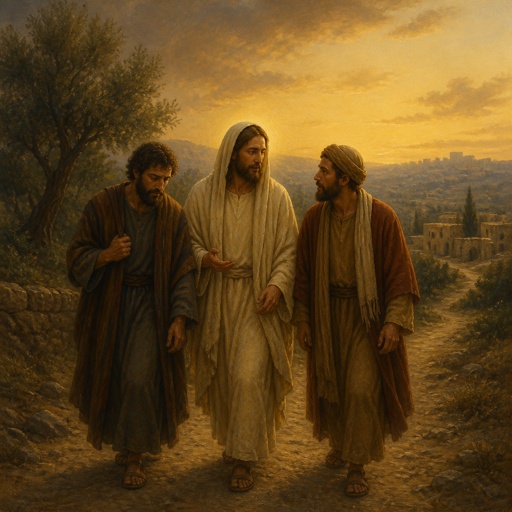
"Now that same day two of them were going to a village called Emmaus, about seven miles from Jerusalem. They were talking with each other about everything that had happened. As they talked and discussed these things with each other, Jesus himself came up and walked along with them; but they were kept from recognizing him. He asked them, “What are you discussing together as you walk along?” They stood still, their faces downcast. One of them, named Cleopas, asked him, “Are you the only one visiting Jerusalem who does not know the things that have happened there in these days?” “What things?” he asked. “About Jesus of Nazareth,” they replied. “He was a prophet, powerful in word and deed before God and all the people. The chief priests and our rulers handed him over to be sentenced to death, and they crucified him; but we had hoped that he was the one who was going to redeem Israel. And what is more, it is the third day since all this took place. In addition, some of our women amazed us. They went to the tomb early this morning but didn’t find his body. They came and told us that they had seen a vision of angels, who said he was alive. Then some of our companions went to the tomb and found it just as the women had said, but they did not see Jesus.” He said to them, “How foolish you are, and how slow to believe all that the prophets have spoken! Did not the Messiah have to suffer these things and then enter his glory?” And beginning with Moses and all the Prophets, he explained to them what was said in all the Scriptures concerning himself. As they approached the village to which they were going, Jesus continued on as if he were going farther. But they urged him strongly, “Stay with us, for it is nearly evening; the day is almost over.” So he went in to stay with them. When he was at the table with them, he took bread, gave thanks, broke it and began to give it to them. Then their eyes were opened and they recognized him, and he disappeared from their sight. They asked each other, “Were not our hearts burning within us while he talked with us on the road and opened the Scriptures to us?”" - Luke 24:13-32
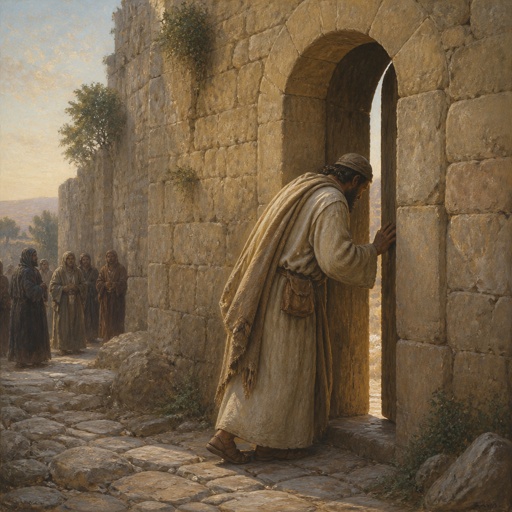
"¶ Strive to enter in at the strait gate: for many, I say unto you, will seek to enter in, and shall not be able." - Luke 13:24

Luke 24:1

Luke 24:35

Luke 24:42

Luke 21:24

luke 24:17

Luke 24:8 - "And they remembered his words,"

LUKE 24:41-43

Luke 24:48 - "And ye are witnesses of these things."

Luke 24:24 - "And certain of them which were with us went to the sepulchre, and found it even so as the women had said: but him they saw not."

Luke 13:18-19

Luke 13:20-21

Luke 13:18-19

Luke 13:20-21
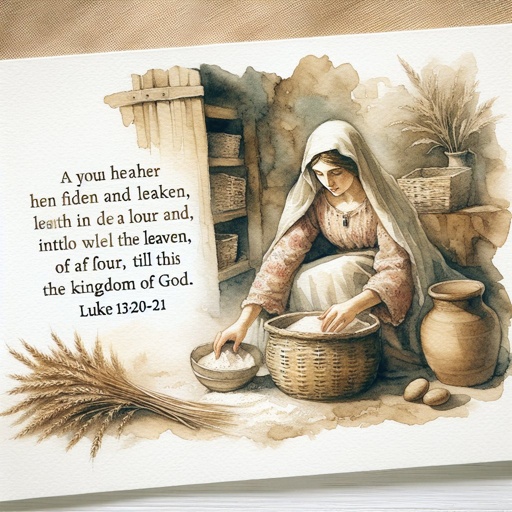
Luke 13:20-21

Luke 24:3 - "And they entered in, and found not the body of the Lord Jesus."

Luke 23:24 - "And Pilate gave sentence that it should be as they required."

Luke 13:20-21

Luke 13:20-21

Luke 24:45 - "Then opened he their understanding, that they might understand the scriptures,"