The Stone of Destiny: Brokenness and Judgment
"Whosoever shall fall upon that stone shall be broken; but on whomsoever it shall fall, it will grind him to powder." - Luke 20:18
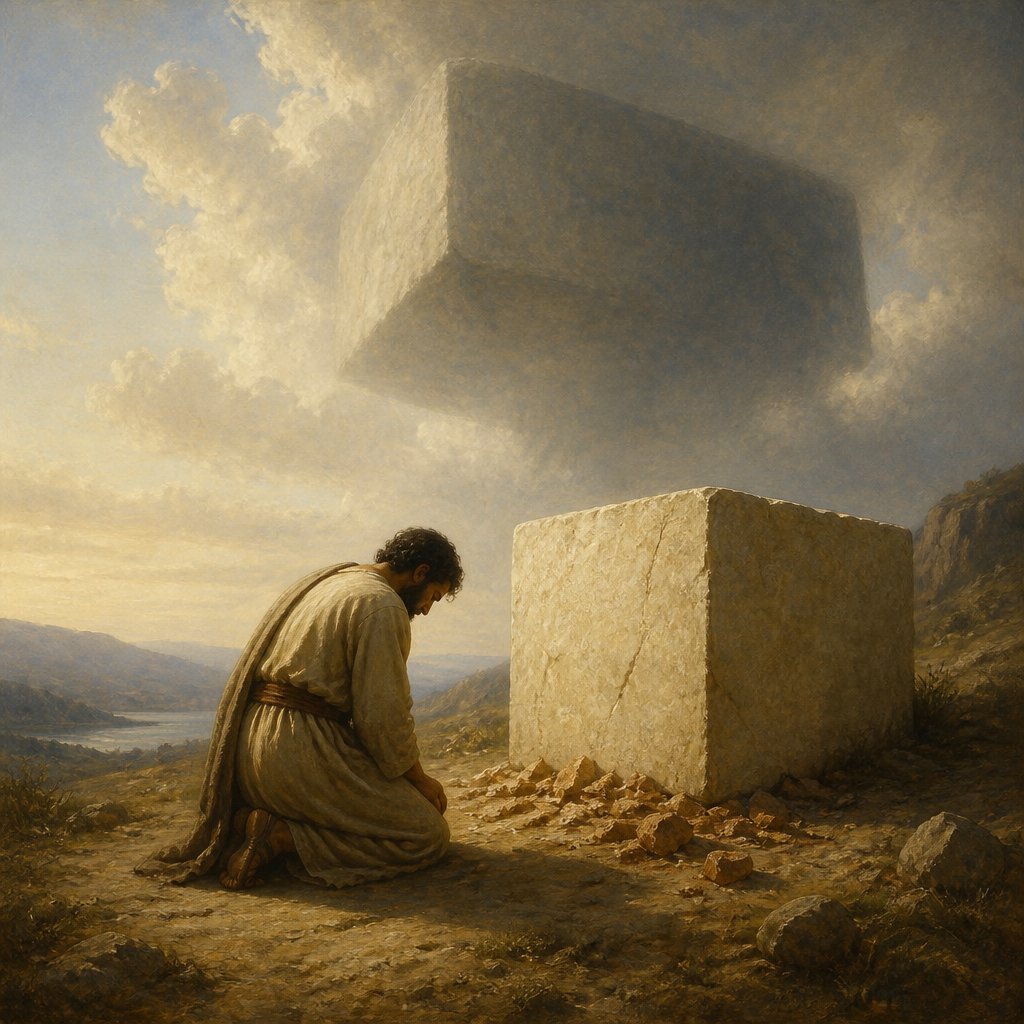
In the thirteenth chapter of Luke, we are drawn into a profound parable about a vineyard and its tenants, leading us to Luke 20:18 — "Whosoever shall fall upon that stone shall be broken; but on whomsoever it shall fall, it will grind him to powder." This verse is a compelling reminder of the dual nature of Christ as both the cornerstone of our faith and the ultimate judge of our lives.
To unpack this verse, we must first understand the context in which Jesus spoke these words. He was addressing the religious leaders who had repeatedly rejected Him andHis teachings. The stone He refers to is Himself— the very foundation of salvation and truth. In recognizing Christ as the stone, we see that He confronts every individual with a choice: to fall on Him in humility and repentance or to face Him as the judge in our unrepentant state.
When we consider the first part of the verse, "Whosoever shall fall upon that stone shall be broken," we are invited to reflect on the beauty of brokenness. In a world that often views brokenness as a weakness, the Bible redefines it as a pathway to wholeness. Christ calls us to come to Him bearing the weight of our sins and failures. Falling upon this stone means recognizing our need for Him. It calls for humility, surrender, and acknowledgment of our need for His grace. This act of falling—the surrender of our ego, our pride, and our self-sufficiency—is simultaneously the beginning of a transformative journey.
The process of being broken at the foot of the cross leads to healing and restoration. As we lay our burdens down before Him, we allow the Holy Spirit to work within us; to mold us, teach us, and shape us into vessels for His glory. This breaking is not a destructive experience; rather, it is a necessary one. In our brokenness, we learn to depend wholly on God, cultivating a deeper relationship with Him and an understanding of His infinite love and mercy. Each fracture in our spirit allows the light of Christ to shine through, revealing His strength in our weakness.
In contrast, the latter part of the verse poses a stark warning: "but on whomsoever it shall fall, it will grind him to powder." Here, we encounter the severity of rejection. For those who choose to reject Christ and His teachings, the consequences are grave. This imagery of being ground to powder evokes a sense of impending judgement. It serves as a reminder that there is a time for mercy and grace, but there is also a time for justice. Those who stubbornly resist the call to repentance and remain unyielded to the truth risk encountering Christ as a consuming fire instead of a comforting Savior.
Reflecting on this dual nature of Christ compels us to ask ourselves where we stand. Are we willing to embrace brokenness in our walk with Him, to find strength and growth through surrender? Or are we choosing the path of rebellion, rejecting the call to repentance? Both paths lead to significant outcomes, but only one leads to life and redemption.
This verse ultimately beckons us to respond. As we stand before the stone, let us choose to fall upon it, allowing our hearts to be tenderized by His love. Let us seek the brokenness that draws us closer to Him, transforming us into reflections of His grace to the world around us. If we heed His voice and yield ourselves to His will, we will find not only hope and healing but also the assurance of His promises living within us.
In closing, let us approach the stone every day with humility and reverence. May we be willing to be broken so that we can be beautifully remade in His image, alive with hope and purpose. And let us remember, while the prospect of being ground to powder may seem daunting, the grace of our Savior is ever-present for those who seek Him earnestly.
Want to reflect more on Luke 20:18?
Continue your spiritual journey with Bible Chat — an AI-powered tool for exploring God's Word through conversation. Ask questions, discover connections, and deepen your understanding.
Get Our Apps


Luke 20:18 Artwork

Luke 20:18 - "Whosoever shall fall upon that stone shall be broken; but on whomsoever it shall fall, it will grind him to powder."
"Whosoever shall fall upon that stone shall be broken; but on whomsoever it shall fall, it will grind him to powder." - Luke 20:18

Luke 18:20 - "Thou knowest the commandments, Do not commit adultery, Do not kill, Do not steal, Do not bear false witness, Honour thy father and thy mother."

Luke 13:20-21

Luke 13:20-21

Luke 13:20-21

Luke 13:20-21
Luke 13:20-21

Luke 10:18-19

Luke 13:18-19

Luke 10:18-19

Luke 10:18-19

Luke 13:18-19

Luke 10:18-19

Luke 10:18-19

Luke 10:18-19

Luke 20:28

Luke 4:18

Luke 4:18

Luke 2:1-20

Matthew 18:20

Genesis 20-18

Genesis 18-20

Matthew 18:20

Matthew 18:20

Luke 20:7 - "And they answered, that they could not tell whence it was."

Luke 18: 9-14

Luke 8:4-18

Luke 10:18-19

Luke 18:9-14