Investing for the Kingdom: Lessons from the Parable of the Pounds
"Wherefore then gavest not thou my money into the bank, that at my coming I might have required mine own with usury?" - Luke 19:23

In Luke 19:23, we find a challenging question posed by the nobleman in the parable of the pounds—"Wherefore then gavest not thou my money into the bank, that at my coming I might have required mine own with usury?" This inquiry resonates deeply with the responsibilities we bear as stewards of the resources entrusted to us by God.
This parable, found in the context of Jesus’ final days before His crucifixion, highlights key themes of servanthood, accountability, and the urgency of investing our lives for the Kingdom of God. The nobleman, who represents Christ, entrusts his servants with money (or pounds) while he goes away to receive a kingdom. The expectation is clear: they are to invest these resources wisely and return with a profit upon his return.
As we delve into the meaning of this verse, we must first understand the implications of the nobleman's question. In the cultural context of Jesus’ time, money lenders were expected to work diligently to grow their assets. For the servant who failed to invest wisely, the nobleman's rebuke highlights a severe oversight. The expectation was not merely to preserve the deposit but to actively engage with it in a way that would yield a return. Likewise, as stewards of God's gifts, we are not called to hide our talents, abilities, and resources; rather, we are called to engage with them in active service and investment for God’s glory.
When Jesus speaks about requiring His own with usury, He underscores the concept of producing a return on investment. The idea of usury, understood in this context as interest or profitability, compels us to assess how we are utilizing the gifts God has given us. Are we using our time, talents, and treasures to enrich the Kingdom of God, or are we burying them in the ground, failing to let God multiply what He has entrusted to us?
On a practical level, this might mean:
- **Time:** Are we investing our time in prayer, service, and outreach, or are we allowing distractions to keep us from engaging deeply in ministry?
- **Talents:** Do we use our skills to build up others and advance God’s Kingdom, or do we let our fears inhibit the exercise of our gifts?
- **Treasures:** How are we managing our financial resources? Are we giving generously to those in need and to the work of the church, or are we hoarding what we have?
It is crucial to remember that God’s economy is different from the world’s. While earthly investments may yield material gain, our heavenly investments yield eternal rewards. 2 Corinthians 9:6 reminds us that, "He which soweth sparingly shall reap also sparingly; and he which soweth bountifully shall reap also bountifully." The call is to be bold, to invest generously, and to trust in God’s promise that our labor in His service is never in vain.
As we reflect on Luke 19:23, we must also consider the urgency of the nobleman’s return. In our Christian walk, the anticipation of Christ's return should spur us to action. We are living in a time of awaiting our King, and now is the moment to be about our Father's business, demonstrating faithfulness in the little things so that we may be proven trustworthy in greater matters.
Ultimately, this parable teaches us a valuable lesson about accountability. Just as the nobleman later seeks to assess the performance of his servants, we too will stand before God to give an account of our stewardship. Let us not be caught unprepared, but rather strive to hear the words, "Well done, thou good servant: because thou hast been faithful in a very little, have thou authority over ten cities" (Luke 19:17). Let this verse and its implications challenge us today as we consider how we can actively invest our lives for His glory and the growth of His Kingdom.
Want to reflect more on Luke 19:23?
Continue your spiritual journey with Bible Chat — an AI-powered tool for exploring God's Word through conversation. Ask questions, discover connections, and deepen your understanding.
Get Our Apps


Luke 19:23 Artwork

Luke 19:23

Luke 19:23

Luke 19:23 - "Wherefore then gavest not thou my money into the bank, that at my coming I might have required mine own with usury?"

"Wherefore then gavest not thou my money into the bank, that at my coming I might have required mine own with usury?" - Luke 19:23

Luke 23:19 - "(Who for a certain sedition made in the city, and for murder, was cast into prison.)"

"(Who for a certain sedition made in the city, and for murder, was cast into prison.)" - Luke 23:19

Luke 23:53

luke 11:23

Luke 10:18-19

Luke 13:18-19

Luke 10:18-19

Luke 10:18-19

Luke 13:18-19

Luke 10:17-19

luke 11:23
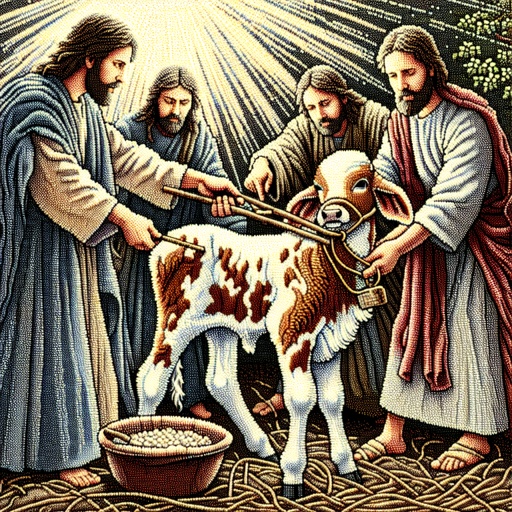
Luke 15:23

luke 11:23

luke 11:23

Luke 10:18-19

Luke 10:18-19

Luke 10:18-19

Luke 10:17-19

Genesis 23-19

Luke 1:19

Luke 19:19 - "And he said likewise to him, Be thou also over five cities."

Luke 19:10

Luke 1:19

Luke 19:28

Luke 1:19

Genesis 19-23