Faithful Stewardship: Multiplying Our Gifts for God
"And the second came, saying, Lord, thy pound hath gained five pounds." - Luke 19:18
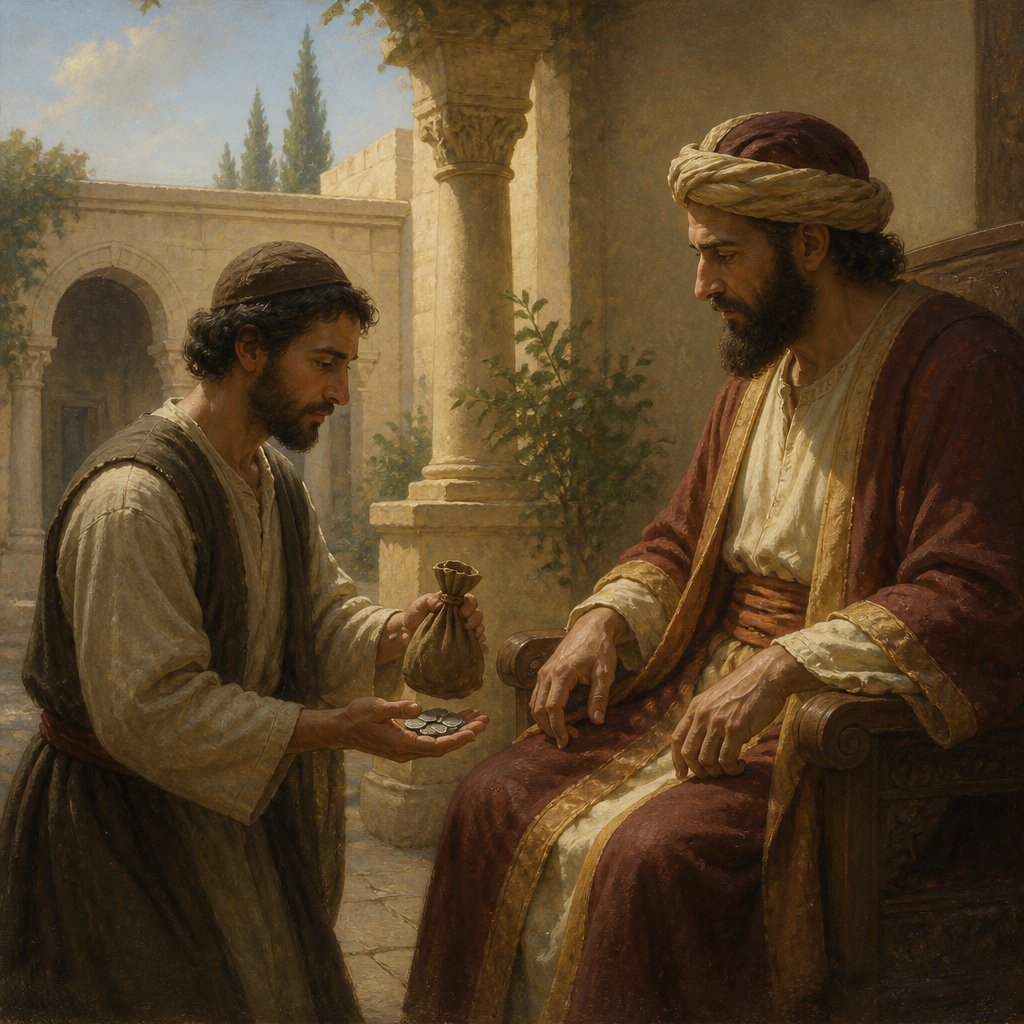
In Luke 19:18, we encounter the parable of the pounds, a profound teaching that delves into the expectations God has for us regarding the gifts and resources He entrusts to our care. The verse states, "And the second came, saying, Lord, thy pound hath gained five pounds" (KJV). This brief yet impactful statement encapsulates a multitude of lessons about stewardship, diligence, and the entrepreneurial spirit that Christ desires in His followers.
To fully appreciate this moment in scripture, we must understand the context of the parable. Jesus tells this story while approaching Jerusalem, knowing that His crucifixion is imminent. He uses the narrative of a nobleman who entrusts his servants with money to illustrate the responsibility placed upon His disciples. Each servant is given a specific amount, or 'pound,' and is expected to invest it wisely during the nobleman’s absence. The emphasis here is crucial: the servants are not marked by their initial resources but by their response to the calling to multiply what they have.
The servant who returns with five additional pounds not only exemplifies diligence but also reflects a significant principle of the Kingdom of God: with faithfulness in small things comes a greater trust in larger matters. The nobleman’s joy upon hearing the servant’s report signifies the reward of good stewardship—he commends the servant, proclaiming that because he has been faithful over a little, he shall be made ruler over much (Luke 19:17). This echoes Matthew 25:21, where the principle of faithfulness remains paramount.
In applying this lesson to our own lives, we are confronted with the reality that each of us possesses unique gifts, talents, and resources. Perhaps you possess a talent for teaching, a gift of encouragement, a knack for financial acumen, or a passion for service. The crucial question is not whether we have been given more or less than our neighbor, but rather how we choose to utilize what we have received. The second servant illustrates that our focus should be on cultivating and multiplying our God-given resources rather than burying them out of fear or complacency.
Moreover, this parable serves as a stark reminder of accountability in our stewardship. The nobleman’s return symbolizes Christ’s eventual return, where we will be required to give an account of our lives and how we managed the "pounds" entrusted to us. Are we investing our time in prayer and scripture, cultivating our spiritual lives? Are we actively using our skills and talents to advance God’s kingdom on Earth? Reflecting on the question of how visible our faith is in our daily actions can provoke a deep introspection of our motives and priorities.
In a world that often values results over processes, this parable challenges our understanding of success. The second servant's faithful return of five pounds showcases the significance of consistent effort towards personal and community growth. True prosperity in God’s eyes often looks different from worldly standards; measures of success are not just financial but can also reflect spiritual maturity, relational depth, and acts of kindness.
Additionally, consider how the parable encourages us to rest in God’s faithfulness. When we invest the gifts we have been given, God is with us, guiding and empowering our efforts. Each pound we manage is not just our burden but a divine opportunity to encounter the God who delights in our work. 1 Peter 4:10 emphasizes this by stating, "As every man hath received the gift, even so minister the same one to another, as good stewards of the manifold grace of God" (KJV).
Let us therefore strive like the second servant to diligently multiply our gifts through faithful action, always remembering that our ultimate joy and reward is found not only in the outcome but in the act of stewarding wisely what we have been entrusted with. May we live with the expectation and urgency of Christ’s return, eager to present Him with the fruits of our labor, saying, "Lord, thy pound hath gained…" and watch as He welcomes us into His eternal glory.
Want to reflect more on Luke 19:18?
Continue your spiritual journey with Bible Chat — an AI-powered tool for exploring God's Word through conversation. Ask questions, discover connections, and deepen your understanding.
Get Our Apps


Luke 19:18 Artwork

Luke 19:18 - "And the second came, saying, Lord, thy pound hath gained five pounds."
"And the second came, saying, Lord, thy pound hath gained five pounds." - Luke 19:18

Luke 10:18-19

Luke 13:18-19

Luke 10:18-19

Luke 10:18-19

Luke 13:18-19

Luke 10:18-19

Luke 10:18-19

Luke 10:18-19

Luke 10:18-19

Luke 18:19 - "And Jesus said unto him, Why callest thou me good? none is good, save one, that is, God."

Luke 18:18-19 - "And a certain ruler asked him, saying, Good Master, what shall I do to inherit eternal life? And Jesus said unto him, Why callest thou me good? None is good, save one, that is, God."

Luke 4:18-19 - "The Spirit of the Lord is on me, because he has anointed me to proclaim good news to the poor. He has sent me to proclaim freedom for the prisoners and recovery of sight for the blind, to set the oppressed free, to proclaim the year of the Lord’s favor."
![Luke 4:18-19 NKJV
"The Spirit of the LORD is upon Me, Because He has anointed Me To preach the gospel to the poor; He has sent Me to heal the brokenhearted, To proclaim liberty to the captives And recovery of sight to the blind, To set at liberty those who are oppressed; [19] To proclaim the acceptable year of the LORD."](https://media.bible.art/42afcc8b-2cc5-4606-a8a4-fd874b5bffcb-thumbnail.jpg)
Luke 4:18-19 NKJV "The Spirit of the LORD is upon Me, Because He has anointed Me To preach the gospel to the poor; He has sent Me to heal the brokenhearted, To proclaim liberty to the captives And recovery of sight to the blind, To set at liberty those who are oppressed; [19] To proclaim the acceptable year of the LORD."

"And Jesus said unto him, Why callest thou me good? none is good, save one, that is, God." - Luke 18:19

Luke 10:17-19

Luke 10:17-19
![Ethereal image of Luke 4:18-19 NKJV
"The Spirit of the LORD is upon Me, Because He has anointed Me To preach the gospel to the poor; He has sent Me to heal the brokenhearted, To proclaim liberty to the captives And recovery of sight to the blind, To set at liberty those who are oppressed; [19] To proclaim the acceptable year of the LORD."](https://media.bible.art/5e886594-b1b1-4642-afe6-428cfa26fab2-thumbnail.jpg)
Ethereal image of Luke 4:18-19 NKJV "The Spirit of the LORD is upon Me, Because He has anointed Me To preach the gospel to the poor; He has sent Me to heal the brokenhearted, To proclaim liberty to the captives And recovery of sight to the blind, To set at liberty those who are oppressed; [19] To proclaim the acceptable year of the LORD."

Luke 19:23

Luke 1:19

Luke 19:23

Luke 19:19 - "And he said likewise to him, Be thou also over five cities."

Luke 19:10

Luke 19:28

Luke 1:19

Luke 1:19

Luke 4:18

Luke 4:18

luke 21:5-19