The Unyielding Widow: Lessons in Persistence and Faith
"Yet because this widow troubleth me, I will avenge her, lest by her continual coming she weary me." - Luke 18:5

In the Gospel of Luke, particularly in the 18th chapter, we encounter an enigmatic parable told by Jesus about a widow and a judge. The verse, Luke 18:5 states, "Yet because this widow troubleth me, I will avenge her, lest by her continual coming she weary me." This verse, poignantly encapsulating the human condition and the nature of divine justice, invites us to reflect on persistence and faith in our walk with God.
### Context and Meaning
In biblical times, a widow was often a woman of great vulnerability. Without the protection or endorsement of a husband, she lacked social status and was oftentimes deprived of her rights. The judicial system of that era was notoriously biased, favoring those with power and connections. However, this widow embodies a different spirit—one of tenacity and unwavering faith in the face of adversity.
The parable describes a judge who neither fears God nor respects man, illustrating a severe moral deficiency in leadership. Despite this, the widow persists in her cries for justice. She understands the power of persistence, believing that her continual appeal will eventually penetrate the apathy of the judge. Her situation drives her to take decisive action, showing us that even when faced with seemingly insurmountable odds, we must not lose heart.
### The Call to Persistence
Jesus uses this scenario to reassure us that God, in contrast to the unjust judge, is attentive to our pleas. The widow’s dedication is notable; she chooses to press on despite the relentless dismissal she initially faces. She exemplifies a powerful persistence that we must emulate in our prayer lives. Here lies an important lesson: when we face delays or obstacles in our spiritual journey, the encouragement is not to abandon our requests but rather to intensify our efforts in seeking God. In our moments of despair or unmet expectations, we are called to approach God with the same boldness and tenacity as this widow.
### God’s Compassionate Justice
The phrase "lest by her continual coming she weary me" reveals the necessity of persistence; the judge, though corrupt, acknowledges the persistence of the widow as a valid force compelling him toward action. This speaks volumes about the nature of human willpower and its influence. Just as the widow’s repeated appeals disturb the complacency of the judge, our continuous prayers can invoke the compassionate justice of God.
God is not like the unjust judge; He cares deeply and is eager to respond to His children’s cries. The call to seek, ask, and knock (Matthew 7:7) invites us into a posture of persistent faith. He assures us that our cries do not fall on deaf ears but rather resonate with a God who is both loving and just.
### Struggling in Prayer
There may be times when our prayers feel futile, and we question the effectiveness of our intercessions. Jesus did not tell this parable to encourage a mechanical approach to prayer, but to instill within us the spirit of perseverance. Scripture tells us in Romans 12:12 to be "rejoicing in hope; patient in tribulation; continuing instant in prayer." This invitation to continually engage in prayer suggests that our relationship with God thrives on intimacy and honesty, reflecting our deepest struggles and hopes.
### Conclusion: The Outcome of Faith
As we meditate on Luke 18:5, let us remember that the widow's story is ultimately about trust in God’s justice and perfect timing. We may not always see immediate results when we pray, but persistence reflects our belief in His faithfulness. Just as the widow did not allow her societal status to hinder her justice, we must not allow our circumstances to determine our faith. Let us continue to approach the throne of grace with the boldness of this widow, trusting that our persistent prayers matter. In the end, God will answer in His perfect way and time, bringing justice and compassion to our lives in abundance. May we pursue God relentlessly and trust that He is avenging our cries in ways we may not yet see.
Want to reflect more on Luke 18:5?
Continue your spiritual journey with Bible Chat — an AI-powered tool for exploring God's Word through conversation. Ask questions, discover connections, and deepen your understanding.
Get Our Apps


Luke 18:5 Artwork

Luke 18:5 - "Yet because this widow troubleth me, I will avenge her, lest by her continual coming she weary me."

"Yet because this widow troubleth me, I will avenge her, lest by her continual coming she weary me." - Luke 18:5
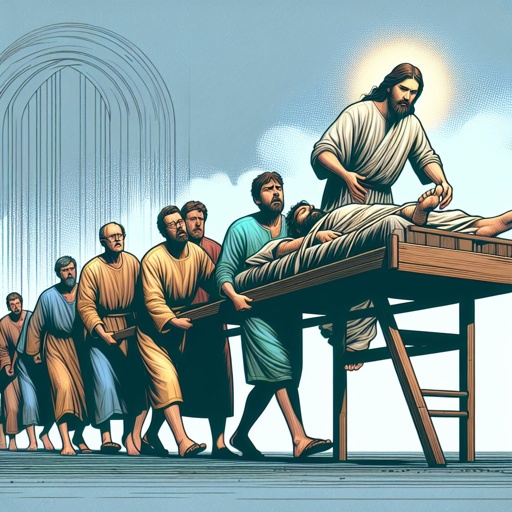
Luke 5:18 - "¶ And, behold, men brought in a bed a man which was taken with a palsy: and they sought means to bring him in, and to lay him before him."

Luke 10:18-19

Luke 13:18-19

Luke 10:18-19

Luke 10:18-19

Luke 13:18-19

Luke 10:18-19

Luke 10:18-19

Luke 10:18-19

luke 5:5

Luke 4:18

Luke 4:18

Luke 10:5

Luke 10:5

Luke 18: 9-14

Luke 8:4-18

Luke 10:5

Luke 10:18-19

Luke 18:9-14

Luke 18:37 - "And they told him, that Jesus of Nazareth passeth by."

Luke 18:18 - "And a certain ruler asked him, saying, Good Master, what shall I do to inherit eternal life?"

Luke 21:18 - "But there shall not an hair of your head perish."

Luke 18:26 - "And they that heard it said, Who then can be saved?"

Luke 5:36

Luke 5:39

"¶ And, behold, men brought in a bed a man which was taken with a palsy: and they sought means to bring him in, and to lay him before him." - Luke 5:18

Luke 6:18 - "And they that were vexed with unclean spirits: and they were healed."

Luke 7:18 - "And the disciples of John shewed him of all these things."