The Prodigal's Return: Grace Over Judgment
"But as soon as this thy son was come, which hath devoured thy living with harlots, thou hast killed for him the fatted calf." - Luke 15:30
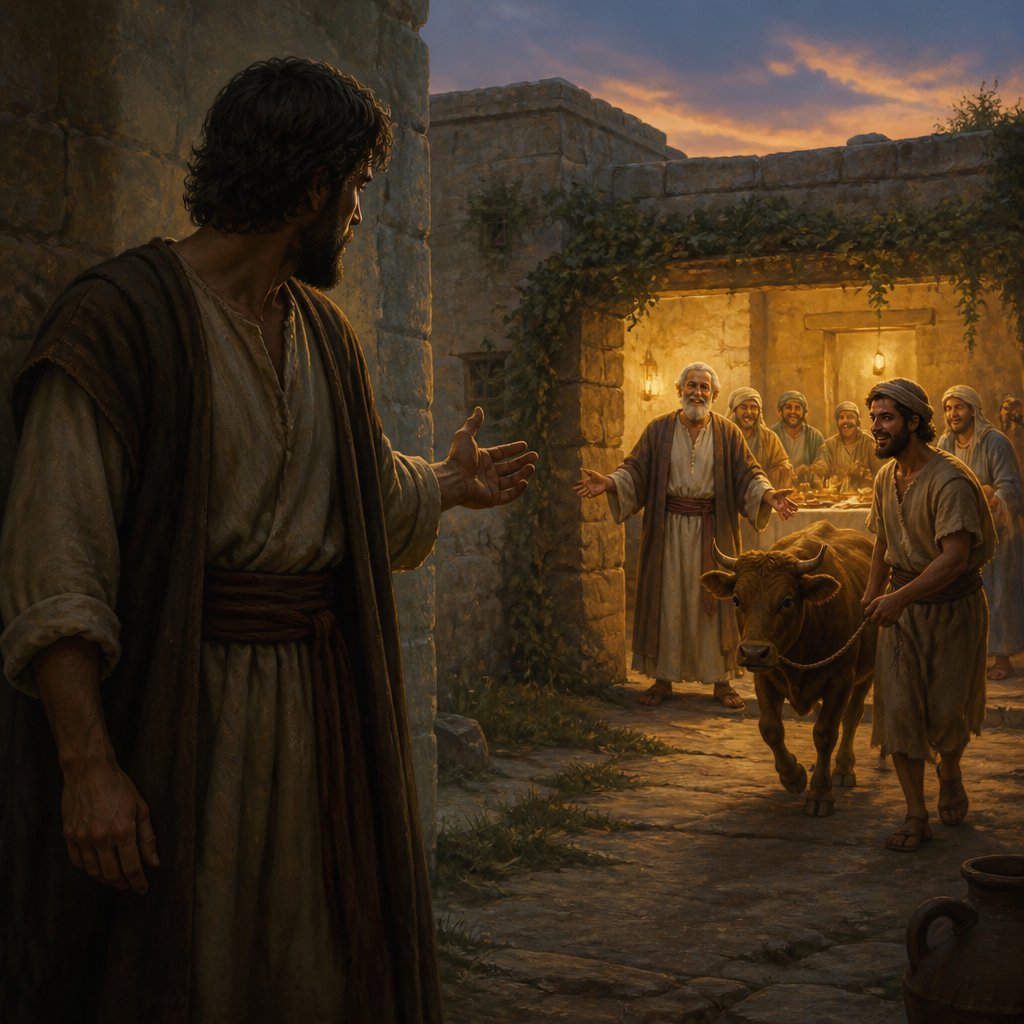
The parable of the Prodigal Son in Luke 15 offers profound insights into the nature of grace, forgiveness, and the human condition. Verse 30 particularly speaks to the heart of envy, resentment, and the struggle between the older and younger sons in their relationship with their father and each other. In this verse, the elder son expresses his discontent: "But as soon as this thy son was come, which hath devoured thy living with harlots, thou hast killed for him the fatted calf." These words encapsulate a significant spiritual conflict—the battle within us when faced with how we perceive forgiveness and wonder about the nature of God’s grace towards others.
As we delve into this parable, we recall that the prodigal son, after squandering his inheritance in reckless living, found himself in a dire state, yearning for the food that pigs ate. This journey of degradation and hunger opened his eyes to his father’s love and abundance back home. His return signifies a powerful act of repentance and humility (Luke 15:20). However, the elder son’s reaction showcases a different perspective—one filled with bitterness over the lost opportunity to receive similar celebration or recognition by the father.
The elder son’s statement highlights the depth of his resentment. He cannot fathom why his wayward brother, who has indulged in sinful living, deserves such a grand celebration, while he, who has remained steadfast and dutiful, is overlooked. This leads us to contemplate the essence of true grace. The fatted calf symbolizes the abundant grace of God, which can be perplexing for those who feel they deserve more. We often find ourselves identifying with the elder brother, questioning why others who have strayed far from righteousness receive a warm welcome upon their return.
The older brother's attitude raises significant questions about our understanding of righteousness and justice. We may often find ourselves comparing our lives with those who have fallen short, feeling deeper in our moral integrity yet struggling internally with pride and self-righteousness. When we operate from a mindset of entitlement, we lose focus on God's boundless love. We forget that grace is not about being deserving—if it were, none could earn it. The notion that our works or faithfulness make us more worthy of God’s grace is a dangerous fallacy.
The father, in the parable, exemplifies unconditional love and grace. He does not neglect the elder son but addresses his feelings with compassion. In his reply (Luke 15:31): "Son, thou art ever with me, and all that I have is thine," the father reassures the elder son of his value and the continuous presence he has in his life. This is a call to acknowledge our own identity as beloved children, regardless of our behavior. It is a reminder to shift our focus from merely our actions to the lavish grace poured out by the Father.
Ultimately, Luke 15:30 is not just a commentary on the elder son’s envy; it challenges us to examine our hearts. Are we being made bitter by others' blessings? Do we begrudge those who have journeyed far from grace when they return? It invites us to celebrate God's merciful heart instead of sulking in our own perceived injustices. Being ‘with the Father’ carries the weight of immense privilege and dignity, a life devoted to reflecting his love towards all, including those we might deem unworthy.
As we meditate on this parable, let us cultivate a heart of forgiveness and joy, celebrating every return to grace as a testament to God’s mercy. Let our prayers align with the Father’s heart, rejoicing that every sinner who repents is welcomed home, and may we find our true fulfillment not in what we deserve, but in sharing in the joy of salvation alongside others.
Want to reflect more on Luke 15:30?
Continue your spiritual journey with Bible Chat — an AI-powered tool for exploring God's Word through conversation. Ask questions, discover connections, and deepen your understanding.
Get Our Apps


Luke 15:30 Artwork

Luke 15:30 - "But as soon as this thy son was come, which hath devoured thy living with harlots, thou hast killed for him the fatted calf."
"But as soon as this thy son was come, which hath devoured thy living with harlots, thou hast killed for him the fatted calf." - Luke 15:30

Luke 1:30

luke 9:30

luke 6:30

luke 9:29- 30

african american luke 10:30

Luke 14:30 - "Saying, This man began to build, and was not able to finish."

Luke 2:30 - "For mine eyes have seen thy salvation,"

Joshua 15:30 - "And Eltolad, and Chesil, and Hormah,"

1.samuel 15:30

Exodus 28:15-30

Genesis 29:15-30

1.samuel 15:30

Luke 20:30 - "And the second took her to wife, and he died childless."

Luke 1:30 Gabriel visits Mary

Luke 17:30 - "Even thus shall it be in the day when the Son of man is revealed."

Luke 4:30 - "But he passing through the midst of them went his way,"

Luke 13:30 - "And, behold, there are last which shall be first, and there are first which shall be last."

Luke 23:30 - "Then shall they begin to say to the mountains, Fall on us; and to the hills, Cover us."

Luke 9:30 - "And, behold, there talked with him two men, which were Moses and Elias:"

Mark 15:30 - "Save thyself, and come down from the cross."

Luke 7:30 - "But the Pharisees and lawyers rejected the counsel of God against themselves, being not baptized of him."

Luke 11:30 - "For as Jonas was a sign unto the Ninevites, so shall also the Son of man be to this generation."
Luke 15:23

Luke 15:10

Luke 15:21

Luke 15:21

1 Corinthians 15:30 - "And why stand we in jeopardy every hour?"

Luke 1:30 - "And the angel said unto her, Fear not, Mary: for thou hast found favour with God."