The Prodigal’s Brother: A Lesson in Anger and Acceptance
"And he was angry, and would not go in: therefore came his father out, and intreated him." - Luke 15:28
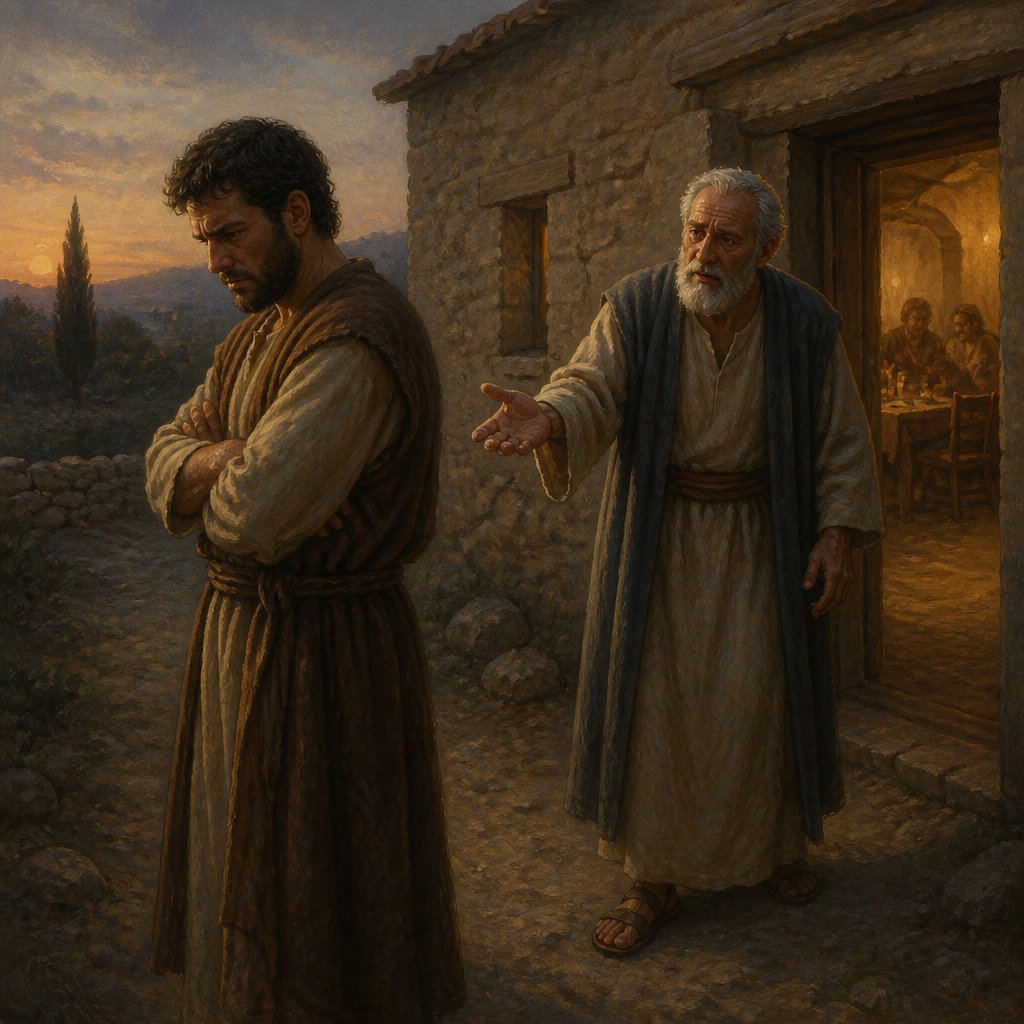
In the parable of the Prodigal Son found in Luke 15:11-32, we encounter a familiar story of grace, reconciliation, and the overflowing love of a father. However, nestled within this parable is a poignant moment concerning the elder brother, encapsulated in the verse, "And he was angry, and would not go in: therefore came his father out, and intreated him" (Luke 15:28, KJV). As we delve into this text, we find layers of meaning that warrant deep reflection and spiritual application in our lives today.
Firstly, let us set the scene. The prodigal son's return is a moment of joy and celebration for the family. The father, who represents God in this narrative, sees his lost son from afar, filled with compassion he runs to embrace him. A feast is prepared to celebrate his return, highlighting the father’s unconditional love and desire for restoration. But outside this joyous moment, the elder brother hears the commotion and is met with anger instead of elation.
The elder son’s reaction reflects a common human response to perceived injustice. He feels overlooked and underappreciated, voicing his feelings: "And answering he said to his father, Lo, these many years do I serve thee, neither transgressed I at any time thy commandment; and yet thou never gavest me a kid, that I might make merry with my friends" (Luke 15:29, KJV). His anger stems from a sense of entitlement—he believes that his years of loyalty should have rewarded him with similar attention and celebration.
This leads to our first reflection: the danger of comparison. Like the elder brother, it is easy for us to slip into a mindset of comparison, measuring our worth against others. We may find ourselves in similar situations at work, at church, or within our families, feeling slighted because we are not receiving the recognition we believe we deserve. Yet, God's grace is not about merit but about love that is freely given. The father’s lavish grace to the returning son does not diminish the elder son’s value in his eyes; instead, it reflects a reality of God’s generous nature. How often do we miss the joy of God’s work in others due to our anger and resentment?
Moreover, the father’s response to the elder son is remarkable. He comes out to him, showing that love seeks to bridge the divide created by anger. The text tells us that he "intreated him"—this signifies both pleading and understanding. The father recognizes the elder son’s feelings; he does not chastise him for his anger, but rather invites him into a conversation about love, grace, and community. This interaction highlights God’s heart toward us even when we harbor resentment or feel wronged. Our Heavenly Father desires reconciliation and understanding, extending compassion to us in our struggles.
As we reflect on this, we are compelled to examine how we react in moments of displeasure. Do we, like the elder brother, stand on the outskirts of God’s work, choosing to remain angry? Or do we allow God to draw us into the celebration of His grace? Our anger can often be a barrier that prevents us from experiencing the fullness of joy that comes from community and reconciliation.
Ultimately, the story culminates with the father reminding the elder son of his everlasting love: "And he said unto him, Son, thou art ever with me, and all that I have is thine" (Luke 15:31, KJV). Herein lies a profound truth: acceptance and love from God are not based on our actions or our comparison to others. Instead, they are grounded in our identity as His children. Every one of us is invited into the feast, regardless of our reactions or feelings of injustice.
In conclusion, let us be mindful of the feelings we hold—whether they are anger, resentment, or feelings of neglect. May we approach our Father, who is always willing to embrace us and remind us of our place in His family. Let us turn our anger into gratitude, celebrating the grace that extends to all, especially those who are lost and now found. And in this season of reflection, may we not miss the joy of being part of the body of Christ, where love flows freely and acceptance is given generously.
Want to reflect more on Luke 15:28?
Continue your spiritual journey with Bible Chat — an AI-powered tool for exploring God's Word through conversation. Ask questions, discover connections, and deepen your understanding.
Get Our Apps


Luke 15:28 Artwork

Luke 15:28 - "And he was angry, and would not go in: therefore came his father out, and intreated him."
"And he was angry, and would not go in: therefore came his father out, and intreated him." - Luke 15:28

Luke 20:28

Luke 19:28

luke 13:28-37

Luke 13:28-27

Luke 13:28-27

Luke 13:28-27

Luke 9:28-45

luke 13:28-37

Genesis 28-15

Luke 5:28 - "And he left all, rose up, and followed him."

Luke 22:28 - "Ye are they which have continued with me in my temptations."

1 Samuel 28:15

Exodus 28:15-30

Luke 4:28 - "And all they in the synagogue, when they heard these things, were filled with wrath,"
Luke 15:23

Luke 15:10

Joshua 15:28 - "And Hazar-shual, and Beer-sheba, and Bizjothjah,"

Luke 15:21

Luke 15:21

Luke 2:28 - "Then took he him up in his arms, and blessed God, and said,"

Luke 18:28 - "Then Peter said, Lo, we have left all, and followed thee."

Luke 11:28 - "But he said, Yea rather, blessed are they that hear the word of God, and keep it."

1 Samuel 28:15-20

1 Samuel 28:15-19

Luke 6:28 - "Bless them that curse you, and pray for them which despitefully use you."

Mark 15:28 - "And the scripture was fulfilled, which saith, And he was numbered with the transgressors."

Luke 15: 4-7

Luke 11:14-15