The Return to Wholeness: A Journey of Redemption
"And when he came to himself, he said, How many hired servants of my father's have bread enough and to spare, and I perish with hunger!" - Luke 15:17
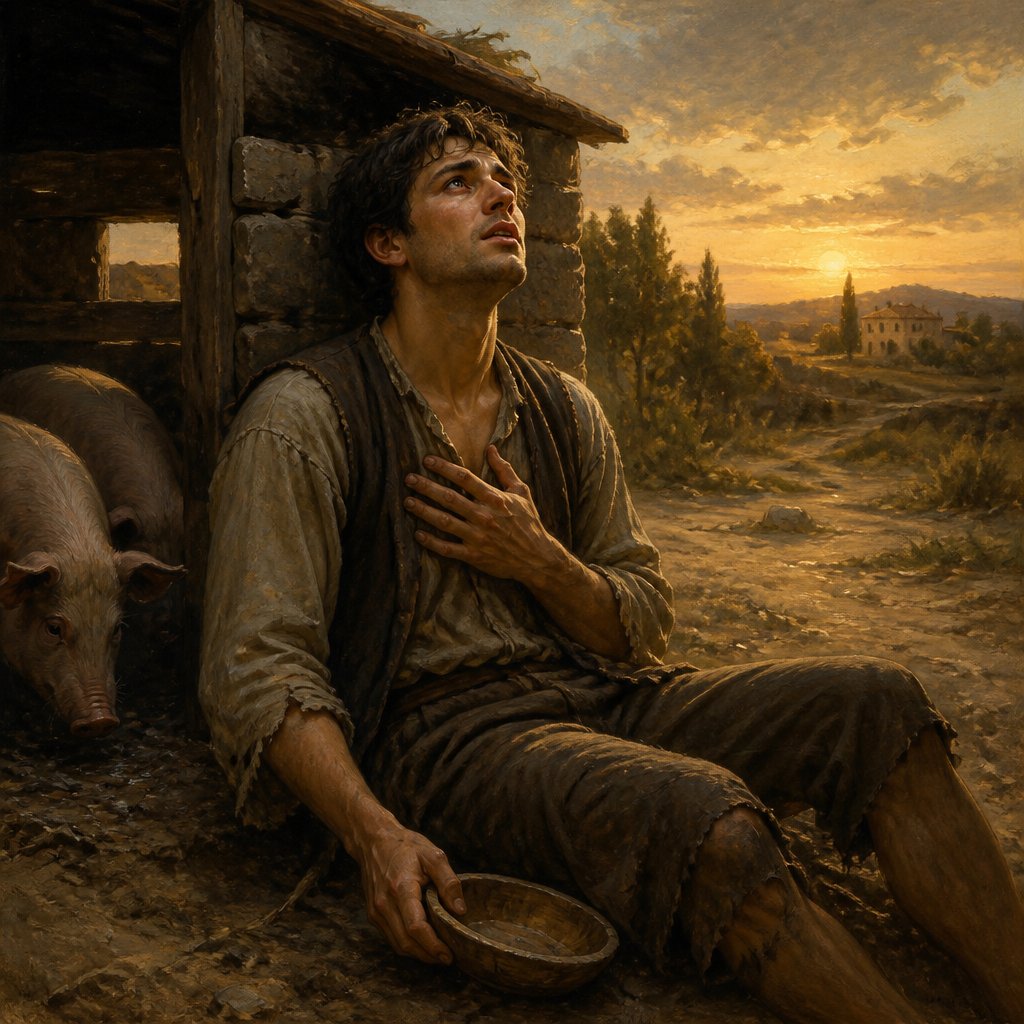
In the parable of the prodigal son recorded in Luke 15, we encounter a powerful narrative of loss, despair, and the longing for restoration. The verse in KJV reads, "And when he came to himself, he said, How many hired servants of my father's have bread enough and to spare, and I perish with hunger!" Here, in the midst of his misery, the young man experiences a profound moment of awakening. He comes to himself—an awakening to his reality and his identity.
This verse is pivotal in understanding the depth of the son’s desperation and the profound grace of God. He finds himself at a breaking point: alone, starving, and longing for the comforts he once took for granted. The phrase "came to himself" indicates a moment of clarity and self-reflection. It signifies a turning back, a realization of who he truly is and where he belongs. In this moment, we see the power of revelation—a divine light piercing through the darkness of his foolish decisions.
The prodigal son starts to remember the abundance he had at his father’s house. His father’s hired servants had more than enough bread, while he, a son, was living in hunger. This stark contrast highlights the foolishness of his choices. What led him away from his father’s abundance was misguided freedom, driven by a desire for a life without restraint. Instead, he found himself in a far-off land, where he had lost everything and was left with nothing but the painful realization of his mistakes.
This moment of recognition is significant for every believer. There are times in our lives when we may stray from our divine calling or purpose, driven by the allure of the world. We may indulge in the momentary pleasures that leave our souls empty and our spirits hungry. Yet, just as the prodigal son remembered his father’s goodness, we too can remember God’s faithfulness.
The realization of our hunger is essential. Spiritual hunger can often go unnoticed until we find ourselves in a situation that reveals our emptiness. Just like the prodigal son, we must confront our spiritual state and acknowledge that we are in need. God welcomes our confessions and our return, just as the father runs to embrace his son.
The father in the parable represents God’s heart towards us—loving, forgiving, and eager to restore. He does not chide the son for his poor decisions but instead rejoices when he returns home. This is a reminder that no matter how far we may wander, the path back is always open. God desires that we come back to Him to find not only sustenance for our souls but also a place of belonging.
As the son plans to return, he acknowledges that he is no longer worthy to be called his father’s son. This humility sets the stage for his restoration. It reveals a crucial step in our walk with God: recognizing our need for Him. This humility is often met with grace. The father’s response—lavished love and a celebration—points to the reality of God’s grace.
Reflecting on this verse, let us consider our own lives. Are there areas where we have strayed, where we find ourselves spiritually starving? Are we consuming the husks that do not satisfy? In this busy world, it’s vital that we take the time to come to ourselves, to reflect and re-evaluate our lives. The prodigal’s return represents not just regret but a sincere desire to be restored.
As we journey towards the path of restoration, let our hearts echo the words of the prodigal,
"How many hired servants of my father's have bread enough and to spare!" Let us approach our Heavenly Father with open hearts, and may we find the true bread of life that nourishes our souls, as we are welcomed back into the arms of love.
In closing, may we never forget the abundance of our Father's house, and may we always seek to return whenever we stray away, trusting in His boundless grace.
Want to reflect more on Luke 15:17?
Continue your spiritual journey with Bible Chat — an AI-powered tool for exploring God's Word through conversation. Ask questions, discover connections, and deepen your understanding.
Get Our Apps


Luke 15:17 Artwork

Luke 15:17 - "And when he came to himself, he said, How many hired servants of my father's have bread enough and to spare, and I perish with hunger!"
"And when he came to himself, he said, How many hired servants of my father's have bread enough and to spare, and I perish with hunger!" - Luke 15:17

Luke 17:15 - "And one of them, when he saw that he was healed, turned back, and with a loud voice glorified God,"

Luke 17:15-16 - "And one of them, when he saw that he was healed, turned back, and with a loud voice glorified God, And fell down on his face at his feet, giving him thanks: and he was a Samaritan."
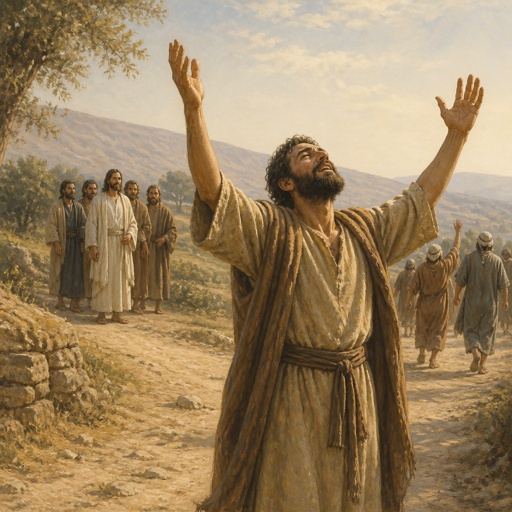
"And one of them, when he saw that he was healed, turned back, and with a loud voice glorified God," - Luke 17:15

Luke 10:17-19

Luke 17:15-16 Then one of them, when he saw that he was healed, turned back, praising God with a loud voice. He prostrated himself at Jesus’ feet and thanked him. And he was a Samaritan.

Luke 10:17-19

Luke 17:17 - "And Jesus answering said, Were there not ten cleansed? but where are the nine?"

Luke 17:15-16 Then one of them, when he saw that he was healed, turned back, praising God with a loud voice. He prostrated himself at Jesus’ feet and thanked him. And he was a Samaritan.

Luke 8:17

Luke 17:10

luke 24:17

Luke 17:15-16 Then one of them, when he saw that he was healed, turned back, praising God with a loud voice. He prostrated himself at Jesus’ feet and thanked him. And he was a Samaritan.
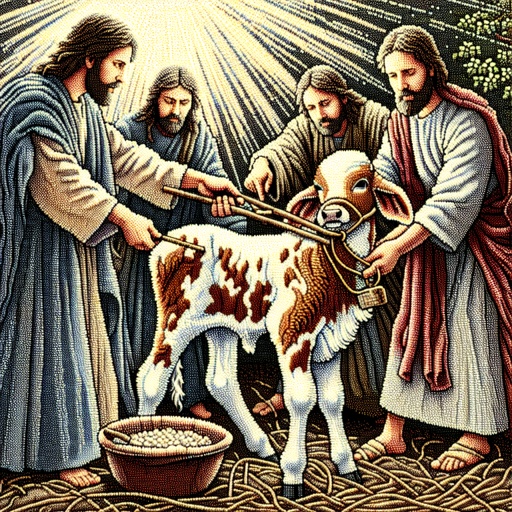
Luke 15:23

Luke 15:10

Luke 15:21

Luke 15:21

Luke 17:32-37

Luke 17:32 - "Remember Lot's wife."

Luke 5:17-26

Genesis 17-15

Provers 15:17

Acts 17:15

Luke 15: 4-7

Luke 11:14-15

Luke 21:15-19

Luke 15:11-32

Genesis 15:17

Luke 15:15 - "And he went and joined himself to a citizen of that country; and he sent him into his fields to feed swine."