The Prodigal Father: A Journey of Grace and Redemption
"And he said, A certain man had two sons: And the younger of them said to his father, Father, give me the portion of goods that falleth to me. And he divided unto them his living. And not many days after the younger son gathered all together, and took his journey into a far country, and there wasted his substance with riotous living. And when he had spent all, there arose a mighty famine in that land; and he began to be in want. And he went and joined himself to a citizen of that country; and he sent him into his fields to feed swine. And he would fain have filled his belly with the husks that the swine did eat: and no man gave unto him. And when he came to himself, he said, How many hired servants of my father's have bread enough and to spare, and I perish with hunger! I will arise and go to my father, and will say unto him, Father, I have sinned against heaven, and before thee, And am no more worthy to be called thy son: make me as one of thy hired servants. And he arose, and came to his father. But when he was yet a great way off, his father saw him, and had compassion, and ran, and fell on his neck, and kissed him. And the son said unto him, Father, I have sinned against heaven, and in thy sight, and am no more worthy to be called thy son. But the father said to his servants, Bring forth the best robe, and put it on him; and put a ring on his hand, and shoes on his feet: And bring hither the fatted calf, and kill it; and let us eat, and be merry: For this my son was dead, and is alive again; he was lost, and is found. And they began to be merry. Now his elder son was in the field: and as he came and drew nigh to the house, he heard musick and dancing. And he called one of the servants, and asked what these things meant. And he said unto him, Thy brother is come; and thy father hath killed the fatted calf, because he hath received him safe and sound. And he was angry, and would not go in: therefore came his father out, and intreated him. And he answering said to his father, Lo, these many years do I serve thee, neither transgressed I at any time thy commandment: and yet thou never gavest me a kid, that I might make merry with my friends: But as soon as this thy son was come, which hath devoured thy living with harlots, thou hast killed for him the fatted calf. And he said unto him, Son, thou art ever with me, and all that I have is thine. It was meet that we should make merry, and be glad: for this thy brother was dead, and is alive again; and was lost, and is found." - Luke 15:11-32

The parable of the Prodigal Son, found in Luke 15:11-32 in the King James Version of the Bible, presents an exquisite narrative that speaks to the heart of redemption, grace, and familial love. This passage should resonate deeply with anyone who has ever wandered far from home, whether physically, emotionally, or spiritually. As we delve into this story, let us explore the themes that emerge and apply them to our own lives.
**Understanding the Context**
To fully grasp the significance of this parable, we must remember that Jesus told it in the midst of a crowd that included tax collectors, sinners, Pharisees, and scribes (Luke 15:1-2). The narrative illustrates God's relentless pursuit of those who stray from His path, as well as the challenges of grace in human relationships.
**The Younger Son’s Rebellion**
The story begins with the younger son asking his father for his share of the inheritance, a request that was not only disrespectful but also akin to wishing his father dead. "And he divided unto them his living" (Luke 15:12). The father, perhaps heartbroken yet firm in his love, grants the son’s request. This moment signifies the freedom afforded to us all — the freedom to make choices, even poor ones. The younger son quickly ventures into a foreign land and engages in "riotous living" (Luke 15:13), a vivid depiction of sin leading to emptiness. It is a stark reminder of how the allure of worldly pleasures can lead us away from our true home until we find ourselves desolate.
Yet, chaos then descends upon him. When a famine strikes, he finds himself in dire need, reduced to feeding swine and longing to eat their slop (Luke 15:14-16). Here we see the sobering truth: sin promises fulfillment but delivers despair. In our darkest moments, however, light can break through.
**Coming to His Senses**
"And when he came to himself" (Luke 15:17) — this marks a pivotal moment of awakening. In his self-reflection, he recalls the abundance in his father’s house and decides to return home, not as a son, but as a servant (Luke 15:18). This decision mirrors the journey many of us take when we recognize our need for a savior. It demonstrates humility and the courage to admit our failings.
**The Father’s Compassion**
As the younger son makes his way home, something remarkable occurs. "But when he was yet a great way off, his father saw him, and had compassion, and ran, and fell on his neck, and kissed him" (Luke 15:20). This spontaneous, loving action is a powerful depiction of divine grace. The father doesn’t wait for a formal apology; he runs to embrace his son, illustrating that God's forgiveness is eagerly extended to those who repent.
In response to the son’s confession, the father celebrates his return. He bestows robes, rings, and a feast, indicating full restoration to the son’s place within the family (Luke 15:22-24). This illustrates that no matter how far we’ve strayed, God’s arms are always open, ready to receive us back into fellowship.
**The Elder Son’s Anger**
The tone shifts when we turn our attention to the elder son, who reacts with anger and jealousy upon hearing of the celebration (Luke 15:25-30). His response mirrors that of many who feel they have faithfully served yet see others receive grace they deem undeserving. The father’s gentle reassurance reminds us that all that he has belongs to the elder son as well (Luke 15:31).
**Conclusion: A Reflection on Grace**
This parable challenges us to consider where we find ourselves in this story. Are we the prodigal, lost in sin and far from home, or the elder brother, harboring resentment towards others? More importantly, it extends an invitation: to embrace and reflect the father’s grace in our interactions with others. The essence of the Gospel captures that redeeming grace; it transforms lives, restores brokenness, and reconciles relationships. As we meditate on this story, may we come closer to the heart of the Father, who eagerly awaits our return, ready with love and compassion that knows no bounds.
Want to reflect more on Luke 15:11-32?
Continue your spiritual journey with Bible Chat — an AI-powered tool for exploring God's Word through conversation. Ask questions, discover connections, and deepen your understanding.
Get Our Apps


Luke 15:11-32 Artwork

Luke 15:11-32

Luke 15:11-32 - "And he said, A certain man had two sons: And the younger of them said to his father, Father, give me the portion of goods that falleth to me. And he divided unto them his living. And not many days after the younger son gathered all together, and took his journey into a far country, and there wasted his substance with riotous living. And when he had spent all, there arose a mighty famine in that land; and he began to be in want. And he went and joined himself to a citizen of that country; and he sent him into his fields to feed swine. And he would fain have filled his belly with the husks that the swine did eat: and no man gave unto him. And when he came to himself, he said, How many hired servants of my father's have bread enough and to spare, and I perish with hunger! I will arise and go to my father, and will say unto him, Father, I have sinned against heaven, and before thee, And am no more worthy to be called thy son: make me as one of thy hired servants. And he arose, and came to his father. But when he was yet a great way off, his father saw him, and had compassion, and ran, and fell on his neck, and kissed him. And the son said unto him, Father, I have sinned against heaven, and in thy sight, and am no more worthy to be called thy son. But the father said to his servants, Bring forth the best robe, and put it on him; and put a ring on his hand, and shoes on his feet: And bring hither the fatted calf, and kill it; and let us eat, and be merry: For this my son was dead, and is alive again; he was lost, and is found. And they began to be merry. Now his elder son was in the field: and as he came and drew nigh to the house, he heard musick and dancing. And he called one of the servants, and asked what these things meant. And he said unto him, Thy brother is come; and thy father hath killed the fatted calf, because he hath received him safe and sound. And he was angry, and would not go in: therefore came his father out, and intreated him. And he answering said to his father, Lo, these many years do I serve thee, neither transgressed I at any time thy commandment: and yet thou never gavest me a kid, that I might make merry with my friends: But as soon as this thy son was come, which hath devoured thy living with harlots, thou hast killed for him the fatted calf. And he said unto him, Son, thou art ever with me, and all that I have is thine. It was meet that we should make merry, and be glad: for this thy brother was dead, and is alive again; and was lost, and is found."

Luke 11:14-15
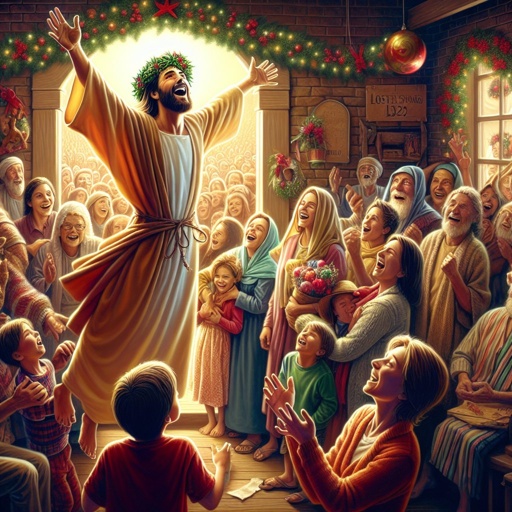
Luke 15:32 - "It was meet that we should make merry, and be glad: for this thy brother was dead, and is alive again; and was lost, and is found."

Luke 15:11 - "¶ And he said, A certain man had two sons:"

Luke 11:32 (KJVA) 32 The men of Nineve shall rise up in the judgment with this generation, and shall condemn it: for they repented at the preaching of Jonas; and, behold, a greater than Jonas is here.

Luke 11:32 - "The men of Nineve shall rise up in the judgment with this generation, and shall condemn it: for they repented at the preaching of Jonas; and, behold, a greater than Jonas is here."

"¶ And he said, A certain man had two sons:" - Luke 15:11

Luke 11:15 - "But some of them said, He casteth out devils through Beelzebub the chief of the devils."

"And he said, A certain man had two sons: And the younger of them said to his father, Father, give me the portion of goods that falleth to me. And he divided unto them his living. And not many days after the younger son gathered all together, and took his journey into a far country, and there wasted his substance with riotous living. And when he had spent all, there arose a mighty famine in that land; and he began to be in want. And he went and joined himself to a citizen of that country; and he sent him into his fields to feed swine. And he would fain have filled his belly with the husks that the swine did eat: and no man gave unto him. And when he came to himself, he said, How many hired servants of my father's have bread enough and to spare, and I perish with hunger! I will arise and go to my father, and will say unto him, Father, I have sinned against heaven, and before thee, And am no more worthy to be called thy son: make me as one of thy hired servants. And he arose, and came to his father. But when he was yet a great way off, his father saw him, and had compassion, and ran, and fell on his neck, and kissed him. And the son said unto him, Father, I have sinned against heaven, and in thy sight, and am no more worthy to be called thy son. But the father said to his servants, Bring forth the best robe, and put it on him; and put a ring on his hand, and shoes on his feet: And bring hither the fatted calf, and kill it; and let us eat, and be merry: For this my son was dead, and is alive again; he was lost, and is found. And they began to be merry. Now his elder son was in the field: and as he came and drew nigh to the house, he heard musick and dancing. And he called one of the servants, and asked what these things meant. And he said unto him, Thy brother is come; and thy father hath killed the fatted calf, because he hath received him safe and sound. And he was angry, and would not go in: therefore came his father out, and intreated him. And he answering said to his father, Lo, these many years do I serve thee, neither transgressed I at any time thy commandment: and yet thou never gavest me a kid, that I might make merry with my friends: But as soon as this thy son was come, which hath devoured thy living with harlots, thou hast killed for him the fatted calf. And he said unto him, Son, thou art ever with me, and all that I have is thine. It was meet that we should make merry, and be glad: for this thy brother was dead, and is alive again; and was lost, and is found." - Luke 15:11-32

Luke 15: 4-7

Luke 1:32

Luke 1:32

Luke 1:32

Luke 1:32

Luke 1:32

Luke 1:32

Luke 1:32

"It was meet that we should make merry, and be glad: for this thy brother was dead, and is alive again; and was lost, and is found." - Luke 15:32

Luke 17:32 - "Remember Lot's wife."

Luke 17:32-37

Luke 20:32 - "Last of all the woman died also."

Luke 5:32 - "I came not to call the righteous, but sinners to repentance."

Luke 22:31-32 - "Luke 22:31-32: And the Lord said, Simon, Simon, behold, Satan hath desired to have you, that he may sift you as wheat: But I have prayed for thee, that thy faith fail not: and when thou art converted, strengthen thy brethren."

"But some of them said, He casteth out devils through Beelzebub the chief of the devils." - Luke 11:15

Luke 2:32 - "A light to lighten the Gentiles, and the glory of thy people Israel."

Luke 4:32 - "And they were astonished at his doctrine: for his word was with power."

John 1:1-5

John 1:1-5

"Remember Lot's wife." - Luke 17:32