The Journey of Two Sons: Unveiling the Heart of the Father
"¶ And he said, A certain man had two sons:" - Luke 15:11

In the heart of the parable known as the Prodigal Son, found in Luke 15:11, we encounter the poignant beginnings of a story that resonates with each of us on many levels. "And he said, A certain man had two sons." In this brief introduction, we are already invited into a profound familial context that encapsulates love, grace, rebellion, and the beauty of reconciliation.
As we delve deeper into this narrative, it is vital to recognize the significance of the father and his two sons. At its core, this parable, told by Jesus, is a powerful illustration of the unconditional love of God the Father and His unyielding grace toward us, no matter the path we choose. The phrase “a certain man” suggests not a specifically named individual, but an archetype—any father who has lost a child to the allure of the world, or who has struggled to cultivate love in the face of rebellion.
The first son represents the many of us who chase after fleeting pleasures. His desire for independence prompts him to request his inheritance early, an act that, in Jewish culture, would have been viewed as scandalously disrespectful. He essentially tells his father, "I’d rather have your wealth than the relationship we share." Yet, despite this audacity, the father, filled with love, grants his wish.
Herein lies a deep theological truth: God gives us the freedom to choose our paths, even when those choices lead to our ruin. This freedom is not an act of abandonment; rather, it is the expression of love. Real love must give the beloved space to choose, even if that choice leads into the wilderness of life. Likewise, as the story unfolds, we see that the son's journey into a distant country, squandering his fortune in riotous living, is marked by the consequences of his choices.
As we reflect on this, we may ask ourselves: how often do we chase after materialism, pride, or the fleeting joys of this world? It is easy to find ourselves in the distant country of our own making—distracted, disconnected, and lost. The lesson here is a sobering reminder of our human nature and the propensity to stray away from that which holds true eternal value. Jesus illustrates not just a physical separation from home but a spiritual estrangement from the Father's love.
However, the beauty of this parable lies in the heart of the father. Despite the son’s reckless behavior and eventual downfall, the father stands ready to embrace and forgive. When the son, weary and destitute, returns home, the father does not engage in lecturing or criticizing; instead, he runs to meet him. This act of running—a symbol of unbridled joy and unconditional love—reflects the nature of God, who awaits eagerly for our return. We should never underestimate the depth of God’s love and the joy it brings when a wayward soul turns back towards Him.
The second son represents those of us who, while remaining in the house, can exhibit a spirit of resentment and entitlement. He has served the father faithfully yet struggles to understand the depth of love given to the lost brother upon his return. This echoes the sentiments of many Christians today who may feel overlooked or underappreciated, leading them to miss the joy of grace and redemption present in the family of God.
In conclusion, Luke 15:11 sets the stage for a rich exploration of God’s love, which calls us to both repentance and rejoicing. Whether through our wayward living or our hidden resentments, we are invited to kneel before the Father. The beauty of this parable is not just the reunion of a son but the celebration of God's relentless pursuit for our hearts. May we be encouraged to embrace the love of the Father, rediscover joy in our relationship with Him, and extend that grace to others in our lives.
Want to reflect more on Luke 15:11?
Continue your spiritual journey with Bible Chat — an AI-powered tool for exploring God's Word through conversation. Ask questions, discover connections, and deepen your understanding.
Get Our Apps


Luke 15:11 Artwork

Luke 15:11 - "¶ And he said, A certain man had two sons:"

Luke 15:11-32

"¶ And he said, A certain man had two sons:" - Luke 15:11

Luke 15:11-32 - "And he said, A certain man had two sons: And the younger of them said to his father, Father, give me the portion of goods that falleth to me. And he divided unto them his living. And not many days after the younger son gathered all together, and took his journey into a far country, and there wasted his substance with riotous living. And when he had spent all, there arose a mighty famine in that land; and he began to be in want. And he went and joined himself to a citizen of that country; and he sent him into his fields to feed swine. And he would fain have filled his belly with the husks that the swine did eat: and no man gave unto him. And when he came to himself, he said, How many hired servants of my father's have bread enough and to spare, and I perish with hunger! I will arise and go to my father, and will say unto him, Father, I have sinned against heaven, and before thee, And am no more worthy to be called thy son: make me as one of thy hired servants. And he arose, and came to his father. But when he was yet a great way off, his father saw him, and had compassion, and ran, and fell on his neck, and kissed him. And the son said unto him, Father, I have sinned against heaven, and in thy sight, and am no more worthy to be called thy son. But the father said to his servants, Bring forth the best robe, and put it on him; and put a ring on his hand, and shoes on his feet: And bring hither the fatted calf, and kill it; and let us eat, and be merry: For this my son was dead, and is alive again; he was lost, and is found. And they began to be merry. Now his elder son was in the field: and as he came and drew nigh to the house, he heard musick and dancing. And he called one of the servants, and asked what these things meant. And he said unto him, Thy brother is come; and thy father hath killed the fatted calf, because he hath received him safe and sound. And he was angry, and would not go in: therefore came his father out, and intreated him. And he answering said to his father, Lo, these many years do I serve thee, neither transgressed I at any time thy commandment: and yet thou never gavest me a kid, that I might make merry with my friends: But as soon as this thy son was come, which hath devoured thy living with harlots, thou hast killed for him the fatted calf. And he said unto him, Son, thou art ever with me, and all that I have is thine. It was meet that we should make merry, and be glad: for this thy brother was dead, and is alive again; and was lost, and is found."

Luke 11:14-15

Luke 11:15 - "But some of them said, He casteth out devils through Beelzebub the chief of the devils."

Luke 15: 4-7

"But some of them said, He casteth out devils through Beelzebub the chief of the devils." - Luke 11:15

John 1:1-5

John 1:1-5
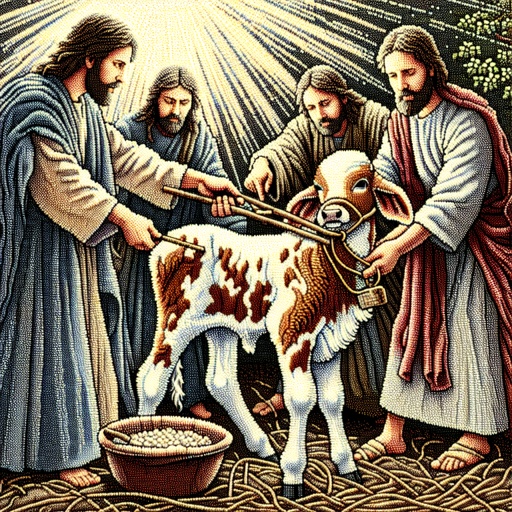
Luke 15:23

Luke 15:10

Luke 15:21

Luke 15:21
Luke 11:9

luke 11:23

luke 11:23

luke 11:23

Luke 8:11

luke 11:23

Luke 11:9

Luke 21:15-19

Exodus 4:1-5

1 Timothy 1:5

Luke 15:15 - "And he went and joined himself to a citizen of that country; and he sent him into his fields to feed swine."

Luke 1:11-12

Luke 11:1-14

Luke 11:9-10

Luke 11:1-14

Luke 5:1-11