The Sabbath Controversy: Healing in the Midst of The Law
"And Jesus answering spake unto the lawyers and Pharisees, saying, Is it lawful to heal on the sabbath day?" - Luke 14:3
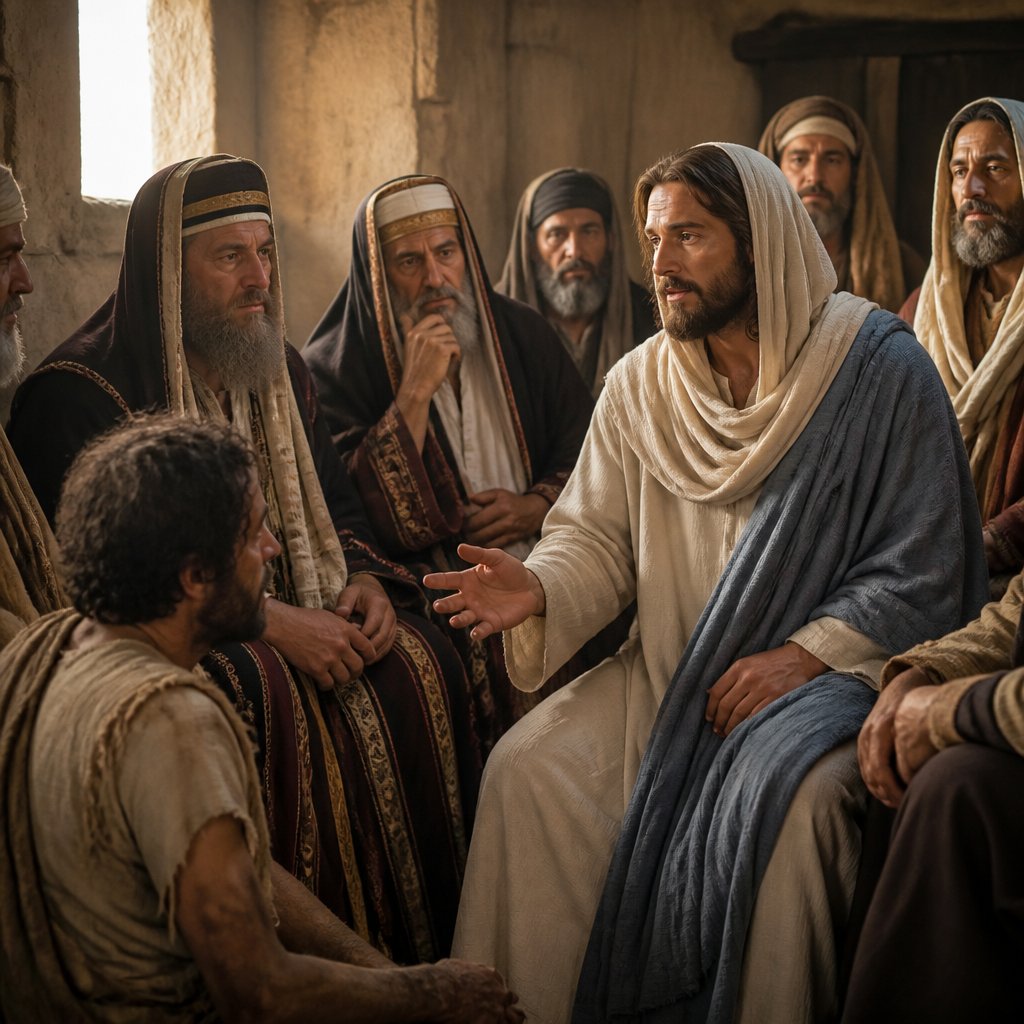
The question posed by Jesus in Luke 14:3, "Is it lawful to heal on the sabbath day?" challenges the very core of how we understand the Sabbath and the heart of God in relation to humanity. This moment is steeped in profound significance, revealing not only Christ’s authority but also urging us to examine the essence of our spiritual practices and traditions.
In Jewish tradition, the Sabbath was established as a day of rest, a command from God that is as ancient as creation itself. The Fourth Commandment reiterates this practice, urging the people of Israel to cease from work, much like the Creator Himself did after the six days of creation. However, by the time of Jesus, the Pharisees and lawyers had accumulated a plethora of additional rules surrounding the observance of the Sabbath, often overshadowing the original intent of the commandment—to rest and reconnect with God.
When Jesus asks, "Is it lawful to heal on the sabbath day?" He is not only provoking them to reconsider their rigid interpretations of the law, but He is also manifesting a fundamental truth about the nature of God’s will. God's love is not confined by time or tradition; it transcends the literal restrictions that man imposes. For the God we serve, healing and compassion are paramount, even on what is supposed to be a day of rest.
To delve deeper into the implications of this question, we consider two aspects: the **letter of the Law** versus the **spirit of the Law**. In a legalistic mindset, following the rules to the letter becomes the focus, often at the expense of love and mercy. However, Jesus illustrates that the spirit of the law is where true obedience lies. Healing—a profound act of love and restoration—was always in line with God’s heart, regardless of the time it was performed. This brings us to an important consideration: when does our adherence to tradition compromise our ability to love?
Moreover, as followers of Christ, how do we apply this teaching today? Are there traditions or expectations in our lives that limit our ability to reach out and engage with those who are hurting? Are we so steeped in the way things should be done—devoid of compassion—that we forget the very essence of what Christ exemplified through His ministry? This teaching is a call to action, urging us to prioritize love, mercy, and compassion above rigid rule-following.
Jesus continues to demonstrate this understanding throughout the Gospels as He heals on the Sabbath, aligning with His assertion that human need outweighs the constraints of legalism.
The act of healing on the Sabbath also signifies a restoration of rest. Unlike the burdensome traditions imposed by the Pharisees, God’s intention for the Sabbath was one of rejuvenation and healing—not merely in the physical sense but spiritually as well. It is a reminder that, regardless of the day, Christ is in the business of healing all aspects of our lives. Spiritually, He invites us to approach Him for healing from sin and brokenness regardless of our circumstances.
Furthermore, this verse beckons us to reflect on the faith community we cultivate. Are we extending grace and healing to those around us, particularly to the broken and marginalized, or are we building walls of criticism based on tradition? It is essential to create an environment where people feel welcome to receive the love and healing that Christ offers us freely, and that we reflect that love in our lives.
In conclusion, Jesus' probing question serves as an illumination, inviting us to examine our hearts and the intentions behind our practices. As we strive to live faithfully, may we remember the essence of God’s law and the heart behind it—love, compassion, and healing. Let us embrace opportunities to share God's love to those we encounter, reflecting the heart of Christ, even on our most sacred days.
Want to reflect more on Luke 14:3?
Continue your spiritual journey with Bible Chat — an AI-powered tool for exploring God's Word through conversation. Ask questions, discover connections, and deepen your understanding.
Get Our Apps


Luke 14:3 Artwork

Luke 14:3 - "And Jesus answering spake unto the lawyers and Pharisees, saying, Is it lawful to heal on the sabbath day?"
"And Jesus answering spake unto the lawyers and Pharisees, saying, Is it lawful to heal on the sabbath day?" - Luke 14:3

Luke 3:14 - "And the soldiers likewise demanded of him, saying, And what shall we do? And he said unto them, Do violence to no man, neither accuse any falsely; and be content with your wages."

Luke 14:14 - "And thou shalt be blessed; for they cannot recompense thee: for thou shalt be recompensed at the resurrection of the just."

Luke 11:14-15

Luke 18:9-14

Luke 11:1-14

Luke 14:25 - 33

Luke 11:1-14

Luke 2:13-14

Luke 18: 9-14

Luke 2:13-14

Luke 14:6 - "And they could not answer him again to these things."

Colossians 4:14 - "Luke, the beloved physician, and Demas, greet you."

Luke 14:30 - "Saying, This man began to build, and was not able to finish."

Luke 24:14 - "And they talked together of all these things which had happened."

Luke 10:14 - "But it shall be more tolerable for Tyre and Sidon at the judgment, than for you."

Luke 14:2 - "And, behold, there was a certain man before him which had the dropsy."

luke 3:1-6

Luke 3:1-6

Luke 3:1-6

Luke 3:3 - "And he came into all the country about Jordan, preaching the baptism of repentance for the remission of sins;"

Luke 2:14 - "Glory to God in the highest, and on earth peace, good will toward men."

Luke 14:22 - "And the servant said, Lord, it is done as thou hast commanded, and yet there is room."

Luke 14:13 - "But when thou makest a feast, call the poor, the maimed, the lame, the blind:"

Luke 14:25 - "¶ And there went great multitudes with him: and he turned, and said unto them,"

Luke 22:14 - "And when the hour was come, he sat down, and the twelve apostles with him."

Luke 2:13-14 fine pointillism sytle

Luke 24:3 - "And they entered in, and found not the body of the Lord Jesus."
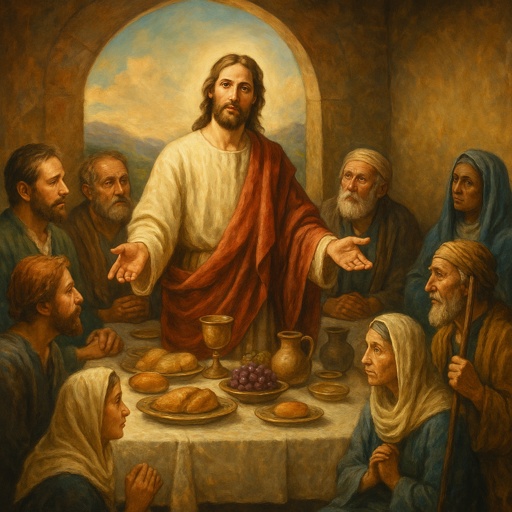
"And he put forth a parable to those which were bidden, when he marked how they chose out the chief rooms; saying unto them, When thou art bidden of any man to a wedding, sit not down in the highest room; lest a more honourable man than thou be bidden of him; And he that bade thee and him come and say to thee, Give this man place; and thou begin with shame to take the lowest room. But when thou art bidden, go and sit down in the lowest room; that when he that bade thee cometh, he may say unto thee, Friend, go up higher: then shalt thou have worship in the presence of them that sit at meat with thee. For whosoever exalteth himself shall be abased; and he that humbleth himself shall be exalted. Then said he also to him that bade him, When thou makest a feast, call the poor, the maimed, the lame, the blind: And thou shalt be blessed; for they cannot recompense thee: for thou shalt be recompensed at the resurrection of the just." - Luke 14:7-14