Healing Beyond Physical Ailments: A Reflection on Luke 14:2
"And, behold, there was a certain man before him which had the dropsy." - Luke 14:2
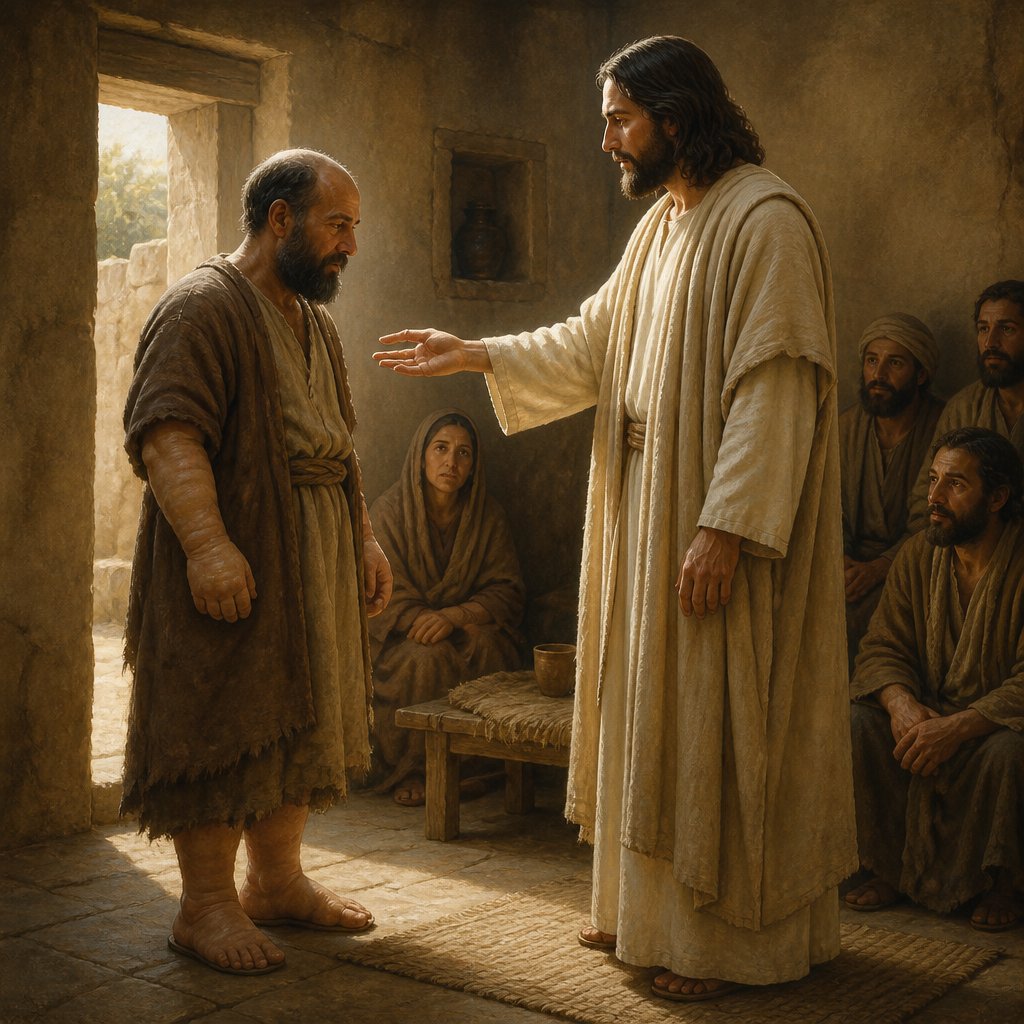
In the Gospel of Luke, we encounter a striking scene in chapter 14, verse 2, which reads: "And, behold, there was a certain man before him which had the dropsy." This brief remark bears tremendous significance, not only in the context of the narrative but also in its broader theological implications. The man with dropsy—a medical condition characterized by an abnormal accumulation of fluid in the tissues—represents more than just a physical ailment; he symbolizes the struggles of humanity, often burdened and incapacitated by both physical and spiritual afflictions.
The setting of this verse is a Sabbath dinner at the house of one of the chief Pharisees. As Jesus engages with those around Him, we see the Pharisees watching Him closely, testing Him to see whether He would heal on the Sabbath. Jesus’ actions in this context challenge our understanding of mercy, compassion, and the essence of the law. This moment provides profound insight into Jesus’ mission and His approach to those who suffer, layered beneath the scrutiny of the religious elite.
The condition of the man before Jesus is worth our contemplation. Dropsy, as a physical ailment, can render a person weak and vulnerable, often causing emotional pain and social isolation due to the visible nature of his suffering. In this context, the man is not merely a patient experiencing a medical condition. He represents humanity’s deeper struggles—our fears, failures, and the debilitating weight of sin that can overwhelm our spirit. He stands before the Healer, indicating the hope we all possess, in our varied forms of suffering, to approach Christ with our burdens.
This scenario forces us to confront an essential question: how do we respond to those who are suffering around us? Just as the Pharisees were often more concerned with rules than relationships, we too can find ourselves trapped in a cycle of judgment and indifference. When we observe the struggles of others, especially those who may seem unworthy or beyond help, are we like the Pharisees, focused solely on the law, or do we mirror Christ’s compassion?
As we meditate on this verse, we are invited to examine our own hearts. Jesus doesn’t merely acknowledge the man’s presence; He sees him, understands his condition, and ultimately, He heals. In the subsequent verses, we witness the miracle that unfolds. Jesus heals the man, thereby illustrating the power of grace that overrides human regulations. This healing acts as an illustration of God’s desire for wholeness in our lives—both physically and spiritually.
Furthermore, this encounter is a call to action. Jesus challenges us to consider whether we are willing to reach out to those who are suffering, regardless of societal expectations or perceived norms. His willingness to heal on the Sabbath underscores that love and mercy trump ritual observance. The lesson here extends to us: how do we extend God’s grace to those around us? Do we create an environment that welcomes healing, or do we erect barriers through misunderstanding and judgment?
As we reflect on our own lives, let us bring our dropsy—our anxieties, our pains, our failures—before the Lord. He is waiting to heal, to restore, and to make us whole. This verse does not merely recount a historical event; it serves as a timeless message of hope. It encourages us to look beyond our circumstances and open our hearts to the transformative power of Christ’s love.
Finally, consider how we can embody this love in our daily interactions. Are we willing to look past the surface, address the deeper issues at hand, and extend grace? As we strive to follow Christ's example, let us be conduits of His healing grace in a world often characterized by judgment and apathy. May we remember that, like the man before Jesus, we all have the opportunity to experience His restoring touch.
Want to reflect more on Luke 14:2?
Continue your spiritual journey with Bible Chat — an AI-powered tool for exploring God's Word through conversation. Ask questions, discover connections, and deepen your understanding.
Get Our Apps


Luke 14:2 Artwork

Luke 14:2 - "And, behold, there was a certain man before him which had the dropsy."

"And, behold, there was a certain man before him which had the dropsy." - Luke 14:2

Luke 2:13-14

Luke 2:13-14

Luke 2:14 - "Glory to God in the highest, and on earth peace, good will toward men."

Luke 2:13-14 fine pointillism sytle

Luke 2:14 - "Glory to God in the highest, and on earth peace, good will toward men."

Luke 2:13-14 - "And suddenly there was with the angel a multitude of the heavenly host praising God, and saying, Glory to God in the highest, and on earth peace, good will toward men."

Luke 2:14 - "Glory to God in the highest, and on earth peace, good will toward men."

"Glory to God in the highest, and on earth peace, good will toward men." - Luke 2:14

Luke 14:14 - "And thou shalt be blessed; for they cannot recompense thee: for thou shalt be recompensed at the resurrection of the just."

Luke 11:14-15

Luke 18:9-14

Luke 11:1-14

Luke 14:25 - 33

Luke 11:1-14

Luke 18: 9-14

Luke 14:6 - "And they could not answer him again to these things."

Colossians 4:14 - "Luke, the beloved physician, and Demas, greet you."

Luke 14:30 - "Saying, This man began to build, and was not able to finish."

Luke 24:14 - "And they talked together of all these things which had happened."

Luke 10:14 - "But it shall be more tolerable for Tyre and Sidon at the judgment, than for you."

Luke 14:22 - "And the servant said, Lord, it is done as thou hast commanded, and yet there is room."

Luke 2:2

Luke 14:13 - "But when thou makest a feast, call the poor, the maimed, the lame, the blind:"

Luke 14:25 - "¶ And there went great multitudes with him: and he turned, and said unto them,"

Luke 22:14 - "And when the hour was come, he sat down, and the twelve apostles with him."
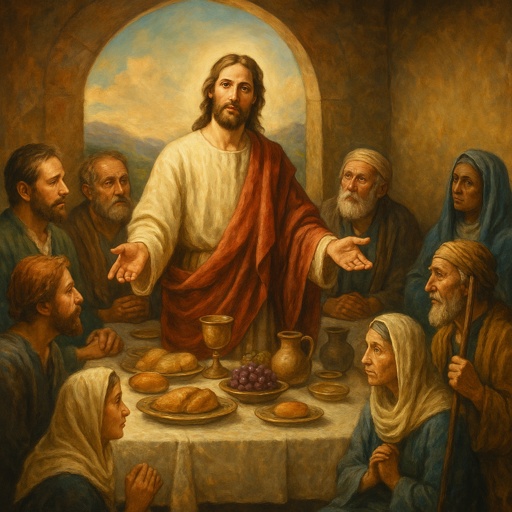
"And he put forth a parable to those which were bidden, when he marked how they chose out the chief rooms; saying unto them, When thou art bidden of any man to a wedding, sit not down in the highest room; lest a more honourable man than thou be bidden of him; And he that bade thee and him come and say to thee, Give this man place; and thou begin with shame to take the lowest room. But when thou art bidden, go and sit down in the lowest room; that when he that bade thee cometh, he may say unto thee, Friend, go up higher: then shalt thou have worship in the presence of them that sit at meat with thee. For whosoever exalteth himself shall be abased; and he that humbleth himself shall be exalted. Then said he also to him that bade him, When thou makest a feast, call the poor, the maimed, the lame, the blind: And thou shalt be blessed; for they cannot recompense thee: for thou shalt be recompensed at the resurrection of the just." - Luke 14:7-14

Luke 14:4 - "And they held their peace. And he took him, and healed him, and let him go;"

Luke 21:14 - "Settle it therefore in your hearts, not to meditate before what ye shall answer:"