Feasting Beyond Reciprocity: The Heart of Generosity
"¶ Then said he also to him that bade him, When thou makest a dinner or a supper, call not thy friends, nor thy brethren, neither thy kinsmen, nor thy rich neighbours; lest they also bid thee again, and a recompence be made thee." - Luke 14:12
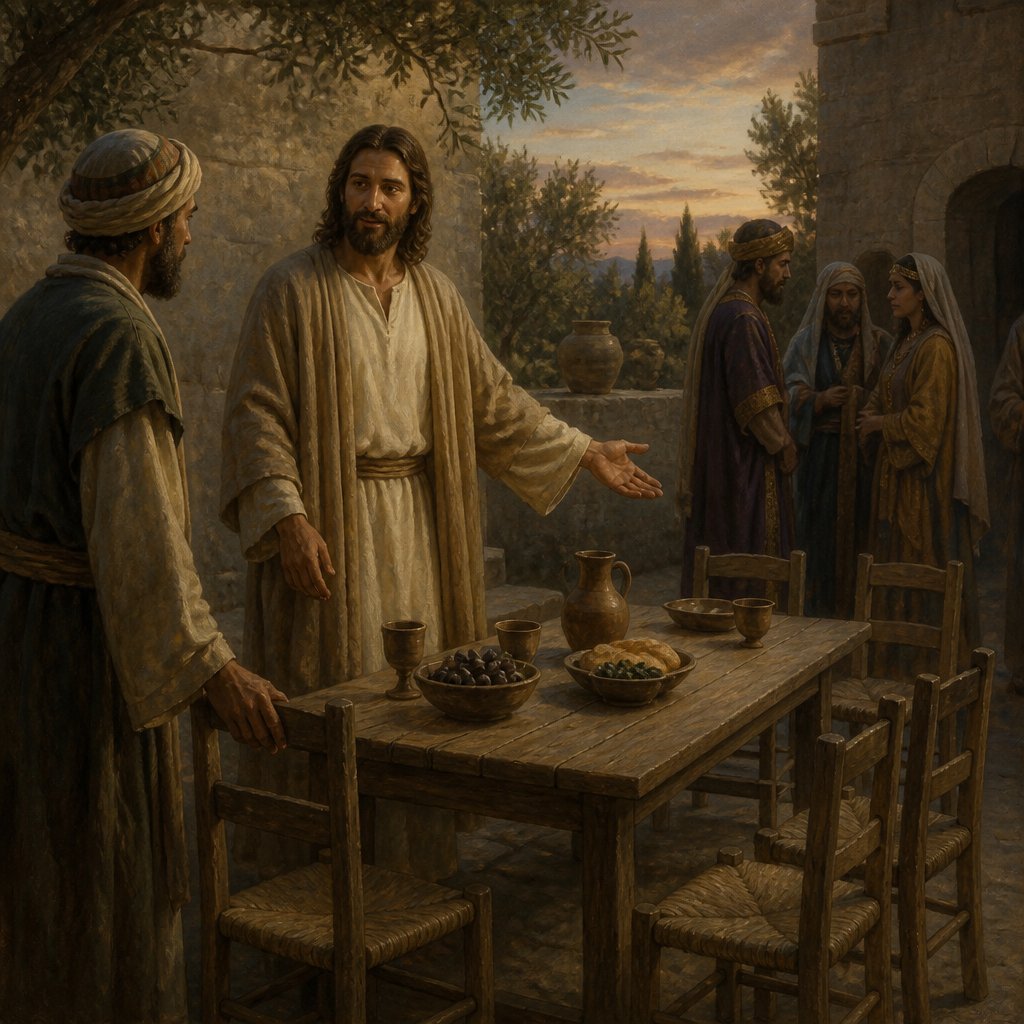
In Luke 14:12 (KJV), we encounter a profound teaching from Jesus as he addresses the nature of hospitality and generosity: "Then said he also to him that bade him, When thou makest a dinner or a supper, call not thy friends, nor thy brethren, neither thy kinsmen, nor thy rich neighbours; lest they also bid thee again, and a recompence be made thee." In this passage, Jesus challenges the conventional understanding of social gatherings that were often built around mutual benefit, thereby igniting a reflection on the deeper essence of giving and the heart behind our actions.
To grasp the gravity of Jesus’ words, we must first consider the cultural context in which they were spoken. During Jesus' time, hospitality was a significant virtue, deeply rooted in the societal framework. However, this hospitality often came with an expectation of reciprocity—inviting those who could later return the favor. In many ways, our understanding of generosity has not dramatically changed; we often extend kindness in hopes of receiving something in return, whether it be a favor or social acknowledgment.
Jesus flips the script with his directive. He calls for a radical form of hospitality that eschews familiar favors and monetary exchanges. He speaks directly to the ego-driven nature of human relationships—relationships that often function on a give-and-take basis. By instructing his followers to invite the poor, the maimed, the lame, and the blind to their feasts, Jesus illuminates a divine principle: true generosity is most profoundly expressed when we give without expecting anything in return.
When we look beyond our immediate circle to invite those who cannot repay us, we participate in the sacrificial love of Christ. This principle underscores the essence of the Gospel—the unmerited grace and love we receive from God, which calls us to extend that same grace to others. Each act of kindness towards the marginalized and the less fortunate becomes a reflection of the Kingdom of God, where social hierarchies and economic status hold little weight.
This idea echoes powerfully throughout scripture, reinforcing a biblical principle found in Proverbs 19:17 (KJV), which states, "He that hath pity upon the poor lendeth unto the Lord; and that which he hath given will he pay him again." This verse beautifully encapsulates the truth that, in God's economy, when we give selflessly, He recognizes our generosity. Our acts of kindness are never overlooked; they are investments into the divine that will be rewarded. Thus, even as we are encouraged to broaden our scopes of giving, we find reassurance that God sees every act of love, every gesture of kindness, and He honors that with His faithful response.
Moreover, the invitation to generosity that Jesus extends in this passage is rooted in humility. To humble ourselves to serve those who cannot repay us demands a relinquishment of pride and status. It calls us to model our lives after Christ, who humbled Himself to the point of death to serve humanity. I often reflect on Philippians 2:3-4 (KJV), where we are exhorted to "let nothing be done through strife or vainglory; but in lowliness of mind let each esteem other better than themselves. Look not every man on his own things, but every man also on the things of others." An invitation to this kind of life requires a daily surrender and a relentless zeal to shift our focus from self to the needs of those around us.
In conclusion, Jesus’ words in Luke 14:12 challenge us to redefine our view of hospitality, generosity, and community. As we gather around our tables, may we not only invite those from whom we can expect a return but also reach out to those who may have never felt welcomed in such spaces. Let us be conduits of His grace, embodying a radical form of love that transcends social boundaries, reflecting the heart of Christ in every encounter. As we do so, we will find that we are not merely serving others, but we are also being transformed, growing in a deeper understanding of what it means to be blessed and to be a blessing.
Want to reflect more on Luke 14:12?
Continue your spiritual journey with Bible Chat — an AI-powered tool for exploring God's Word through conversation. Ask questions, discover connections, and deepen your understanding.
Get Our Apps


Luke 14:12 Artwork

Luke 14:12 - "¶ Then said he also to him that bade him, When thou makest a dinner or a supper, call not thy friends, nor thy brethren, neither thy kinsmen, nor thy rich neighbours; lest they also bid thee again, and a recompence be made thee."

Luke 14:12-14 - "Then Jesus said to his host, "When you give a luncheon or dinner, do not invite your friends, your brothers or sisters, your relatives, or your wealthy neighbors; if you do, they may invite you back and so you will be repaid. But when you give a banquet, invite the poor, the crippled, the lame, the blind, and you will be blessed. Although they cannot repay you, you will be repaid at the resurrection of the righteous."
"¶ Then said he also to him that bade him, When thou makest a dinner or a supper, call not thy friends, nor thy brethren, neither thy kinsmen, nor thy rich neighbours; lest they also bid thee again, and a recompence be made thee." - Luke 14:12
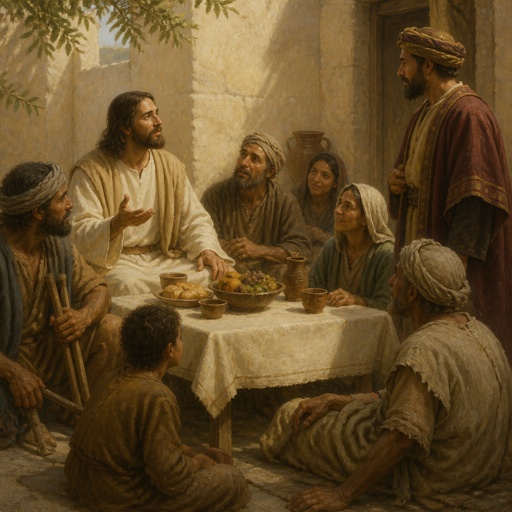
"Then Jesus said to his host, "When you give a luncheon or dinner, do not invite your friends, your brothers or sisters, your relatives, or your wealthy neighbors; if you do, they may invite you back and so you will be repaid. But when you give a banquet, invite the poor, the crippled, the lame, the blind, and you will be blessed. Although they cannot repay you, you will be repaid at the resurrection of the righteous." - Luke 14:12-14

Luke 12:14 - "And he said unto him, Man, who made me a judge or a divider over you?"
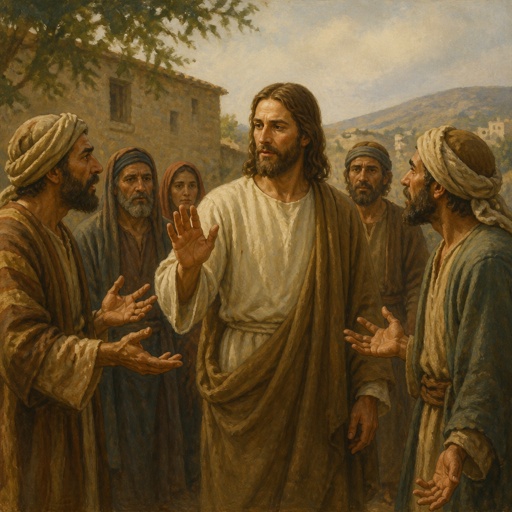
"And he said unto him, Man, who made me a judge or a divider over you?" - Luke 12:14

Luke 12:25

Luke 12:25

Luke 12: 49

Luke 12:34

Luke 12:10

Luke 12:50

Luke 17:12-14 - "As he was going into a village, ten men who had leprosy met him. They stood at a distance and called out in a loud voice, "Jesus, Master, have pity on us!" When he saw them, he said, "Go, show yourselves to the priests." And as they went, they were cleansed."

Luke 14:14 - "And thou shalt be blessed; for they cannot recompense thee: for thou shalt be recompensed at the resurrection of the just."

Luke 11:14-15

Luke 18:9-14

Luke 11:1-14

Luke 14:25 - 33

Luke 11:1-14

Luke 2:13-14

Luke 18: 9-14

Luke 2:13-14

Luke 12:12 - "For the Holy Ghost shall teach you in the same hour what ye ought to say."

1 cor 12:12-14

Luke 1:11-12

Luke 12:25-26

Luke 12:25-26

Luke 12:25-26

Luke 12:25-26

Luke 12:25-26