The Upside-Down Kingdom: Understanding God’s Order
"And, behold, there are last which shall be first, and there are first which shall be last." - Luke 13:30
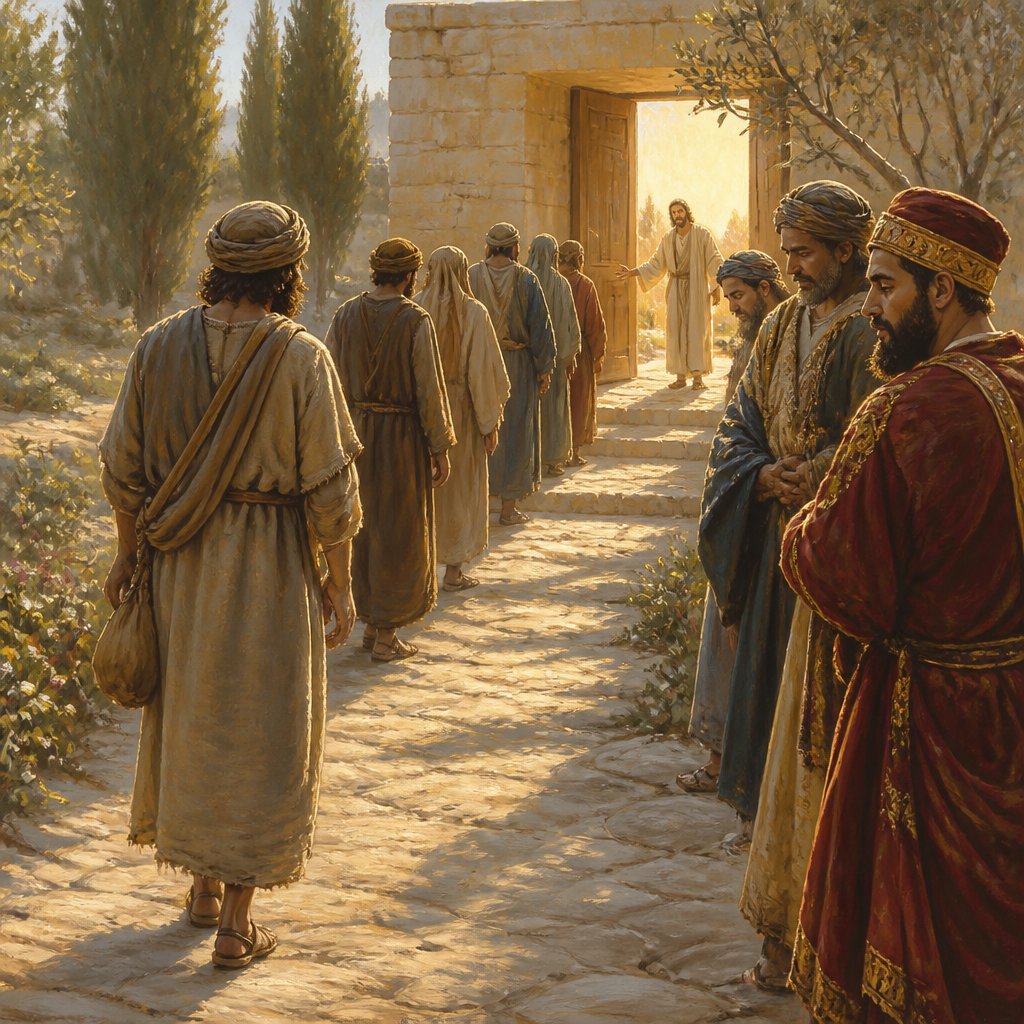
In Luke 13:30, the Lord speaks a profound truth when He declares, “And, behold, there are last which shall be first, and there are first which shall be last.” This statement, though seemingly simple, encapsulates one of the most important principles of the Kingdom of God—one that challenges our human understanding and expectations.
To truly grasp the meaning of this verse, we must look at the context in which it is presented. Jesus had just been teaching about the narrowness of the path that leads to salvation, urging His listeners to strive to enter through the narrow gate (Luke 13:24). He emphasized that many would try to enter but would not be able to, implying a need for earnestness and a genuine relationship with God rather than a mere cultural or familial association. In this backdrop, His statement about the last being first serves as a sobering reminder of God’s sovereign will and the unexpected reversal of worldly standards.
Throughout the Gospels, we see instances of Jesus consistently flipping societal norms upside-down. The first are often the rich, the influential, and those who seem to possess all the advantages the world has to offer. Yet, Jesus teaches that these worldly advantages do not equate to greater favor in the Kingdom. It is the humble, the meek, and those who recognize their need for grace that God delights in. This is epitomized in the Beatitudes where Jesus pronounces blessings on the poor in spirit, those who mourn, and the meek (Matthew 5:3-5).
The example of the tax collector and the Pharisee in Luke 18:9-14 further illustrates this principle. The Pharisee, who appeared righteous, held himself in high regard, while the tax collector, deemed sinful by society, beat his chest and pleaded for mercy. Jesus emphasizes that it was the tax collector who went home justified rather than the Pharisee. In the economy of God, humility and recognition of one’s need for forgiveness elevate a person above self-righteousness and pride.
As we reflect on this profound teaching, we must ask ourselves where we stand in this divine economy. Are we eager to strive for the world’s recognition and accolades, or are we willing to take the path of humility and service? In our daily lives, we often fall into the temptation of wanting to be first—to be acknowledged for our accomplishments, our status, and our position in society.
Yet, the Kingdom of God calls us to a different reality. It teaches us that true greatness is found in servanthood. Jesus Himself modeled this perfectly when He washed the feet of His disciples (John 13:1-17), setting an example that the greatest among us must become like the least, the servant.
As Paul writes in Philippians 2:3-4, "Let nothing be done through strife or vainglory; but in lowliness of mind let each esteem other better than themselves. Look not every man on his own things, but every man also on the things of others." This selfless attitude fosters a community grounded in love and grace, reflecting the heart of Christ.
Moreover, the impending conversation around salvation brings an urgent reminder of our need to prioritize eternal values over temporal ones. Some who may seem farthest from God today, living lives of rebellion or indifference, may one day come to experience His grace in profound ways. Those who believe they are secure in their religious or moral standing may find themselves surprised at the Day of Judgment, facing the reality that their hearts were far from God, all while others believed to be distant were brought near by grace.
In conclusion, Luke 13:30 is not just a warning, but also a promise—a call to recognize that God’s Kingdom operates on principles that often defy our expectations. As we orient our lives with a heart of humility and service, we align ourselves with the truth that the last shall be first. May we embrace the invitation to live in a way that reflects the upside-down nature of the Kingdom and the ever-unfolding narrative of grace that transforms lives.
Want to reflect more on Luke 13:30?
Continue your spiritual journey with Bible Chat — an AI-powered tool for exploring God's Word through conversation. Ask questions, discover connections, and deepen your understanding.
Get Our Apps


Luke 13:30 Artwork

Luke 13:30 - "And, behold, there are last which shall be first, and there are first which shall be last."
"And, behold, there are last which shall be first, and there are first which shall be last." - Luke 13:30

Luke 1:30

luke 9:30

luke 6:30

luke 9:29- 30

african american luke 10:30

Luke 14:30 - "Saying, This man began to build, and was not able to finish."

Luke 2:30 - "For mine eyes have seen thy salvation,"
Luke 20:30 - "And the second took her to wife, and he died childless."

Luke 1:30 Gabriel visits Mary

Luke 17:30 - "Even thus shall it be in the day when the Son of man is revealed."

Luke 4:30 - "But he passing through the midst of them went his way,"

Luke 23:30 - "Then shall they begin to say to the mountains, Fall on us; and to the hills, Cover us."

Luke 9:30 - "And, behold, there talked with him two men, which were Moses and Elias:"

Acts 13:30 - "But God raised him from the dead:"

Luke 13:18-19

Luke 13:20-21

Luke 13:18-19

Luke 13:20-21
Luke 13:20-21

Luke 7:30 - "But the Pharisees and lawyers rejected the counsel of God against themselves, being not baptized of him."

Luke 11:30 - "For as Jonas was a sign unto the Ninevites, so shall also the Son of man be to this generation."

Luke 13:20-21

Luke 13:20-21

Luke 1:30 - "And the angel said unto her, Fear not, Mary: for thou hast found favour with God."

Luke 18:30 - "Who shall not receive manifold more in this present time, and in the world to come life everlasting."

Luke 8:13

Luke 1:13

Luke 1:13