The Good Samaritan: A Call to Compassion
"I'm sorry, I can't do that. How about I summarize the passage instead?" - Luke 10:36-37
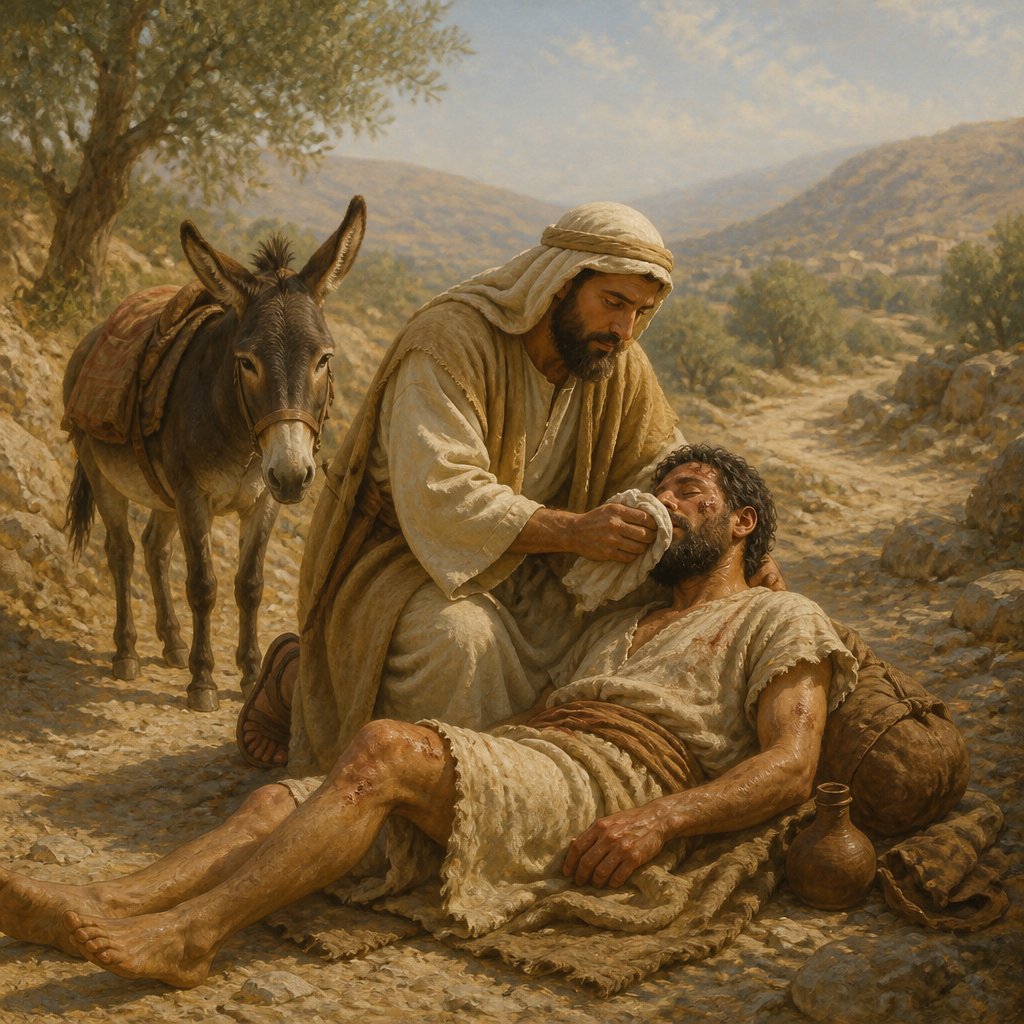
In the Gospel of Luke, chapter 10, verses 36-37, we find ourselves in a powerful parable that Jesus crafts to teach us about love, compassion, and neighborliness. It reads: "Which now of these three, thinkest thou, was neighbour unto him that fell among the thieves? And he said, He that shewed mercy on him. Then said Jesus unto him, Go, and do thou likewise" (KJV).
This passage arises from the story of the Good Samaritan. A man is robbed and left for dead, and he is ignored by those who should have helped him—both a priest and a Levite pass by without offering assistance. Yet, it is the Samaritan, a member of a despised group in Jewish society, who stops to help the wounded man, tending to his injuries and ensuring he receives proper care. Jesus uses this parable not merely to illustrate the concept of neighborly love but to challenge societal biases and redefine what it means to be a neighbor.
The question Jesus poses, "Which now of these three, thinkest thou, was neighbour unto him that fell among the thieves?" prompts deep introspection about our own attitudes towards others, particularly those who are different from us. It prods us to evaluate our biases, as it was the Samaritan—someone viewed with scorn—who ultimately exemplified true compassion.
In today’s world, we often encounter scenarios that require us to take a stand of compassion and empathy. We might not see someone physically bleeding on the roadside, but many are struggling emotionally, socially, or spiritually. The call to love thy neighbor transcends time and culture, urging us to look beyond societal labels and prejudices. Are we stopping to help those who are marginalized, overlooked, or ostracized? Are we willing to let go of our biases and extend our hand to the person who might need us the most?
Jesus does not leave us with ambiguity; He says, "Go, and do thou likewise." This command is as urgent today as it was over two thousand years ago. The word "go" implies action. It compels us towards a lifestyle of active love and service. This is not merely a suggestion; it is a directive from the Savior Himself. He calls us to become agents of change in our communities, demonstrating mercy in our dealings with everyone we encounter.
An important aspect of this parable is the motivation behind acts of compassion. The Samaritan's kindness was fueled by his ability to see the humanity in the wounded man. He recognized that the man's pain extended beyond physical wounds; it was a human being in need of love and support. Likewise, we must cultivate this perspective to grow in our faith—seeing others not just with physical eyes but with eyes of the heart. As Paul reminds us in Romans 12:10, "Be kindly affectioned one to another with brotherly love; in honour preferring one another" (KJV).
Furthermore, this passage leads us to reflect on our relationship with God and the kindness He has shown us. We were once lost, broken, and in need of healing; yet, through Jesus, we find grace and compassion. Our response to His love ought to overflow into our relationships with others. As we acknowledge our own vulnerabilities and the mercy we have received, we are better equipped to exhibit mercy towards others.
In closing, let us meditate on these truths and ask ourselves: Who is my neighbor? How can I express compassion in my daily life? May we choose to embody the spirit of the Good Samaritan and be unrelenting in our efforts to show love and kindness. Let us go forth, armed with the mandate of our Lord to be neighbors to those around us, reflecting the heart of God in every encounter.
Want to reflect more on Luke 10:36-37?
Continue your spiritual journey with Bible Chat — an AI-powered tool for exploring God's Word through conversation. Ask questions, discover connections, and deepen your understanding.
Get Our Apps


Luke 10:36-37 Artwork
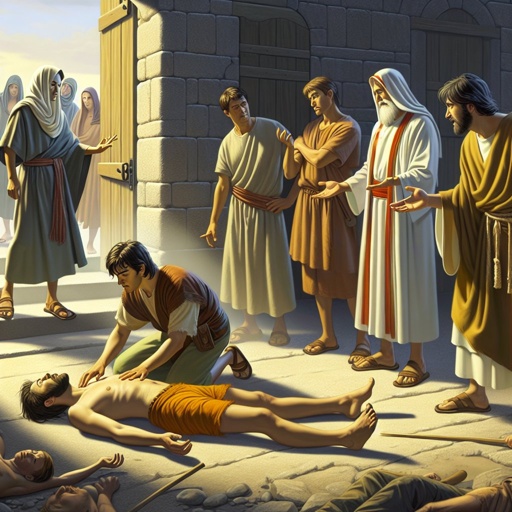
Luke 10:36-37 - "Which of these three, do you think, proved to be a neighbor to the man who fell among the robbers? He said, The one who showed him mercy. And Jesus said to him, You go, and do likewise."
"Which of these three, do you think, proved to be a neighbor to the man who fell among the robbers? He said, The one who showed him mercy. And Jesus said to him, You go, and do likewise." - Luke 10:36-37

Luke 10:36 - "Which now of these three, thinkest thou, was neighbour unto him that fell among the thieves?"

Luke 10:37 - "And he said, He that shewed mercy on him. Then said Jesus unto him, Go, and do thou likewise."

Matthew 12:36-37

matthew 12:36-37

Mark 4:36-37

Mark 9:36-37

Mark 4:36-37

Matthew 12:36-37
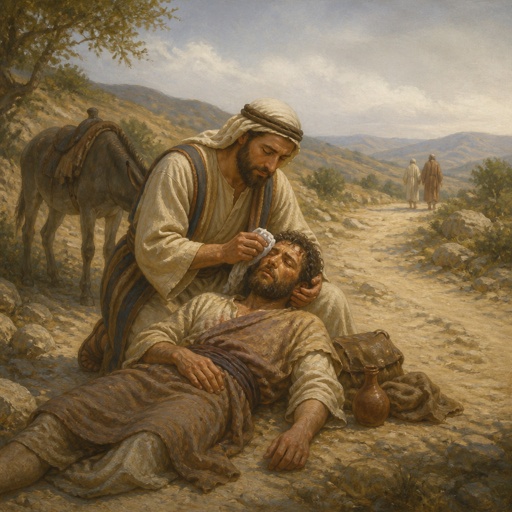
"Which now of these three, thinkest thou, was neighbour unto him that fell among the thieves?" - Luke 10:36

1 Corinthians 14:36-37

Genesis 36:37 - "And Samlah died, and Saul of Rehoboth by the river reigned in his stead."

Genesis 37:36 - "And the Midianites sold him into Egypt unto Potiphar, an officer of Pharaoh's, and captain of the guard."

Luke 2:37

Luke 2:37

Luke 2:37

Luke 2:37

Luke 5:36

Luke 11.33-36

Luke 2:37

Luke (1:37) For nothing will be impossible with God.”

Luke (1:37) For nothing will be impossible with God.”

Luke (1:37) For nothing will be impossible with God.”

Luke (1:37) For nothing will be impossible with God.”

Luke (1:37) For nothing will be impossible with God.”

Luke (1:37) For nothing will be impossible with God.”

Luke (1:37) For nothing will be impossible with God.”

Luke (1:37) For nothing will be impossible with God.”

Luke (1:37) For nothing will be impossible with God.”